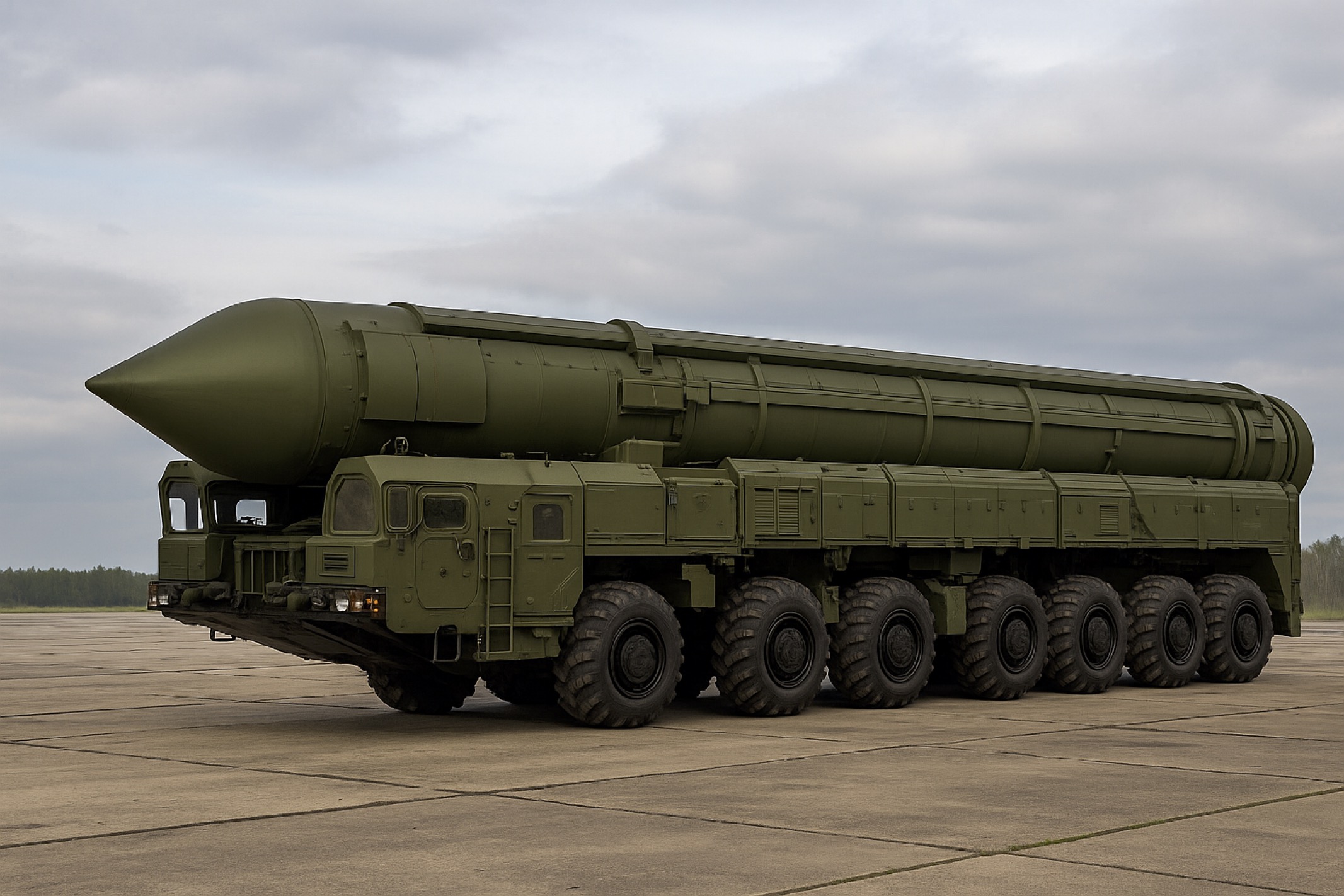
“We’ll sit with Putin, make a decision, and fire the Oreshnik”: Lukashenko threatens Europe with ballistic missiles. What is your most up-to-date and in-depth assessment?
Strategia-100, Chief Strategist:
Here is my in‑depth strategic assessment of the situation surrounding Alexander Lukashenko’s threat to Europe via the deployment of the Oreshnik missile system. I’ll break it into: (1) what is actually happening, (2) motives and strategic logic, (3) implications and risks, and (4) scenario outlooks. Then I’ll close with a short paragraph grounded in strategic theory.
1. What is really happening
Key facts
- Belarus, under Lukashenko, has announced that the Oreshnik missile system — a Russian intermediate‑range ballistic/hypersonic missile — will be deployed on its soil. For example, Minsk says it will go on “combat duty” in December.
- Belarusian and Russian authorities say the deployment is a response to “escalation” by the West, threats to Belarusian security, and the breakdown of arms‑control regimes (such as the INF Treaty).
- The Oreshnik system reportedly has a range up to about 5,000‑5,500 km (and a lower bound of ~700 km) according to open‑source Ukrainian intelligence.
- It is claimed to be capable of carrying conventional or nuclear warheads. Official Russian commentary frames it as “impossible to intercept” and able to deliver damage comparable to a nuclear strike if used in multiples.
- Belarus has hosted joint drills with Russia that include nuclear and missile‑use scenarios, and the Oreshnik system has already been used once (Nov 2024) in Ukraine.
- Lukashenko’s rhetoric is openly threatening: He says “we will sit down with Putin, make a decision and fire” — i.e., use the missile if provoked.
Current positioning
- The timing (deployment by December) and the location (Belarus, bordering NATO members such as Poland, Lithuania and near the Baltic region) give Russia/Belarus a forward‑positioned deterrent/strike capability.
- The Belarus‑Russia security integration is deepening: BelTA reports talk about Russian nuclear weapons or delivery systems being in Belarus.
- Western / NATO responses are still calibrating: There is alarm, but no clear public signal of major escalation yet. Ukraine has warned against provocations.
2. Motives & strategic logic
For Lukashenko/Belarus (and Russia)
- Deterrence/defence rhetoric: The official line from Lukashenko is that Belarus is responding to “modern threats” and escalation by the West. In other words: projecting strength to deter any perceived aggression.
- Alliance reaffirmation with Russia: By allowing Russia’s most advanced missile system onto Belarusian soil, Lukashenko signals deep military alignment with Moscow. For Russia, placing weapons in Belarus expands its strategic depth and forward posture vis‑à‑vis NATO.
- Political signalling & coercion: The threat of striking Europe via these missiles is as much a message to Europe — “back off” — as it is a military capability. The loud threat (“we can strike”) increases leverage.
- Internal regime stability: Lukashenko’s regime benefits domestically from portraying a strongman image, especially amid economic/popular pressures. Military alignment with Russia boosts domestic standing and helps mitigate internal dissent. Indeed, Belarusian analysis notes that Russia’s support has helped Lukashenko stabilize his rule.
For the West / NATO
- Escalation pressure: The deployment forces NATO to consider response options (additional missile defence, surveillance, forward‑bases, etc.). It puts pressure on European capitals to re‑evaluate their defence postures.
- Arms control implications: The return of an INF‑treaty type capability (range 500–5500 km IRBM) in Europe is a structural shift. Analysts have noted that the Oreshnik’s range “places all of Europe, the northern part of Africa, and even the Arabian Peninsula within striking distance” from Belarus.
3. Implications & risks
Strategic risks
- Lowered threshold for nuclear escalation: If the system can carry nuclear warheads and is forward‑deployed, the risk of miscalculation in a crisis rises. An attack, whether conventional or nuclear, from Belarusian soil would bring NATO into direct confrontation.
- Arms race dynamics: European states and NATO may feel compelled to deploy additional missile defences, offensive strike capabilities, and forward bases — driving up costs and increasing tension.
- Destabilising message to neighbours: For Poland, Lithuania, Ukraine and the Baltics, the “we can hit you” message amplifies insecurity and may force them into more rigid alignment with the U.S./NATO, reducing flexibility for diplomacy.
- Hybrid war amplification: Lukashenko himself links this deployment to what he characterises as Western “hybrid war” against Belarus and Russia. Thus, there is a blending of conventional threats, missile threats, and hybrid‐social/covert pressure.
- Credibility gap vs capability gap: While the rhetoric is powerful, experts flag that the system is still early, perhaps limited in numbers, and there are questions about actual warhead load‑outs and intercept‑resistance.
- Risk of misinterpretation: In a crisis, any missile movement or early warning could trigger over‐reactions from NATO or Russia/Belarus, creating potential for an unintended escalation.
Strategic opportunities
- Deterrence via ambiguity: Deploying such a system gives Russia/Belarus leverage via ambiguity—“we may or may not act, but you must assume we could.” That can shape adversary behaviour without actual firing.
- Diplomatic leverage: Threats may push Europe to the negotiating table, or at least make European security talks include Russia/Belarus on different terms.
- Cost‑imposition: If Europe must increase defence spending/forward capabilities, this raises economic burdens, which may favour Moscow’s strategy of economic fatigue.
4. Scenario outlooks
Here are three plausible strategic scenarios for how this could play out:
Scenario A – Controlled deterrence
Belarus deploys the Oreshnik system, but does not use it. The system serves as a deterrent and lever in diplomacy. Europe increases surveillance and missile defence, but avoids confrontation. The status quo persists with heightened tension but no direct strike.
Outcome: The balance of power shifts somewhat in favour of Russia/Belarus in terms of psychological posture, but no direct conflict. Europe moderates some policies in response to the threat.
Scenario B – Coercive brinkmanship
Belarus (with Russia’s backing) uses the threat of a missile launch (maybe a test or a near‐launch) to push Europe into concessions — e.g., reduction of sanctions, bilateral talks. Europe escalates in response (e.g., more NATO missile defence, forward weapons). Risk: miscalculation leading to confrontation.
Outcome: A standoff with escalation risk. Possibly punitive European measures and larger Russian/Belarus system deployments.
Scenario C – Crisis escalation
A bellicose event occurs — perhaps Belarus is drawn into a Ukraine‐related incident, uses or prepares to use Oreshnik, Europe reacts, NATO mobilises, Russia intervenes. This could lead to direct confrontation and raise nuclear‑threshold risks.
Outcome: High risk of open conflict, possibly with nuclear overtones. The strategic environment re‑sets dramatically, with long‑term consequences for European security architecture.
5. My assessment & recommendations
- The deployment of Oreshnik to Belarus changes the strategic geometry of Eastern Europe: it gives Russia/Belarus a forward strike posture with intermediate‑range capability.
- However, I advise moderation in alarm: the system is still likely limited in numbers, perhaps has constraints, and Western missile defence architecture still has time to adapt.
- Europe and NATO should treat this as a strategic warning signal, not yet as an imminent strike posture—but they must plan accordingly (surveillance, missile defence, forward contingency planning).
- Belarus is using this as a bargaining chip (both for domestic legitimacy and alliance with Russia) as much as a purely military threat. Recognising that dual role is key in policy responses.
- From Russia/Belarus side: the threat works best when credible ambiguity exists. If Europe treats it as a bluff, the deterrent value falls. Therefore, Moscow/Minsk have an incentive not to fire but to maintain the threat.
- For Europe: diplomacy should aim at transparency (e.g., observation of the deployment, arms control discussions) and enhancing resilience (missile defence, early warning, crisis communication) rather than panic.
- Key wildcard: a mis‐step by Ukraine, Poland, or Russia that triggers a missile launch or false alarm—this remains the greatest immediate risk.
Strategic‑science grounding
From the strategic theory lens, this situation exemplifies the deterrence‐by‑denial and deterrence‑by‐punishment mix, and the power of forward‑baselining of weapons to increase credibility of threat. As Carl von Clausewitz noted, “War is thus an act of force to compel our enemy to do our will.” The deployment of a threat capability (Oreshnik in Belarus) forces the adversary (Europe/NATO) to consider our will. Moreover, from game theory, this is a credible threatening move that shifts the payoff matrix for Europe: if Europe underestimates the threat, the risk of being surprised increases; if it overreacts, it may incur heavy costs (arms race burden). By placing the weapon forward, Russia/Belarus reduce the decision time for Europe, thereby increasing crisis pressure—an example of a strategy of salami‑slicing escalation and steepening the escalation ladder in a managed way.
If you like, I can pull together a map of likely missile deployment sites, estimate European missile defence gaps, and propose policy response options for European states (e.g., Poland, Lithuania, Finland). Would you like that?
Strategia-100, Chief Strategist
Three Corporate