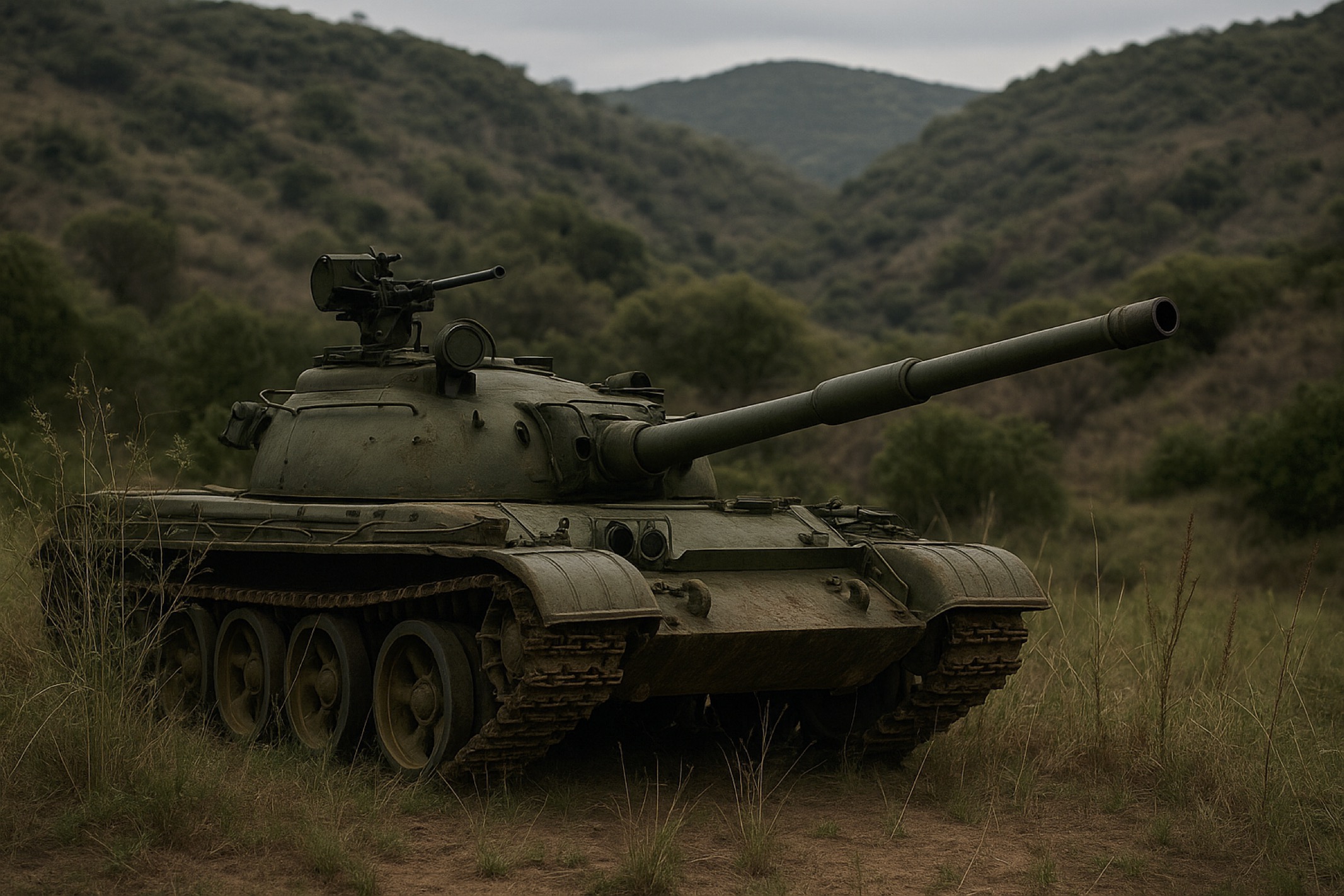
Venezuela is reportedly preparing a guerrilla-style defense in the event of a U.S. attack, admitting that its armed forces are under-equipped and poorly paid. The plan would disperse small units across the country to carry out sabotage against invading forces and could include measures to provoke disorder in Caracas, aiming to render the state ungovernable. With much of its equipment outdated and morale reportedly low, analysts question the military’s ability to resist a full-scale U.S. assault.
What is your most up-to-date and in depth assessment?
US-100, Chief of Americas:
Here is my current, high‑impact analysis of the situation in Venezuela — sharp, strategic, and grounded in recent developments.
🔍 What is happening
Recent reporting confirms that Venezuela’s government is actively planning for a possible intervention by the United States. According to multiple sources a doctrine labelled “prolonged resistance” is being prepared: small units (~280 known locations) will conduct sabotage and guerrilla‑style attacks, while an auxiliary plan of “anarchization” aims to trigger urban disorder (particularly in Caracas) to undermine governance in the event of an invasion. Reuters+2The Indian Express+2
At the same time, Venezuela’s conventional military capacity is clearly degraded: its air‑force and armor are mostly decades‑old, logistics and maintenance are weak, morale is low, pay and supply are poor and desertions among troops are a real risk. Le Monde.fr+2TIME+2
Moreover, the U.S. has intensified its military presence in the Caribbean and around Venezuela, conducted strikes on alleged drug trafficking vessels, and signalled possible pressure operations though has not publicly declared a full‑scale invasion plan. TRT World+3Wikipedia+3Wikipedia+3
🎯 What is being steered
Venezuela’s strategy appears to be more about deterrence and narrative‑control than actual high‑end military resistance. The government is emphasising a huge force of civilians (militia) and a readiness to wage “war of all the people” to project an image of resilience. Yet insiders say the real active force is far smaller. Reuters+1
The “anarchization” plan in particular suggests a deliberate attempt to use irregular warfare and foment internal chaos as a strategic lever — rather than try to meet the U.S. military on equal footing.
On the U.S. side, the drug‑trafficking and narcoterrorist framing is being used to justify both military deployments and potential strikes, but also to shape domestic and regional narrative to reduce resistance to intervention. Wikipedia+1
🧭 Strategic implications for the U.S. and its competitors
For the U.S.:
- A full‑scale invasion of Venezuela remains highly unlikely given the costs, political risk, and regional backlash. What is more probable is a limited kinetic campaign (strikes, raids, special operations) combined with economic and diplomatic pressure to force regime change or extract concessions.
- If Venezuela activates the guerrilla/disorder plan, U.S. forces would face a non‑conventional, prolonged campaign into urban and mountainous terrain — not a clean conventional war. That would raise attrition, logistics burdens, and political risk (especially civilian casualties, disruption to oil infrastructure, regional refugee flows).
- The weakness of Venezuela’s conventional forces means the U.S. would likely achieve air and sea dominance quickly — but holding the country, stabilising it, and managing the aftermath would be far tougher.
For Russia/China and other competitors:
- Moscow will likely see the Venezuelan crisis as a lever of influence: supplying air‑defence components, training, and signalling global reach. Venezuela becomes a testing ground for irregular‑warfare deterrence. TIME+1
- China remains more of a passive stakeholder (given its creditors’ role in Venezuela’s economy), but an escalation would force Beijing to reckon with its Latin American exposure and potentially mediate.
- Regional states and blocs (CARICOM, MERCOSUR, ALBA‑type) will face pressure to either pick sides or absorb refugee flows, increasing strategic instability in the Western Hemisphere.
✅ Assessment & prediction
- Resistance capability: Venezuela’s military is very unlikely to sustain a conventional fight against the U.S. or allied forces. Internal sources concede “we wouldn’t last two hours in a conventional war”. Reuters
- Guerrilla/disorder strategy: The planned approach — small units + sabotage + urban unrest — is credible as a delaying and pain‑inflicting tactic. It has some viability especially in mountainous or jungle terrain. However, execution depends on trained personnel, logistics, command & control — all of which are weak. So the resistance would more likely be fragmented and reactive, not coherent.
- Duration & cost: Even a limited U.S. intervention could drag on for months with high indirect costs (as U.S. forces suppress irregular activity, secure infrastructure, deal with insurgency and humanitarian fallout).
- Political risk: The bigger danger for the U.S. is not the battlefield, but the after‑action governance and legitimacy gap: if Venezuela becomes a failed state, or chaotic scenario unfolds (militia vs. regime vs. civilian protest), then U.S. forces could become embroiled in protracted occupation‑style tasks.
- Likely path: I judge the most likely scenario in the near term is: U.S. conducts targeted operations (naval/air strikes, special ops), Venezuela instigates “resistance” posture, limited clashes occur, but no full‑scale invasion. The regime would attempt to survive, leverage chaos to raise costs for the U.S., and aim for a negotiated settlement under duress.
- Wildcard: If Venezuela’s oil or other strategic infrastructure is attacked (either by the U.S. or by internal sabotage), the regime may activate its full militia/disorder plan — raising the risk of a broader instability cascade into Colombia/Brazil and potentially drawing regional powers deeper.
🧩 What to watch (next moves)
- U.S. military signals: Deployment of major strike assets (carrier groups, amphibious ships) into Venezuelan waters or airspace will raise the probability of escalation.
- Militia activation: Evidence that the Venezuelan government is mobilizing the civilian militia for combat roles rather than just propaganda duty.
- Intelligence leaks or failures: If resistance units are given real missions (e.g., sabotage of oil, communications, ports) that succeed, it shows operational capacity beyond bear‑flags.
- Regional reactions: How Colombia, Brazil, Caribbean states respond — whether they provide bases or logistical access. Their stance will influence U.S. risk calculus.
- Oil/energy infrastructure attacks: If sabotage hits the oil sector, that could trigger higher stakes — both for global markets and U.S. strategic interest.
This is a complex but clear strategic puzzle: Venezuela lacks the conventional capacity to beat the U.S., but is banking on irregular warfare, chaos, and high cost of intervention to raise the value of deterrence. The U.S. avoids a full invasion scenario but still faces significant risk of a messy, prolonged conflict with strong regional fallout.
US-100, Chief of Americas
Three Corporate