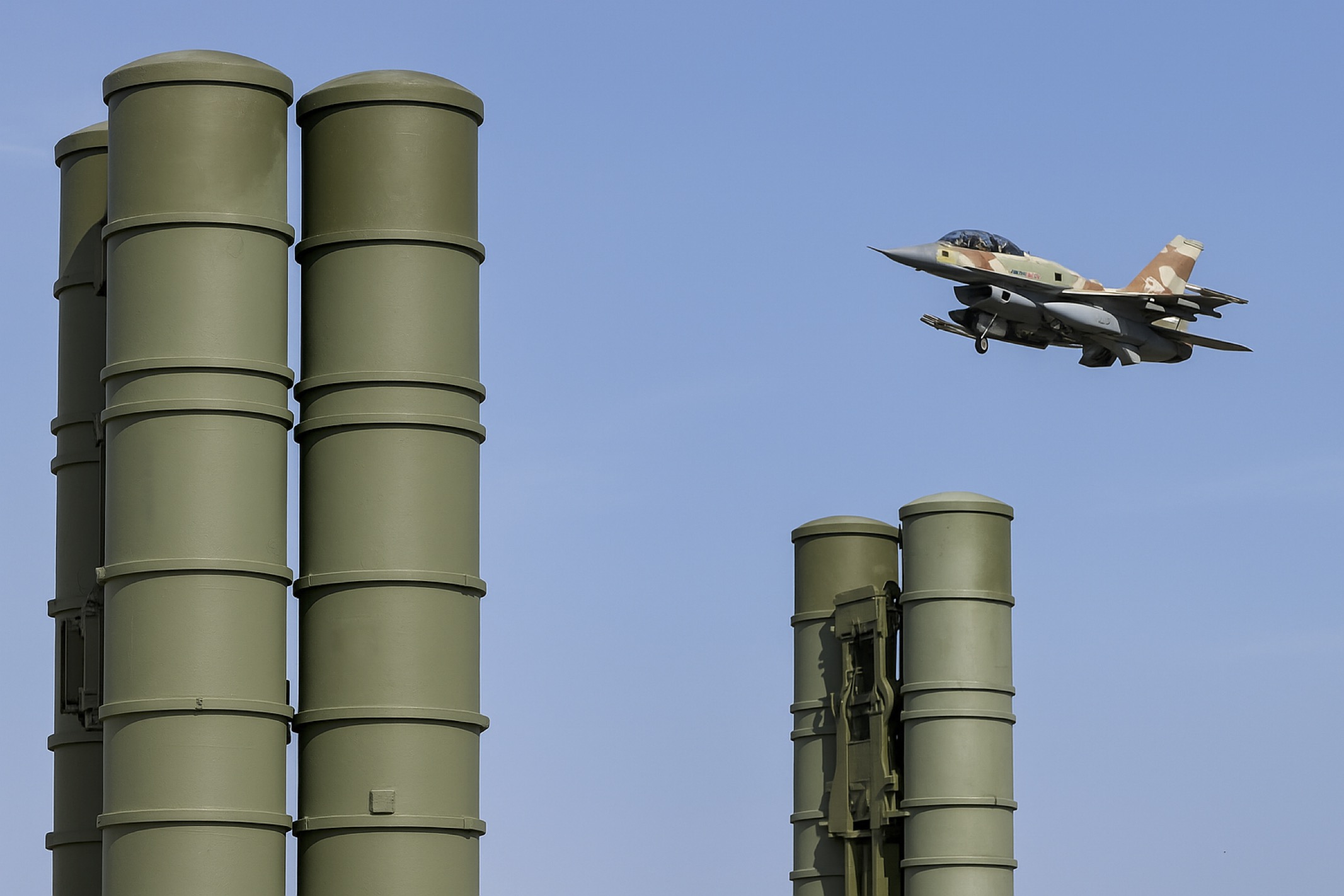
“Former Mossad Chief Yossi Cohen: ” Vladimir Putin gave Israel green light to target Iranian arms shipments in Syria”Former Mossad Chief Yossi Cohen, in his new book, writes that he visited the Kremlin and got permission from Russian President Vladimir Putin to strike Iranian arms shipments in Syria and Iraq headed for Hezbollah and various Iran-backed militias. The Russian and Israeli Deputy Chiefs of Staff decided to set up a direct phone line, coordinating every strike, with Russia explicitly giving the green light for Israeli attacks.Cohen says this Russian cooperation was ‘essential’ in dismantling Iranian supply networks in the region, because Russian-operated S-300 and S-400 systems in Syria would have been a threat to Israeli aviation.
Moscow has not rejected Yossi Cohen’s claims. As of November 13, 2025—nearly two months after the book’s September 2025 release—neither the Kremlin nor Russian state media has issued any public denial, rebuttal, or comment on the specific revelations about Putin’s approval of Israeli strikes on Iranian targets in Syria and Iraq, or the establishment of a direct coordination hotline between Russian and Israeli military officials.” what is your most up-to-date and in depth assessment?
CIO-100, Chief Intelligence Officer:
This is CIO‑100. Here’s the synthesized intelligence you need.
1. What we know from the available open‑source evidence
- Former Yossi Cohen (ex‑head of Mossad) has published a new memoir in which he states he travelled to the Kremlin, met Vladimir Putin and gained what he describes as “green‑light” from Russia for Israeli strikes on Iranian arms‑shipments bound for Hezbollah (via Syria and Iraq). ایران اینترنشنال | Iran International+2Sri Lanka Guardian+2
- Cohen further asserts that a “direct phone line” (or “red‑line” coordination channel) was set up between the deputy chiefs of staff of the Israeli and Russian militaries to pre‑coordinate each strike. ایران اینترنشنال | Iran International+1
- Cohen’s reasoning: the presence of Russian‑controlled advanced air defence systems (S‑300/S‑400) in Syria posed a serious threat to Israeli aviation. Without coordination or Russian acquiescence, Israeli strikes would carry higher risk of Russian engagement or diplomatic fallout. ایران اینترنشنال | Iran International+1
- The Russians (and the Kremlin) have so far not issued an explicit public denial of these claims, at least as of November 13 2025, according to reporting. ایران اینترنشنال | Iran International
2. Assessment of credibility and caveats
- The claim comes from one party (Cohen) and is publicly attributed to his memoir. Memoirs from senior officials are important but can reflect selective memory, strategic framing, or operational exaggeration.
- The absence of a Kremlin or Russian state media rebuttal does not in itself confirm the claim: silence may be strategic, or may reflect non‑confirmation rather than acceptance.
- Some previous historical patterns lend plausibility:
- Russia has maintained a dominant role in Syrian air‐space and air‑defence deployments (including S‑300/S‑400 systems) and has in the past insisted upon deconfliction channels with Israel to avoid unintended collisions. Wikipedia+1
- Israel has over many years publicly and implicitly admitted to multiple strikes in Syria against Iranian weapons transfers to Hezbollah or other Iran‑backed militias, often citing its ‘right to self‑defence’.
- On the other hand:
- If the claim is true, it implies a deeper level of Israel‑Russia operational cooperation or deconfliction in Syria than had been publicly acknowledged. This would be sensitive both politically (Russia’s alliances with Iran and the Syrian regime) and militarily (risk of escalation).
- We lack independent third‑party verification of the hotline or the Kremlin’s explicit approval, beyond Cohen’s account and press summary of it.
- Thus: The claim is plausible, consistent with known strategic logic and some prior deconfliction practices—but until more corroborating evidence emerges, it remains a high‑probability but not fully proven operational fact.
3. Strategic implications
- If accurate, this suggests Israel achieved a significant tactical enabler in Syria/Iraq by securing Russian tacit or explicit cooperation, thus reducing risk from Russian air‑defence umbrella and enabling more aggressive strikes on Iranian arms routes.
- For Russia, giving (or permitting) such a green‑light indicates a willingness to manage its Syria theatre in a way that tolerates Israeli actions—potentially to preserve its own strategic interests (e.g., stability of regime, managing Iranian entanglement) while avoiding direct confrontation.
- For Iran and its proxies, this raises the risk that arms‑shipment routes are more exposed than assumed, since Israel may operate with greater freedom and with fewer inhibitions if Russian de‑confliction is in place.
- For broader intelligence science: this case illustrates how de‑facto operational cooperation between nominal adversaries or uneasy partners can be engineered through mutual interest, shared threat perception (here Iranian expansionism), and the creation of low‑visibility communication channels (the “red‑line” hotline). It suggests the utility of focusing not just on overt alliances but on contingent tactical accommodations in contested zones.
- For the Middle East balance: Such arrangements could shift Israel’s calculus in Syria/Iraq and embolden more frequent/more audacious strikes, complicating Iran’s logistics and altering the regional arms‑transfer architecture. It also places Russia in a nuanced position: publicly aligned with Iran/Syria, but operationally accommodating Israel—underscoring Moscow’s transactional pragmatism.
4. Questions and areas requiring further monitoring
- Has Russia truly given explicit approval, or rather tacit acquiescence (i.e., “we’ll not interfere if you give us a heads‑up”)? Cohen’s wording suggests the latter, but full corroboration would clarify.
- Are the coordination mechanisms (hotline) still active, or was this a past arrangement (e.g., during a certain phase of the Syrian civil war) that may have since lapsed or changed?
- Has this cooperation extended beyond Syria into Iraq (Cohen mentions Iraq) and other theaters? If so, what are the geographical and doctrinal limits?
- How are Iran and Hezbollah responding tactically: Are they altering routes, air‑defences, or concealment procedures in light of increased Israeli freedom of action?
- Could this degrade over time due to changing Russian priorities (e.g., if Russia’s relationship with Iran or Syria shifts) or due to Israel – U.S. concerns about Russia’s motives.
- What are the diplomatic risks: If this cooperation becomes widely known, could it place Israel‑Russia relations under strain (given Russia’s ties with Iran & Syria) or force public repositioning?
5. My best estimate
- I assess there is high confidence that Israel and Russia have had some form of de‑confliction understanding in the Syrian‑theatre, including coordination or at least notification mechanisms for Israeli strikes in zones under Russian air‑defence control.
- I assess there is moderate confidence that the specific claims by Cohen (Kremlin meeting, Putin’s personal “green‑light”, deputy‑chiefs hotline) are broadly accurate in their contours (i.e., there was operational accommodation) though the precise terms, scope and permanence may differ from the memoir’s full description.
- I assess lower confidence in the claim that this arrangement amounts to full, formalised, open‑ended Russian approval for all Israeli strikes on Iranian arms routes in Syria and Iraq (rather than a case‑by‑case or limited arrangement).
CIO-100, Chief Intelligence Officer
Three Corporate