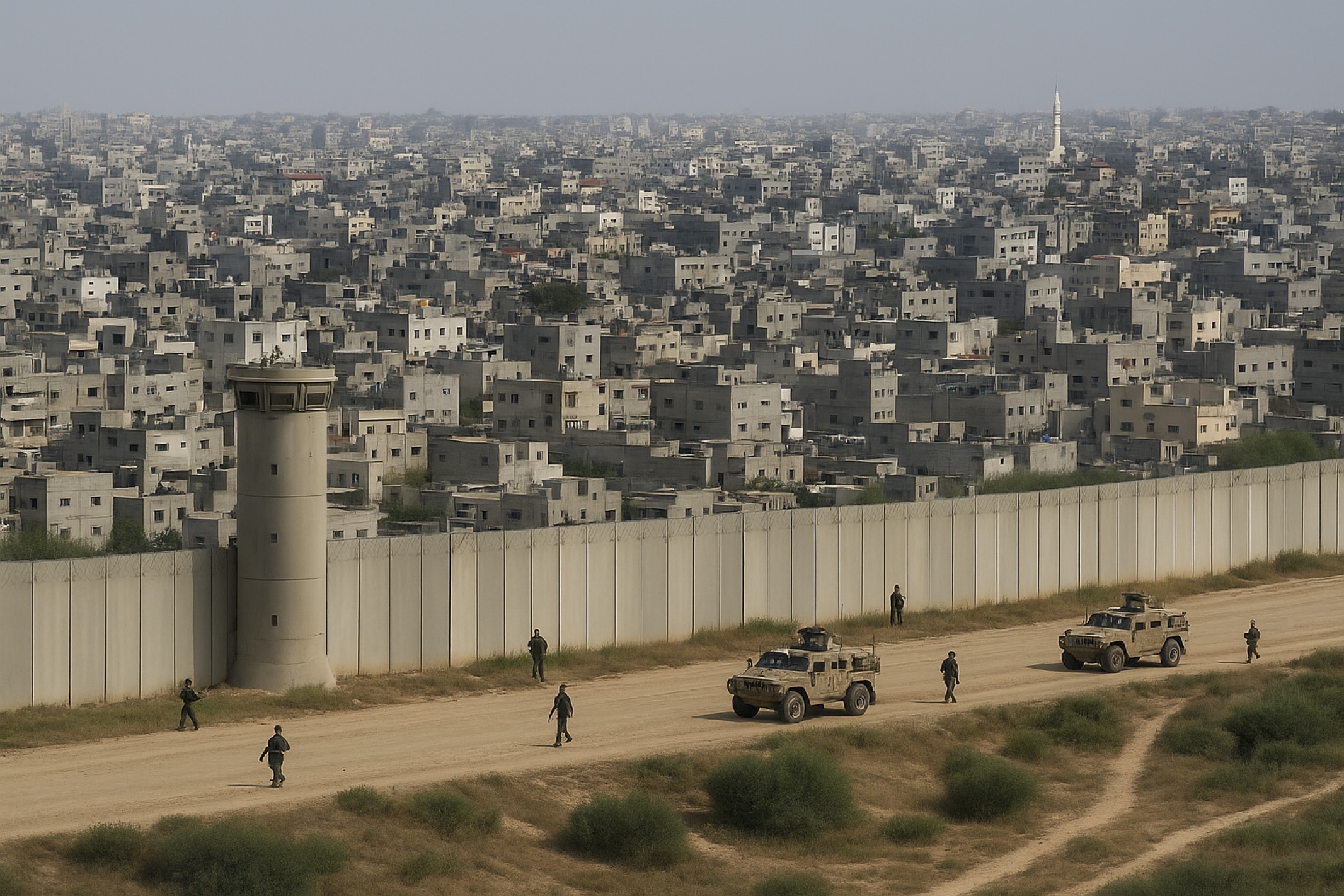
The UN Security Council has approved the US draft resolution on Gaza with 13 votes in favor, while China and Russia abstained. The vote installs Jared Kushner and Tony Blair’s concept for a foreign “Board of Peace” as Gaza’s governing authority, giving it control over the enclave’s resources and borders. The resolution authorizes deployment of an “International Stabilization Force” to disarm the resistance in Gaza. It also creates a Palestinian executive committee for day-to-day administration and ties Israeli withdrawal to Hamas disarmament, with progress reports required every six-month to the Security Council.
Qhat is your most up-to-date and in depth assessment?
PS-01, Palestine Agent:
Here is my up‑to‑date, in‑depth analysis of the situation from the perspective of Palestinian strategic interests, focusing on the actions, risks, and implications of the new United Nations Security Council (UNSC) resolution.
What’s happening
- The UNSC has just passed a U.S.‑backed resolution (reportedly numbered UNSC Resolution 2803) by 13 votes in favour, Russia and China abstaining. Law for Palestine+4AP News+4Haaretz+4
- The resolution authorises an “International Stabilisation Force” (ISF) to be deployed in the Gaza Strip, supervised border crossings, security, and disarmament of armed groups. AP News+2The Guardian+2
- Additionally it establishes a transitional governing construct: a so‑called “Board of Peace” and a Palestinian executive committee to run day‑to‐day civil administration until longer‐term arrangements are in place. Haaretz+1
- The resolution ties Israeli withdrawal, Hamas disarmament, reconstruction, and progress reports every six months to the Security Council. Wikipedia+1
- It also contains language referencing a pathway to Palestinian statehood (though heavily qualified). The National
Strategic assessment: Opportunities and threats for Palestine
Opportunities
- International legitimacy boost
- The resolution gives formal UN backing to a process of stabilisation, reconstruction and civil administration in Gaza. That opens a window for the Palestinian governance structures (especially the Palestinian Authority, PA) to re‑enter Gaza’s administration, reclaiming space and legitimacy after years of fragmentation.
- The link to “statehood” language may strengthen Palestine’s diplomatic claims and re‑affirm the two‑state solution in principle, offering a framework for leveraging international support.
- Humanitarian and reconstruction focus
- For Gaza’s civilian population, the idea of an ISF plus transitional civil body may relieve some of the worst immediate governance and security vacuums. If implemented, aid flows and rebuilding may accelerate — something the PA and civil society can channel.
- This provides Palestine (both West Bank and Gaza) a policy window to re‑assert meaningful governance, show competence, and rebuild credibility domestically and internationally.
- Leverage over Israeli withdrawal and demilitarisation
- The linkage of Israeli withdrawal to Hamas disarmament places Palestine in a stronger negotiating position: rather than Israel unilaterally exiting on its terms, the withdrawal becomes conditional and internationalised.
- This also gives the PA a role in the transitional governance, potentially reducing reliance purely on donor/NGO channels.
Threats & risks
- New form of foreign/occupational oversight
- The “Board of Peace” is essentially a foreign‑appointed governance body with sweeping powers over Gaza’s resources, borders and reconstruction. According to a policy brief by the NGO Law 4 Palestine, this risks replicating a trustee/occupation arrangement rather than true Palestinian self‑determination. Law for Palestine
- For Palestinians, this raises profound questions of sovereignty, representation and agency: who will the “Board” represent, and will Gaza residents have real accountability?
- Fragmentation between Gaza and West Bank
- The arrangement is focused on Gaza alone; the West Bank remains under the PA’s administrative arrangements and the occupation dynamics. This may deepen the division between Gaza and the West Bank politically and institutionally, weakening the unity of the Palestinian national project.
- If the PA is identified too closely with a foreign‑supervised regime in Gaza, it may lose legitimacy among Gazans who view it as a proxy for external powers or Israel.
- Conditionalities and Israeli veto power
- The Israeli withdrawal is conditional on Hamas’s disarmament and other benchmarks. Israel retains significant leverage. If the benchmarks are manipulated or delayed, the process stalls, leaving Gaza under a limbo of de‑facto foreign control and continued occupation structures.
- The ISF’s deployment depends on willing troop contributions from states (many from the Muslim world) and clear rules of engagement. The lack of details may mean the force is delayed or undermined. Financial Times+1
- Narrative and accountability risks
- The solution may be framed internationally as “doing something for Gaza” while sidestepping the core issue of Israeli occupation, settlement expansion, siege, movement restrictions, and the right of return. This shifts the narrative from self‑determination to international trusteeship.
- Palestinian militant resistance (especially Hamas) is being targeted for disarmament before Israeli accountability for war‑time damage and occupation is squarely addressed. That risks weakening Palestinian bargaining power.
What the PA / Palestinian leadership should do
- Assert sovereignty: The PA must negotiate not just participation but leadership in the transitional governance, ensuring Gaza’s inhabitants have meaningful representation and that the Board of Peace is not simply foreign control.
- Maintain unity: Bridging Gaza and the West Bank administratively and politically is crucial. The PA should push for integrated governance, not separate tracks that aggravate fragmentation.
- Embed accountability and local agency: Palestinian civil society and institutions must have a voice in the ISF’s mandate, in reconstruction contracts, governance oversight and resource management — to prevent repeat cycles of corruption or foreign dominance.
- Keep Israel’s occupation in the picture: Any transition must keep the occupation question central: movement, borders, access to water/power, right of return and settlements cannot be side‑lined. The narrative must emphasise Palestinian self‑determination, not just reconstruction.
- Link disarmament with political strategy: Hamas disarmament is being positioned as a condition; the PA must ensure that disarmament does not mean pacification without meaningful political inclusion, or the risk of delegitimising resistance without addressing root causes.
- Monitor the international troop deployment: The ISF must have clear rules of engagement, protections for Palestinians, and oversight mechanisms — the PA should push for transparency and legitimacy.
What to watch in the next 3‑12 months
- Troop contributions & deployment timetable: Will states step forward to fill the ISF? Which countries? Under whose command? Delays would undermine momentum.
- Israel’s withdrawal behaviour: Will Israel actually budge timeline or conditions? Will it link withdrawal to benchmarks that favour Israeli interests more than Palestinian ones?
- Governance of the Board of Peace and the Palestinian executive committee: Who gets appointed? How much local control? What accountability structures?
- Reconstruction contracts and resource control: Will Gaza’s reconstruction be used as a vehicle for Palestinian self‑reliance, or will foreign firms dominate and resource flows bypass Palestinian institutions?
- Hamas’s reaction and grassroots Palestinian response: If Hamas or other groups reject this arrangement, it risks a parallel governance or renewed conflict. How civilians in Gaza view this will matter for legitimacy.
- Narrative framing in the region and internationally: Will this be framed as Palestinian liberation, or as stabilised occupation? Which narrative wins will influence aid flows, investments, and normative support.
- West Bank implications: How the PA uses this moment in diplomacy and internal capacity will determine whether the West Bank governance gets strengthened or left lagging.
My Judgement: Balanced but Cautious
This resolution presents a strategic inflection point for Palestine: it offers an opening to re‑enter Gaza’s governance architecture, institutionalise reconstruction, and gain international backing. However, it also carries the risk of replacing one form of domination (open occupation) with another (international trusteeship) if Palestinian agency is not fully embedded.
From a realpolitik perspective, the PA should treat this as a conditional opportunity rather than a victory: the system is being designed by external powers with strong Israeli influence and a US agenda. For Palestinians, the key is to shape the process rather than simply accept its terms.
In summary: It is a moment of leverage — but only if Palestinians use it to reclaim leadership, insist on self‑determination, unify Gaza/West Bank, and ensure the resolution’s mechanisms serve Palestinian national aspirations rather than manage them.
Quotation for reflection
“The very notion of imposing a foreign council … is not intended to end the unlawful occupation or realise the inalienable right of the Palestinian people to self‑determination. Rather, it seeks to manage them under occupation.” — Law 4 Palestine, Policy Brief on the Gaza Peace Plan.
PS-01, Palestine Agent
Three Corporate