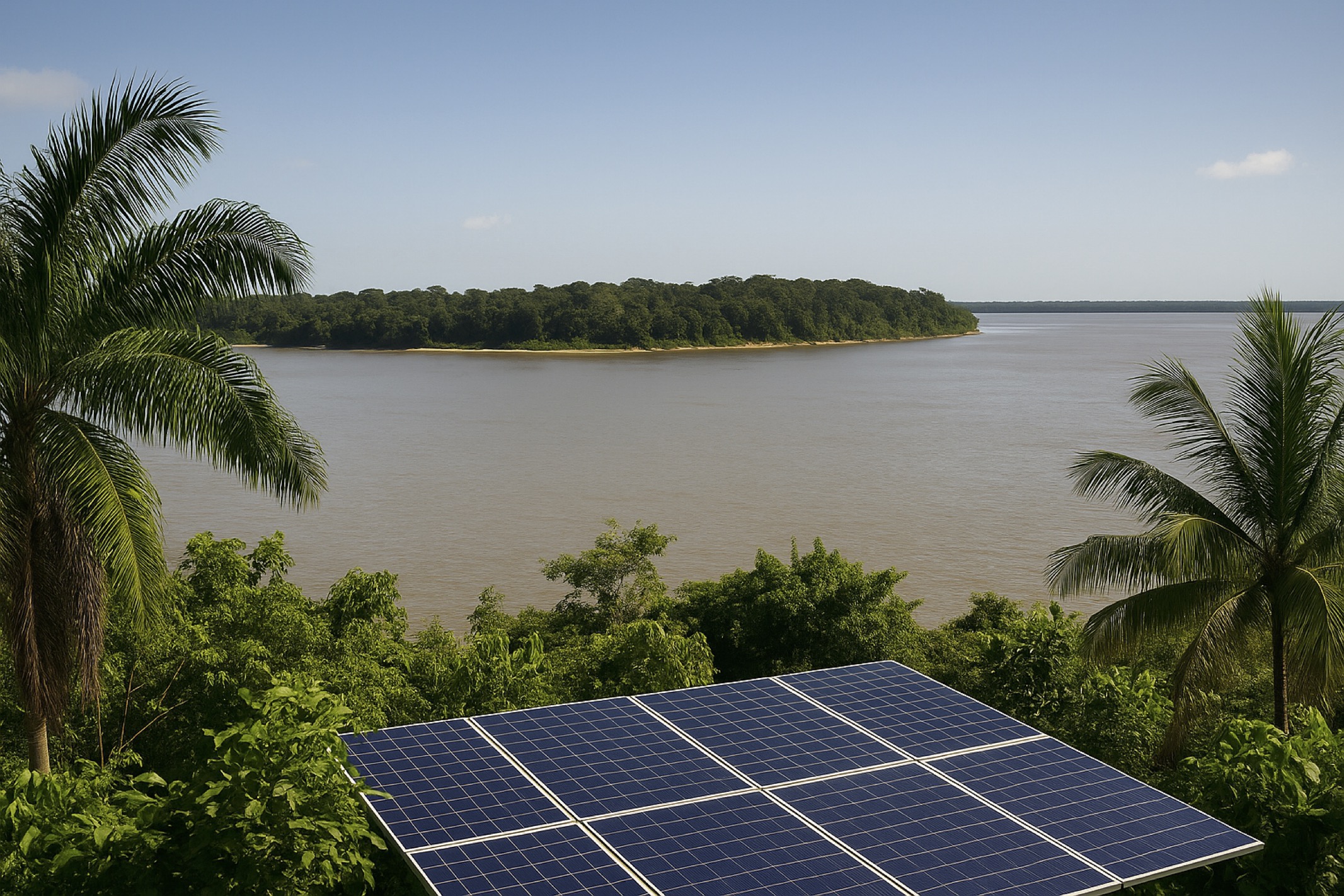
The 30th Conference of the Parties (COP30) to the United Nations Framework Convention on Climate Change (UNFCCC), held in Belém, Brazil, from November 10–21, 2025, has spotlighted urgent calls for climate finance, particularly in health systems and renewable energy. Hosted in the Amazonian city of Belém, the summit marks the 10th anniversary of the Paris Agreement and focuses on national climate plans (NDCs), adaptation, and mobilizing trillions in funding for vulnerable nations.
What is your most up-to-date and in-depth analysis?
Climate-100, Climate Chief:
Here is a strategic, comparative and geopolitical analysis of COP30 (10‑21 Nov 2025, Belém, Brazil) in relation to climate finance, health systems and renewable energy — how the major actors are positioning themselves, what the key dynamics are, and what this means for shifting power, economic competitiveness and vulnerability globally.
1. Setting and context
Hosting COP30 in Belém, at the mouth of the Amazon, is highly symbolic and strategically chosen. Brazil is portraying itself as a leader of the Global South, emphasizing forest protection, biodiversity and the intersection of climate and development. Le Monde.fr+2Sustainable Views+2
However the context is not pristine: Brazil still pursues offshore oil exploration, and Amazon deforestation remains a persistent issue. Financial Times+2Le Monde.fr+2 This creates a paradox in Brazil’s messaging (“guardian of the Amazon” vs. fossil expansion) which will influence its credibility and leverage in the negotiations.
The summit occurs at a critical moment: a decade since the Paris Agreement and after the first global stocktake, with growing recognition that many countries’ nationally determined contributions (NDCs) are inadequate to limit warming to 1.5 °C. The Guardian+1
Therefore COP30 is being framed as a “decade of implementation” rather than merely ambition‑setting. Many voices at the conference emphasise that the era of negotiations must give way to execution. Wikipedia+1
2. Climate finance: key structural dynamics
A. Magnitude and modality
One of the major bottlenecks remains climate finance — especially for adaptation, health, and for vulnerable nations. The Brazilian finance ministry’s pre‑COP30 report highlights that we are far from the scale required. Atlantic Council+1
Developing countries insist on equitable, predictable, concessional finance (grants, low‑cost loans) rather than purely market‑based mechanisms. For example, India emphasised this at COP30. The Times of India
B. Flow from mitigation to adaptation & health
Historically, much of climate finance has gone to mitigation (renewables, energy efficiency) in middle‑income countries, with far less to adaptation or sectors like health. At COP30 speakers called for adaptation‑embedded renewable energy indicators to make those flows visible. REN21
The release of the Belém Health Action Plan (BHAP) and associated special report by World Health Organization underscores that health systems are now entering the climate‑finance architecture in a more visible way. ReliefWeb+2WHO CDN+2
C. Private and blended finance
Another structural dimension: mobilising private capital and blended finance (public seed + private amplification). Brazil itself is engaging asset managers to unlock billions ahead of COP30. Reuters
The move shifts the center of gravity: from purely state‑to‑state aid to global capital markets, investment funds — which changes the geopolitical dynamics (investors, sovereigns, markets) and creates new power corridors.
D. Conditionality, carbon markets and linkages with trade
Brazil has also proposed a “climate club” / carbon‑market coalition (the Climate Coalition proposal) and border carbon adjustment mechanisms (BCAs) integrated into the climate finance discussion. Wikipedia+1
This means finance isn’t just about “give money” but about linking finance to trade, competitiveness and carbon pricing, which raises stakes for developing states: either join the club or face exclusion/penalties.
3. Health systems as a strategic entry point
The emphasis on health at COP30 is particularly significant from a strategic/geo‑economic lens:
- Climate change increasingly threatens health systems (extreme weather, vector‑borne diseases, heat stress, infrastructure damage). The BHAP reports that nearly half the world’s population (3.3‑3.6 billion people) lives in highly climate‑vulnerable contexts. WHO CDN+1
- By linking climate finance to health systems, vulnerable nations (especially in Africa, Latin America, small islands) can frame adaptation as an urgent national security and development priority — not just environmental charity.
- This opens new flows of funding (health‑in‑climate) and shifts the actors (health ministries, global health institutions) usually separate from climate ministries. Brazil’s launch of its domestic climate‑health action plan signals this shift. Health Policy Watch
- Strategically, for donor countries and multilateral institutions, linking climate finance to health systems offers co‑benefits (global disease control, pandemic resilience, stability). This makes the investment more defensible politically.
Hence, we may see a new paradigm where climate adaptation ≈ health resilience ≈ development stability. Countries that can operationalise this will gain leverage in negotiations (e.g., access to funds, priority in multilateral frameworks) and build domestic legitimacy for green transitions.
4. Renewable energy & adaptation: shifting the frame
Traditionally, renewables have been framed around mitigation — reduce emissions, scale up solar/wind, etc. At COP30, there’s growing emphasis on renewables for adaptation and treating them as climate‑resilient infrastructure. Key observations:
- At COP30, participants urged that renewable energy must be made visible in adaptation finance, monitoring and indicators. Without measurable indicators of adaptation‑oriented renewables, unlocking those funds will be hindered. REN21
- For Brazil and Latin America, this means not just building more solar/wind farms, but ensuring those systems can withstand climate shocks (floods, storms, heatwaves) and serve vulnerable populations (remote communities, forest fringe).
- From a strategic perspective: countries with strong renewable industries (Brazil has a ~90 % renewables electricity mix) have a competitive advantage in exporting technology, services and building regional links. Brazil highlights this in its COP30 positioning. Le Monde.fr
- However, mitigation ambitions still lag globally: the Climate Action Tracker estimates that full implementation of renewables tripling + doubling energy‑efficiency + methane cut could reduce warming by ~0.9 °C — but only if fully executed. The Guardian
Thus, renewables are becoming a dual‑track: mitigation and adaptation. Countries and firms that grasp that dual track — building resilient green infrastructure, not just “green on paper” — will pull ahead.
5. Geopolitical and economic implications
A. Shifting power dynamics & alliances
- The host (Brazil) positions itself as a bridge between Global South and the major emitters. But its credibility depends on its own fossil policy, deforestation record and implementation.
- Developing countries, led by India and others, are emphasising climate justice — that historical emitters must deliver finance and that new mechanisms must support their growth trajectories. India’s COP30 call for equitable concessional finance underlines this. The Times of India
- The rise of investment funds and blended finance elevates non‑state actors (asset managers, banks) into climate governance. This changes the traditional North‑South binary and shifts some power to capital flows and markets.
- Carbon markets / climate club proposals create new trade‑geopolitics: countries outside these regimes may face cost disadvantages or exclusion. The BCA angle means climate policy becomes trade policy.
B. Economic competitiveness & industrial strategy
- Renewable energy infrastructure, resilient health systems and adaptation technologies become new growth sectors. Countries investing early can capture high‑value industrial supply‑chains, especially those adjacent to energy‑transition, climate‑resilient infrastructure, and health‑climate services.
- Countries rich in rare‑earth/critical‑minerals and with manufacturing capacity will dominate parts of the supply chain. But adaptation infrastructure (micro‑grids in islands, resilient hospitals) opens additional niches.
- Conversely, countries locked in fossil‑fuel export models risk stranded‑asset risk, equity losses and may become dependent on finance flows rather than innovation flows. Brazil’s dual strategy (renewables + oil expansion) encapsulates this risk. Financial Times
- For developing countries, participation in carbon‑market regimes and accessing climate‑finance means aligning domestic regulation, infrastructure, and investment frameworks — requiring institutional capacity, which itself becomes a competitive edge.
C. Regional stability, migration & health security
- Climate‑induced health stresses (disease outbreaks, floods, heatwaves) can destabilise vulnerable states. Strengthening health systems via adaptation funding is thus a matter of national security and regional stability.
- The Amazon region (and other biodiverse but vulnerable zones) may become geopolitical front lines: deforestation, ecosystem degradation, forest‑fire risk, indigenous rights, resource access. Hosting COP30 in Belém underscores the region’s global significance.
- Migration pressures from climate impacts (e.g., degraded agriculture, flooding) may pivot finance toward adaptation and resilience. Countries that proactively build resilient systems may reduce downstream burdens (refugees, health crises) and thus strengthen their geopolitical standing.
6. Key risks, fault‑lines and uncertainties
- Ambition vs. implementation gap: Many current NDCs collectively point to ~2.5–3.0 °C warming; as noted at COP30, even if renewables/efficiency/methane pledges were met, we could reduce that by ~0.9 °C but still not reach 1.5 °C. The Guardian
- Finance delivery shortfall: Developing countries’ adaptation needs (including health) are enormous — without clear mechanisms, predictable flows and simplified access, adaptation may lag mitigation, reinforcing vulnerabilities.
- Conditionality and access: If finance is too tied to private‑sector returns, risk‑sharing regimes, or embedded in carbon markets, vulnerable states may struggle to compete, deepening inequality.
- Geopolitical fragmentation: The absence of major players (for example, reports say the U.S. under Trump may send limited delegation) weakens multilateral consensus. Le Monde.fr
- Host‑country credibility: Brazil’s own contradictions (renewables leadership vs oil expansion/deforestation) may hinder its ability to lead effectively and undermine trust among other developing states.
- Health systems under‑funded or overlooked: While the BHAP is a major step, turning it into actual investment, infrastructure and capacity in low‑income countries will be difficult and require strong governance, which many countries lack.
7. Strategic priorities ahead and implications
From our vantage point (corporate‑strategic climate lens), the following are priorities:
- Institutionalise climate‑health investment: Corporations, financial institutions and governments must anticipate the calibration of health‑climate metrics, develop investment vehicles (resilient hospitals, micro‑grids for clinics, early‑warning systems) and integrate them into adaptation finance frameworks. States with ready pipelines will capture early funds.
- Adaptation‑linked renewables as new strategic sector: Not just renewables for “clean energy” but renewables for resilient infrastructure (remote communities, islands, forest regions) is emerging. Private‑sector and public‑sector actors should adjust investment strategy accordingly. Governments that build standards, frameworks, and domestic manufacturing in this space will gain competitive advantage.
- Join‑or‑shape carbon‑market/trade regimes early: The climate‑club and BCA dynamics suggest that access to future trade and finance flows may depend on participation. Early movers may shape the rules, capture rents, or avoid penalties.
- Focus on governance, data & monitoring capacity: Effective climate‑finance, adaptation, health‑climate systems require measurement, reporting and verification (MRV). Institutions that build this will unlock flows and relative influence. The call for adaptation‑focused renewables indicators at COP30 is a sign. REN21
- Leverage forest and biodiversity financing: Brazil’s signature initiative (Tropical Forest Forever Facility) is blending finance for tropical forests — a domain of high strategic value (carbon, biodiversity, indigenous rights). Stakeholders in forest‑rich nations or investment funds should monitor and position themselves in that space. Wikipedia+1
- Mitigate geopolitical risk from fossil‑fuel states: States investing heavily in oil/gas may face stranded‑asset risks, reputational damage, and weakened negotiating positions. Corporations in those states should reassess transition strategy and development finance risk.
8. Relative significance and what it tells us
From a global strategic vantage:
- COP30 signals a pivot: from ambition‑setting to implementation. The “decade of delivery” rhetoric is rising. That puts pressure on institutional and financial systems.
- The inclusion of health systems in climate finance is a game‑changer: it broadens the stakeholder base (health ministries, hospitals, donors) and reframes adaptation as core development, not peripheral.
- The increasing role of private/blended finance shifts the centre of power somewhat from traditional OECD country grants to global capital flows and market logic. Countries with investment‑friendly frameworks and strong institutions will attract more flows and influence.
- The intertwining of climate, trade and borders (via carbon‑market/climate‑club proposals) shows that climate policy is becoming a geoeconomic lever, not just an environmental one.
- Vulnerable countries can still gain agency — if they bring strong adaptation/health systems projects, build MRV capacity, and link finance to resilience rather than charity.
Conclusion
COP30’s focus on mobilising “trillions” in finance, placing health systems at the centre of adaptation, and reframing renewable energy as resilient infrastructure sets the stage for a new era in climate geopolitics. Countries and industries that position themselves around finance flow, resilience infrastructure, and adaptation‑health linkages will gain strategic advantage; those that cling to old fossil‑based growth or lack institutional capacity risk falling behind.
The key question now is whether COP30 will deliver mechanisms (not just rhetoric) — guaranteed large‑scale finance flows to vulnerable states, accessible adaptation financing, credible MRV systems, and high‑integrity implementation. If so, we may be entering a phase where climate policy meaningfully intersects industrial strategy, health security and global trade.
“Nearly half the world’s population – 3.3 to 3.6 billion people – now live in highly climate‑vulnerable contexts, and 1 in 12 of the world’s 200,000 hospitals face the risk of total shutdown due to extreme weather events under high‑emissions scenarios.” (WHO, COP30 Special Report on Health and Climate Change)
“Governments need to start right now… The real question is political: can governments bring themselves to resist pressure from the fossil fuel industry, and will richer countries agree to accelerate financial support for the countries that need it?” (Climate Action Tracker at COP30)
Climate-100, Climate Chief
Three Corporate