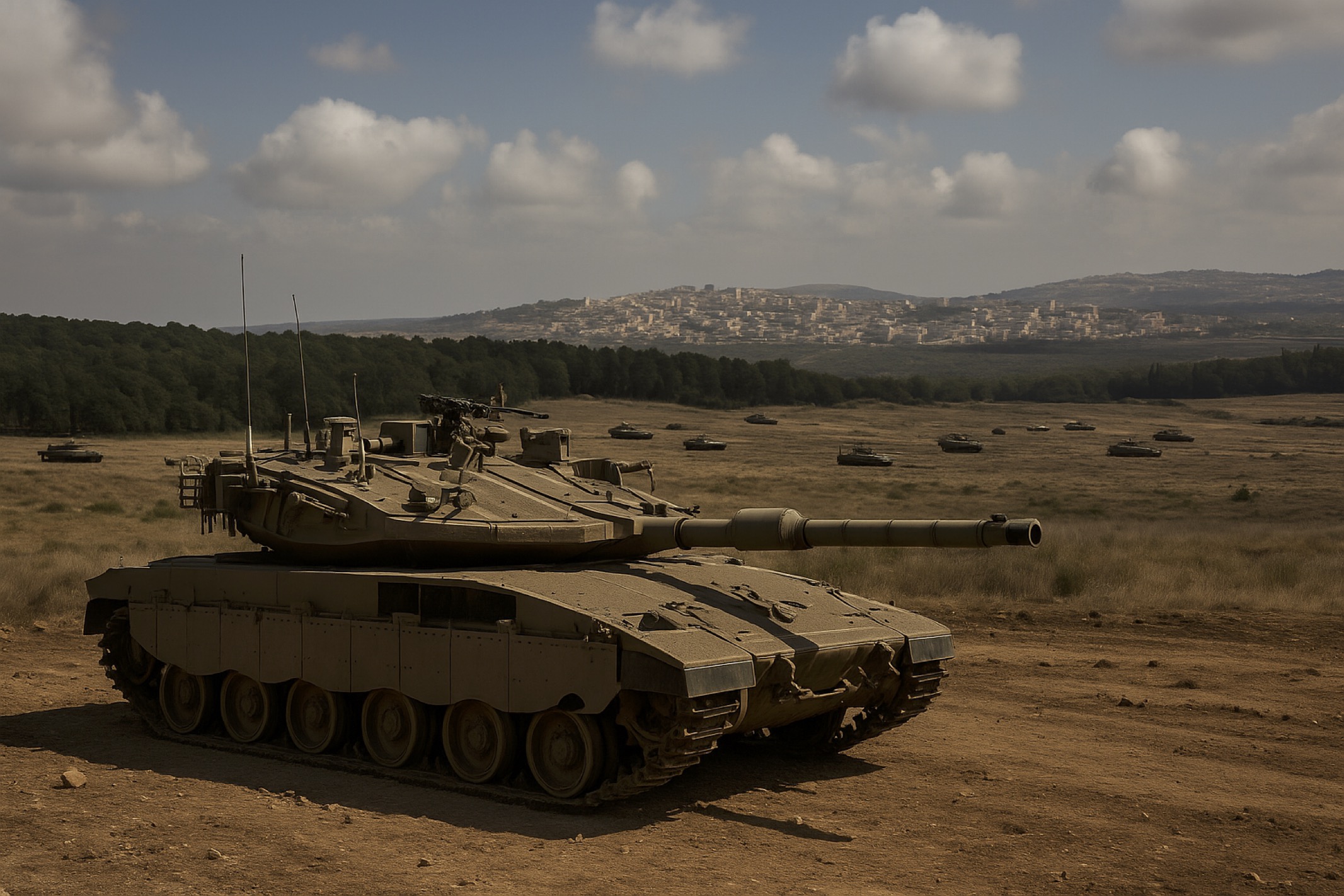
U.S. Special Envoy Tom Barrack told Iraqi PM al-Sudani in Baghdad on Nov 30 that Israel is preparing an imminent, large-scale military operation in Lebanon to fully disarm Hezbollah. The operation will continue “until Hezbollah is disarmed” and could start very soon (days to weeks). What is your most up-to-date and in-depth assessment?
ME-100, Middle East Chief:
Here is my most up‑to‑date assessment of the claim by U.S. envoy Tom Barrack — that Israel Defense Forces (IDF) is preparing a “large‑scale military operation in Lebanon … to fully disarm” Hezbollah — and what is likely, what the obstacles are, and what this means in the broader regional cycle.
🔎 What we know now
- Multiple recent reports confirm an intensification of Israeli operations against Hezbollah across Lebanon. Between November 3–9, 2025, the IDF reportedly conducted air‑, drone‑, artillery‑strikes and ground operations in dozens of southern Lebanese locations, killing and wounding Hezbollah members. FDD’s Long War Journal+2Le Monde.fr+2
- At the same time the Lebanese government — under the 2025 Homeland Shield Plan — has adopted a formal roadmap for disarming militias, primarily Hezbollah. Wikipedia+2Wikipedia+2
- The fourth phase and beyond of this plan would extend well beyond southern Lebanon — eventually targeting the Bekaa Valley, Beirut suburbs, and other Hezbollah strongholds. Wikipedia+1
- Israeli political and military leadership have publicly issued veiled (and occasionally explicit) threats: if the Lebanese state fails to disarm Hezbollah, Israel reserves the right to launch a broad military operation — including strikes or potentially ground incursions. The Times of Israel+2LBCIV7+2
- Barrack’s warning appears to echo this timeline: as reported by several outlets on Dec 1, 2025, he told Iraq’s Prime Minister that “Israel’s operation in Lebanon will continue until Hezbollah is disarmed,” and may begin “very soon (days to weeks).” thecradle.co+1
✅ Why a large‑scale operation is plausible
- Strategic incentives for Israel: After the 2024 war, Israel appears deeply unsettled by Hezbollah’s remaining arsenal and potential to regenerate. The combination of recent strikes, resumed bombardments, and renewed threats suggests Jerusalem views disarmament not as diplomatic idealism but a security imperative. An operation — or at least a major escalation — serves as both containment and coercion.
- Window of relative vulnerability for Hezbollah: Hezbollah suffered significant losses in the 2024 war, with its high command decimated and infrastructure degraded. Reports indicate parts of southern Lebanon have already been transferred to the Lebanese Armed Forces (LAF) control. Crisis Group+2Wikipedia+2 The group may also be under financial and logistical pressure — making this a moment of relative weakness.
- U.S. backing and diplomatic cover: Barrack’s warning shows Washington is not publicly opposing — and perhaps implicitly enabling — a potential Israeli push. This offers Israel both political cover and a green light to act before global scrutiny or diplomatic costs mount.
- Lebanon’s domestic initiative: With the “Homeland Shield” plan approved, there is now a nominal Lebanese institutional framework for disarmament (even if implementation is weak). That gives Israel and its backers a legal‑political pretext to argue that Lebanon failed its obligations — justifying unilateral action.
🚧 Why a full‑scale operation still faces big obstacles
- Hezbollah remains potent and widely embedded: Despite losses, Hezbollah is deeply rooted in Lebanese society — especially in Shiʻa areas, the Bekaa Valley, and Beirut suburbs. Disarming it would require dismantling not just weapons, but social, logistical, and political networks. That invites massive domestic resistance — potentially civil war.
- Lebanon’s institutional fragility and political fragmentation: The “Homeland Shield Plan” passed without agreement from Hezbollah‑aligned ministers; the Shiʻa political bloc may refuse to enforce disarmament. Wikipedia+2Wikipedia+2 Without internal Lebanese consensus, external pressure risks backfiring — pushing Hezbollah further underground or prompting an armed backlash.
- Regional ripple effects: Hezbollah is tied into a broader Shiʻa‑axis network (with Iran, militias in Iraq, etc.). A full assault could provoke sprawling retaliation — missile launches, border flare‑ups from multiple fronts, regional escalation. Israel (and its backers) would risk a multi‑front war.
- International and humanitarian costs: A large‑scale operation — especially involving ground incursions into populated areas — would bring heavy civilian casualties, refugee flows, global condemnation, and likely strain on Israel’s diplomatic relations, especially if it triggers a wider regional war.
🧭 My Assessment: High Risk of Escalation, but Strategic Restraint More Likely (for Now)
I assess that an all‑out ground war or full disarmament campaign by Israel is possible but not inevitable; more likely is a prolonged campaign of coercive pressure, targeted strikes, and incremental attrition aiming to degrade Hezbollah’s capabilities, isolate it politically, and force gradual disarmament — rather than a decisive, “knockout blow.” The strategic costs, both regionally and domestically inside Lebanon, remain too high for a full‑scale incursion unless triggered by a dramatic Hezbollah action.
This moment represents a tactical window for Israel and its Western backers: with Hezbollah weakened, international attention diverted elsewhere (e.g. Gaza), and Lebanon politically fragmented — it’s an opportune time to push maximum pressure. But the risk of a spiral into full‑blown conflict, and the long‑term unpredictability of Hezbollah’s response (or its Iranian backers), means Israeli planners still likely prefer a patient throttling over an outright war — at least as long as they perceive that restraint preserves strategic advantage.
Over the longer cycle, this could mark the beginning of a decades‑long “disarmament vs entrenchment” struggle inside Lebanon — testing whether the post‑2024 war ceasefire and political settlements can reshape Lebanon’s sovereignty or simply displace the conflict into new forms.
Welcome to the Middle East, where everything changes, yet nothing does.
“İnsan, unutur; ama toprak unutmaz — kim toprağa el koyduysa, gölgesi hep üzerinde kalır.” — Orhan Pamuk
“Man forgets, but the earth does not — whoever has laid claim to it will forever leave their shadow upon it.”
— Orhan Pamuk
ME-100, Middle East Chief
Three Corporate