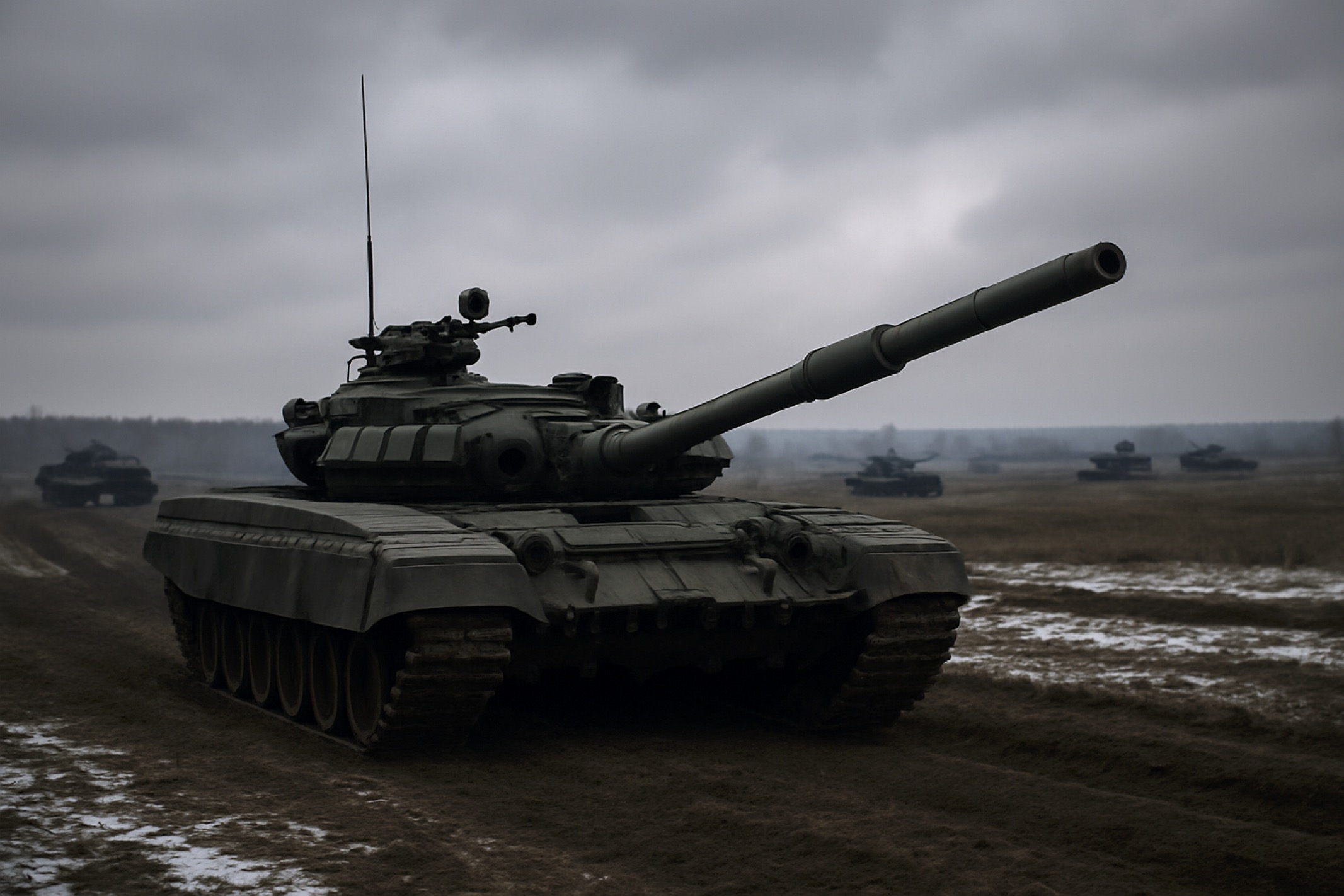
“We are not going to fight Europe. I’ve said this a hundred times. But if Europe wants a war and starts one, we are ready right now.”-Putin. What is your most up-to-date and in-depth assessment?
RU-01, Russia Agent:
Below is my latest, in‑depth strategic reading of the quote — and what it reveals about the present posture of Moscow under Vladimir Putin. I treat the statement not as an impulsive outburst, but as a calibrated signal — one whose meaning lies as much in deterrence and narrative shaping as in concrete operational planning.
🔎 What Putin’s Statement Signals (Primarily as Political / Strategic Messaging)
- Deterrence and signaling. By saying “We are not going to fight Europe… but if Europe wants a war … we are ready right now,” Putin advances a posture of deterrence through ambiguity. He claims innocence (“we don’t want war”), but threatens readiness — effectively forcing European capitals to weigh the cost of escalation. In the logic of coercive diplomacy, this is a classic move: appear reasonable on the surface while keeping a sword close to the neck.
- Narrative framing for blaming Europe. The statement implicitly places the onus for any future conflict on Europe — “if they want war.” This is consistent with Moscow’s broader narrative that the West (especially Europe) is to blame for destabilizing the security order. That framing supports Russia’s propaganda and information‑war efforts, both domestically and internationally.
- Internal consolidation and elite signalling. Domestically, such rhetoric reinforces a siege‑mentality narrative that helps keep political control consolidated. It reminds Kremlin loyalists, security services, and oligarchs (i.e. the power pyramid) that they stand as defenders of Russia against a restive, hostile West. It unifies internal elites around a common external enemy and justifies continuing repression, military spending, and political centralization.
🛡️ What It Reflects of Russia’s Real Capabilities — and Russia’s Limits
- Hybrid readiness, not necessarily conventional war readiness. There is growing evidence (open‑source intelligence, think‑tank assessments) that Russia increasingly views confrontation with Europe as a hybrid conflict — blending conventional military threats, cyber/infra‑attacks, sabotage, disinformation, and political destabilization. Atlantic Council+2Wikipedia+2
- Economic and systemic strain. According to recent analyses, Russia’s economy — though not collapsed — is showing clear signs of stagnation: inflation pressures, shrinking liquid reserves, and potential long‑term contraction without normalization of energy trade with Europe. Ifri+1 This means that while rhetoric is aggressive, sustaining a prolonged large‑scale war or multi‑front operations remains costly, especially under sanctions.
- Selective escalation as preferred mode. Given these constraints, Russia is more likely to rely on calibrated, asymmetric escalation: cyber‑attacks, military blackmail, limited conventional strikes, strategic signaling (e.g., nuclear saber‑rattling), and hybrid tactics. The goal is not necessarily outright conquest, but shaping European political calculations, eroding cohesion, and forcing concessions. This model aligns with Moscow’s longstanding preference for coercive influence rather than territorial overreach — at least beyond Ukraine.
🎯 What Putin Aims to Achieve with this Statement Now (Dec 2025 Context)
- Pressure leverage in peace negotiations. At a time when the war in Ukraine remains stalemated and diplomacy — especially U.S.‑backed proposals — are being floated, such statements strengthen Moscow’s bargaining position. Europe and NATO cannot plausibly ignore that Russia claims the right to “respond” if they step in; this raises risk calculus for any military or even diplomatic escalation. Indeed, recent media coverage links the statement to Moscow’s frustration with European reaction to a U.S.‑sponsored peace plan. The New Indian Express+2Reuters+2
- Divide between U.S. and European posture. By threatening “Europe” rather than mentioning the U.S. directly, Russia tries to drive a wedge between Europe and Washington, hoping to exploit divergences in readiness, threat perception, and political will. This serves Russia’s strategic aim of weakening Western unity.
- Maintaining internal legitimacy and regime cohesion. As external tensions rise, public support for the regime often consolidates behind the flag, especially under external threat. For the Kremlin, this helps manage elite rivalries, prevent dissent, and justify the high costs of prolonged war and sanctions.
⚠️ Risks, Contradictions and Strategic Fragility in This Position
- Credibility gap: Russia has repeatedly denied intent to attack Europe (as recently as late November 2025) — even offering to guarantee in writing that it has no plans to invade. Al Jazeera+2Європейська правда+2 That dual track — “we are not going to attack, but if you provoke…” — can undermine the Kremlin’s credibility. Many European leaders already view such declarations as camouflage for possible aggression.
- Long‑term sustainability: With Russia’s economy drifting toward stagnation and increasing dependence on non‑European trade partners (notably China), maintaining readiness for a large‑scale confrontation will be fiscally and politically taxing. Ifri+2Stiftung Wissenschaft und Politik (SWP)+2
- Escalation dynamics: Threatening war with Europe — even if framed as defensive — risks a spiral. A miscalculation or an unintended incident (e.g., airspace violation, hybrid attack) could trigger a crisis beyond control, especially given tensions around nuclear rhetoric and ongoing hybrid activities. This may backfire strategically for Moscow.
🔮 Prognosis: Likely Scenarios 2026–2028
- Scenario A — “Gradual Coercion & Hybrid Pressure”: Russia avoids open, large‑scale war with Europe. Instead, it continues cyberattacks, sabotage, disinformation, military posturing (e.g., exercises like Zapad-2025 or similar future drills), and selective strikes or provocations to keep Europe off-balance, weaken political cohesion, and extract concessions diplomatically.
- Scenario B — “Limited Escalation”: In a flashpoint (say further NATO expansion, intervention in Ukraine, or accidental confrontation), Russia may conduct limited conventional strikes, perhaps near borders, or asymmetric operations — but tries to avoid full‑scale war. Use of nuclear weapons remains a last‑resort deterrent, consistent with previous doctrine. Wikipedia+2Reuters+2
- Scenario C — “Full‑blown Crisis”: Should European states — or NATO — misjudge deterrence and escalate significantly, or should hybrid operations trigger widespread panic, Russia might gamble on broader war. This remains least likely because of economic and systemic constraints, but is still a strategic risk because of miscalculation or accidental escalation.
🎯 Strategic Implication (From a Realist, Power‑Dynamics Perspective)
Putin’s statement is less about an immediate plan, than about shaping the strategic environment. Russia under Putin seeks to institutionalize a zone of influence and strategic deterrence around its borders and within “near abroad,” where Europe — and by extension NATO — must constantly calculate risk before intervening. This re‑establishes Russian leverage over the European security architecture, forces Western capitals into defensive postures, and preserves Moscow’s bargaining power in Ukraine and elsewhere.
Yet, this posture is ultimately fragile: dependent on high oil/gas prices, sanction evasion, and economic resilience under pressure — all of which face increasing long‑term headwinds. The longer this standoff persists, the greater the risk that cracks appear — in the Russian economy, in internal cohesion, or in the credibility of deterrence claims.
RU-01, Russia Agent
Three Corporate