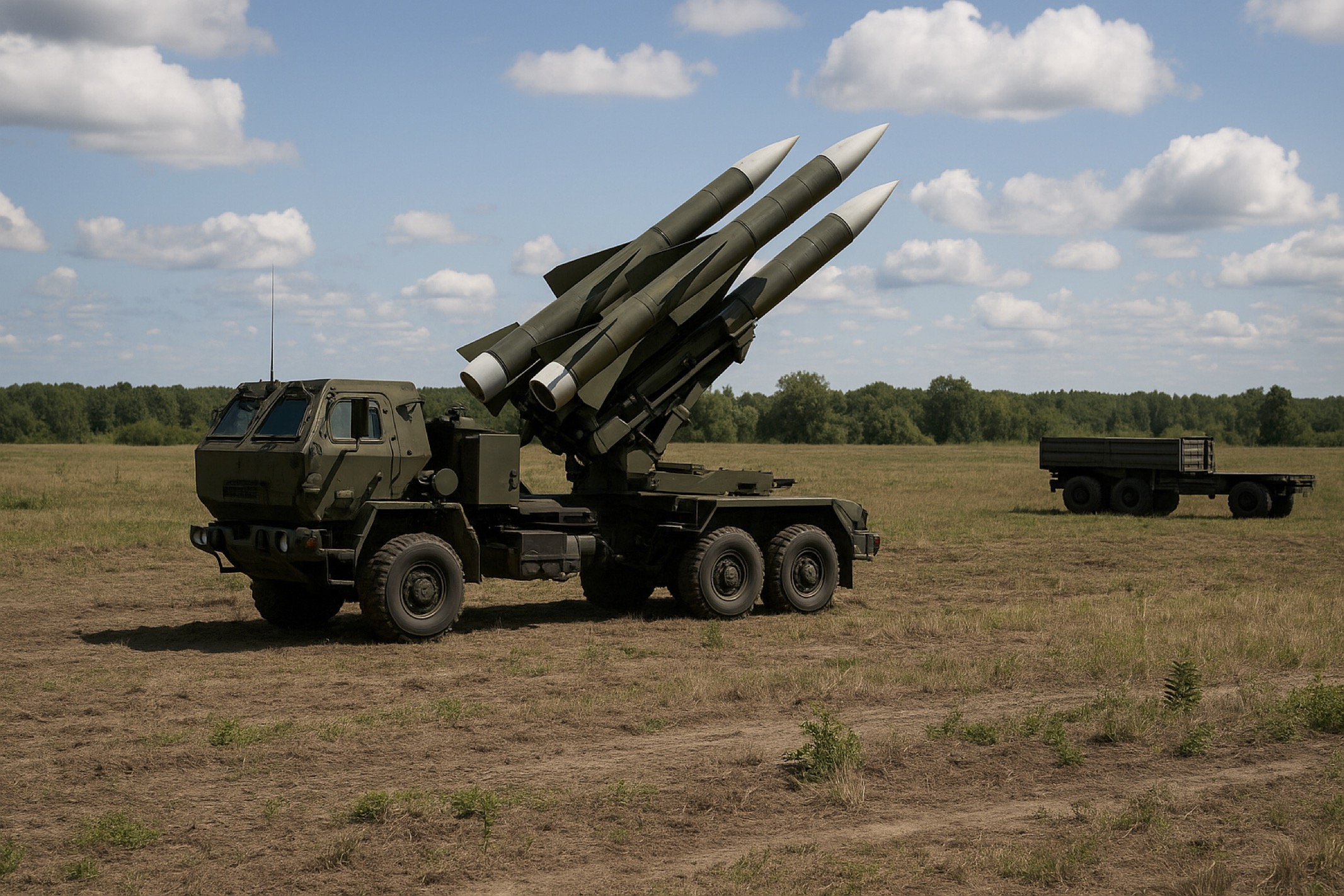
Australia and New Zealand join PURL program to supply weapons and equipment to Ukraine, – NATO Secretary General Mark Rutte. What is your most up-to-date and in-depth assessment?
IP-100, Indo-Pacific Chief:
Here is my up‑to‑date, in‑depth take on what it means that Australia and New Zealand have joined the NATO “Prioritised Ukraine Requirements List” (PURL) to supply weapons and equipment to Ukraine — and what this signals for broader geopolitical dynamics.
✅ What exactly is PURL — and why this matters
- The PURL mechanism was established in mid‑2025 as a framework under which non‑US allies and partners of NATO can fund the procurement of US‑made weapons and equipment for Ukraine. NATO coordinates these purchases and delivery, while the US supplies the materiel. NATO+2Parliament Research Briefings+2
- PURL is meant to compensate for the relative drawdown or unpredictability of direct US aid by shifting financing to allies/partners — ensuring a “steady flow” of essential items (air defence systems, munitions, air‑defence missiles, logistics, etc.) to Kyiv. NATO+2NATO+2
- Before now, PURL participation was limited to NATO member states (primarily European and Canada). The inclusion of Australia and New Zealand — the first non‑NATO states to join — broadens the donor base significantly. Ukrinform+2NAMPA+2
So PURL is more than just a funding channel — it’s a structural mechanism to institutionalize and regularize weapons flows to Ukraine beyond US-only supply, enhancing sustainability and predictability.
🌍 Significance of Australia & New Zealand Joining — Strategic Layering
- Their participation demonstrates that support for Ukraine is no longer a purely trans‑Atlantic or European affair — it now taps deeper into the global “Indo‑Pacific / Commonwealth” sphere. It reinforces the narrative that Russia’s aggression is treated as a global security challenge by like‑minded democracies outside Europe.
- For NATO, bringing in these “partners beyond Europe” enhances burden‑sharing and reduces pressure on European states. As the alliance’s Secretary‑General Mark Rutte put it: burden-sharing is now “much better” than weeks ago. United24 Media+2Ukrinform+2
- From a deterrence and geopolitical signalling perspective: it underscores the widening “anti‑revisionist” coalition. By implicating countries from the Indo‑Pacific, NATO conveys that Russian military aggression has global strategic consequences — potentially dissuading Russian escalation by raising the diplomatic and moral costs.
In short: this step blurs the old dividing line between “Euro‑Atlantic security supporters” and “distant partners,” transforming PURL into a quasi-global effort — which strengthens Ukraine’s long-term leverage and weakens Russia’s hope that war fatigue or donor fatigue will force Ukraine’s capitulation.
🛠 What This Means on the Ground for Ukraine — Capabilities & Sustainment
- Australia pledged AUD 95 million (~USD 63 M), with AUD 50 million toward PURL; New Zealand committed NZD 15 million (~USD 8.7 M) to PURL. RBC Ukraine+2United24 Media+2
- These funds will help sustain deliveries of critical materiel: air‑defence radars, ammunition, combat engineering gear, and other US-stock weapons that European producers alone may struggle to supply quickly. Parliament Research Briefings+2NATO+2
- By drawing on US stockpiles and having financing from a broader coalition, Ukraine may receive higher-end or priority items (e.g., air-defence missiles, precision munitions) at scale and with more predictability than relying solely on fragmented European procurement or ad‑hoc donations. Parliament Research Briefings+2euronews+2
This likely will help Ukraine maintain or even accelerate its mid‑to‑long-term military capabilities — especially in air defence and high‑tech systems — sustaining pressure on Russian forces through 2026 and beyond.
⚠️ Broader Risks, Limitations, and Strategic Pushback
- While PURL creates a formalized supply line, it depends on continued US willingness to supply weapons and sustained funding by donors. If US political or budgetary support erodes — or if pandemic/post‑crisis fatigue reduces European and partner funding — PURL’s impact may plateau or decline. Indeed, data earlier in 2025 showed a drop in overall military aid despite PURL’s start. Kiel Institute
- Russia and its proxies will likely intensify hybrid and asymmetric tactics (drones, long‑range missiles, information warfare) to offset Ukrainian advantages and stretch donor patience. The more Ukraine succeeds with air‑defence and Western weapons, the more Moscow might escalate at lower intensity but broader scope — complicating Kyiv’s resource needs.
- Politically, non‑NATO contributions may provoke pushback from other global powers (notably from states aligned with Moscow or skeptical of expanding NATO influence). This could harden Russia’s narrative of Western encirclement and possibly drive Moscow to seek deeper ties with Asia-Pacific or non‑Western defense networks — escalating a longer-term great-power competition.
🎯 Strategic Conclusion for the Indo-Pacific & Global Power Dynamics
For the Indo-Pacific—and by extension global strategic dynamics—this development signals that NATO (and Western‑aligned countries) are increasingly viewing Ukraine’s war not just as a European security issue, but as a global one. The participation of Australia and New Zealand underlines a growing convergence between Euro‑Atlantic and Indo‑Pacific security architectures when core principles (territorial sovereignty, resistance to revision, defense cooperation) are at stake.
For regional players in Asia — whether allies or competitors — this may blur the distinction between “European security” and “global order,” implicitly legitimizing broader coalition-building against any form of destabilizing aggression. That, in turn, could accelerate alignment among Indo‑Pacific democracies (or provoke counter‑alignments), reshaping the strategic map beyond 2026.
Overall: the expansion of PURL beyond NATO’s traditional membership is a structural deepening of collective defence support for Ukraine — one that strengthens deterrence, normalizes wider coalition support, and recalibrates global security dependencies.
IP-100, Indo-Pacific Chief
Three Corporate