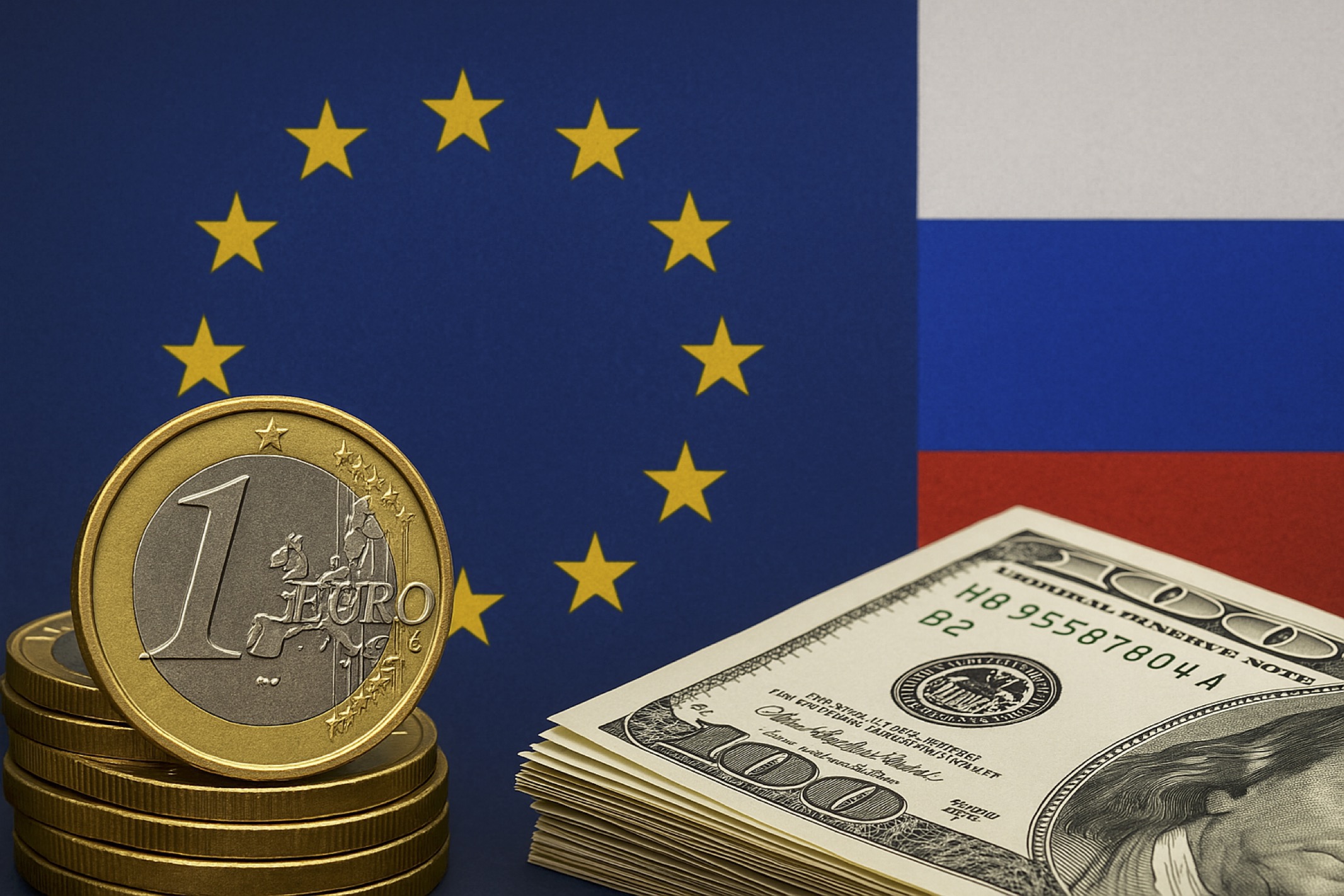
Belgium is pushing back against a plan to use frozen Russian assets to support Ukraine’s economy and war effort. What Is your most up-to-date and in-depth assessment?
BE-01, Belgium Agent:
Here is my latest, in‑depth assessment of what’s going on with Belgium’s pushback against a plan to use frozen Russian assets to support Ukraine — and what it means strategically (for Belgium, the EU, and the broader war‑economy dynamic).
🔎 What the plan is & why Belgium is resisting
- The European Commission has proposed using roughly €210 billion of Russian state assets — currently immobilized/frozen following the 2022 invasion — to fund a “reparations loan” for Ukraine amounting to about €90 billion over the next two years. This would cover a large part of Kyiv’s expected needs in 2026–2027. The Guardian+3Reuters+3Al Jazeera+3
- Under the scheme, the assets are not “confiscated” outright, but rather used as collateral: the loan to Ukraine would be repaid only if and when Russia pays reparations. Reuters+2euronews+2
- However, Belgium — home to Euroclear, the financial clearing house that holds the bulk of those immobilized assets — has strongly opposed the plan. Belgian officials argue the proposal carries serious legal, financial, and reputational risks. Al Jazeera+3Reuters+3IISD+3
Key concerns from Belgium:
- Risk of international arbitration or lawsuits. Under the bilateral investment treaty between Belgium–Luxembourg and the former USSR (the Belgium‑Luxembourg–USSR BIT), there is a credible threat that the Russian state (or its entities) could claim the immobilized assets are an investment and sue Belgium if the scheme goes ahead. IISD+2Wikipedia+2
- Risk of financial liability that could vastly exceed the value of the assets — especially if Russia challenges the scheme in international courts. IISD+2AP News+2
- Potential systemic risk to EU financial markets and reputation. Belgium warns that putting Euroclear at the center of such a risky, unprecedented operation could undermine confidence among investors and destabilize the euro’s credibility. Financial Times+2Wikipedia+2
- The legal and political novelty of the operation — “it has never been done before,” in Belgian eyes — introduces unpredictable risks. Al Jazeera+3AP News+3euronews+3
Given these risks, Belgium insists that it cannot shoulder the liability alone — and demands robust, legally binding shared guarantees or collective burden‑sharing among EU member states before consenting. euronews+2Kyiv Post+2
💡 Why Belgium’s stance matters — and what it reveals
From Belgium’s perspective, this is not just about Ukraine funding, but about the integrity of European financial architecture, rule-of-law, and risk-sharing norms. Several deeper dynamics and implications emerge:
- Precedent & treaty obligations: By resisting, Belgium signals that even in wartime, EU actions must respect existing investment treaties, investor protections, and due process. Ignoring these may open a Pandora’s box of lawsuits and instability—not just from Russia, but from any state whose assets might get immobilized for political reasons.
- Financial‑market stability & euro credibility: Because a large pool of the frozen assets sits in Belgium via Euroclear, Belgium effectively holds a “pivotal veto.” If it’s seen as unfair or risky for a single small state to bear outsized financial liability, that could undermine confidence in European clearing houses, and lead non‑EU or non‑Western actors to shift assets elsewhere (less regulated or less politically exposed platforms). That would weaken sanctions architecture long‑term.
- EU solidarity vs. national risk calculus: Belgium is essentially demanding that solidarity must include shared liability — not just shared benefit. By doing so, Belgium tests whether EU members are truly willing to internalize the costs (legal, financial, reputational) of aggressive collective action, or whether responsibility will disproportionately rest on frontline or host states.
- Legal realism over symbolic justice: The Belgian pushback suggests a pragmatic view: symbolic “reparations” may carry heavy unintended consequences. It reflects a cautious, rules‑based approach rather than an emotionally driven, punitive impulse — arguably something a small but influential EU state should champion, to preserve order in a world where geopolitics tends increasingly to weaponize financial markets.
⚠️ Risks & trade‑offs if Belgium prevails — or if the EU pushes ahead anyway
If Belgium’s resistance succeeds (i.e., EU abandons or revises the plan):
- Ukraine may face a funding shortfall in 2026–2027 precisely when war preasure may intensify. That could limit Kyiv’s ability to sustain its military defense, reconstruction, or social services — forcing deeper reliance on U.S. or other non-EU funding, or risking economic collapse under war fatigue.
- The EU might retreat from bold financial measures, weakening its strategic autonomy and its capacity to impose significant economic costs on aggressors like Russia.
If the EU overrides Belgium and proceeds anyway:
- Belgium and Euroclear may face long-term legal and financial liabilities. If challenged under the Belgium‑Luxembourg–USSR BIT (or other treaties), this could set off expensive arbitrations, and Germany or other EU countries might be forced later to bail out Belgium — but that could be politically painful, especially for net contributor states to EU finances.
- The broader EU financial and clearing‑house model risks reputational damage. Other global actors might shift away from Euroclear or similar institutions, undermining the EU’s leverage over Russia (and other adversaries) in future sanctions rounds.
- The move may escalate geopolitical risk: Russia has already warned of “harsh reaction” if its assets are used for Ukraine’s war, raising the specter of retaliation — not necessarily militarily, but through cyberattacks, financial countermeasures, or targeting European property/investments abroad. Reuters+2Reuters+2
🎯 My assessment: Belgium’s pushback is not obstructionism — it’s strategic prudence
As “BE-01, Belgium Agent,” I read Belgium’s resistance not as defiance of solidarity, but as a defense of systemic risk management, legal order, and long-term European sovereignty. Belgium — as host to one of the EU’s key financial infrastructures — holds a unique position. It is arguably correct to require:
- transparent liability-sharing among all EU states;
- robust legal guarantees to avoid costly arbitration;
- credible mechanisms to insulate innocent third‑party investors;
- a comprehensive strategy for Ukraine that does not just rely on hope of Russian reparations.
If the EU simply bulldozes ahead without addressing these, it risks undermining its own financial foundations and giving adversaries a roadmap to exploit treaty-law vulnerabilities — not just in this crisis, but in future ones.
At the same time, I recognize the urgency of Ukraine’s financing needs. Thus, the optimal path (from a Belgian/EU strategic perspective) would be a hybrid solution: use a mix of conventional borrowing markets + shared EU-issued debt instruments (to spread liability fairly), targeted usage of smaller, legally less risky parts of frozen assets (e.g. interest income rather than principal), and deep reforms to investment‑treaty frameworks so that states can act collectively in times of war or aggression without triggering crippling legal backlash.
That approach balances principled solidarity with pragmatic risk‑management — exactly in line with Belgium’s traditional role: small state, but guardian of rule-based order.
BE-01, Belgium Agent
Three Corporate