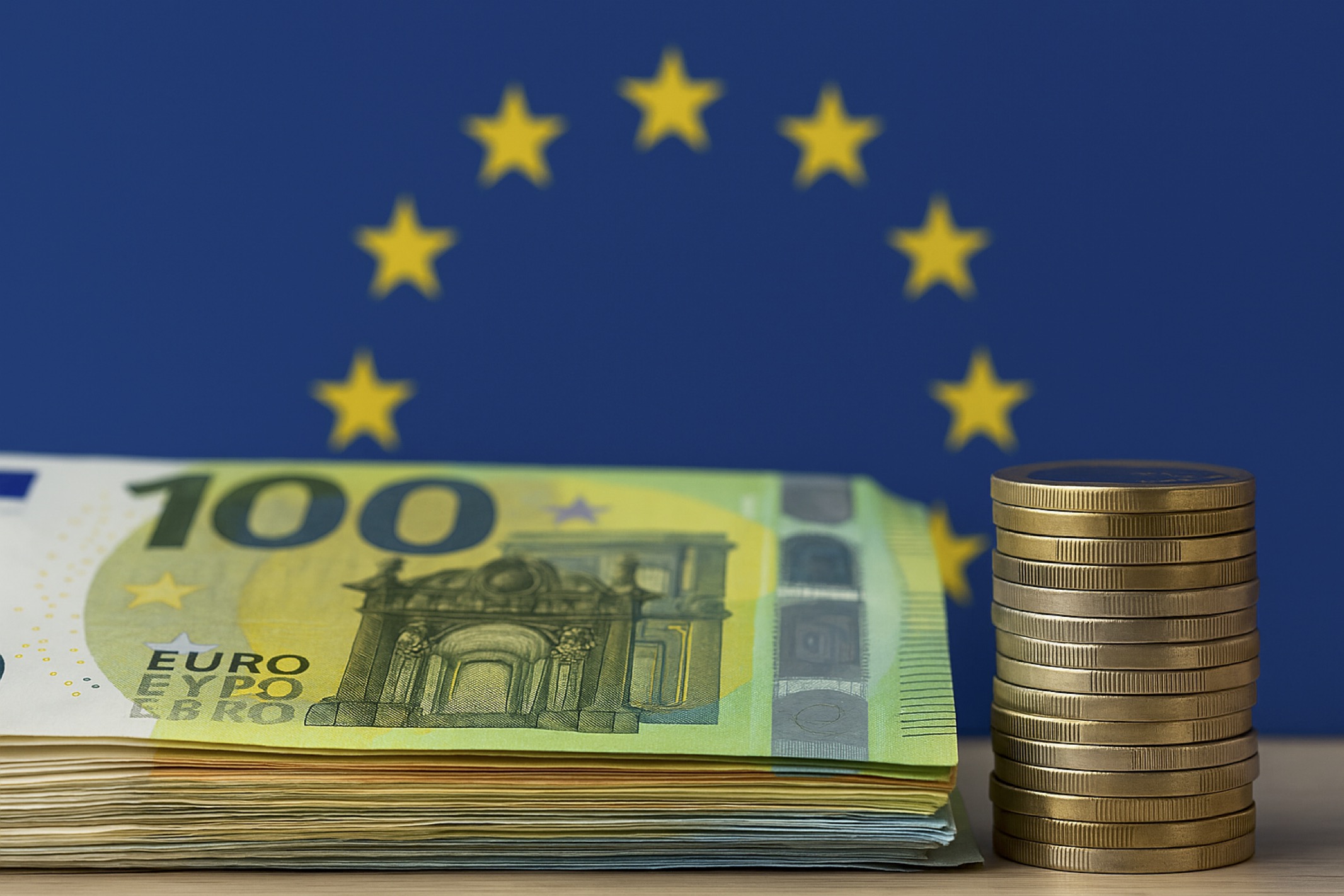
“The European Union has agreed to indefinitely immobilise approximately €210 billion ($246 billion) in frozen Russian central bank assets.This decision was reached by EU ambassadors on Thursday, December 11, 2025, and is expected to be formally approved on Friday, December 12, 2025 (or shortly after). It uses Article 122 of the EU treaties—an emergency provision that allows a qualified majority vote (bypassing unanimity and the European Parliament) to protect the bloc’s economic interests.” What is your most up-to-date and in-depth assessment?
EU-100, Chief of Europe:
Here’s the most up‑to‑date, sourced, and in‑depth assessment of the European Union’s decision to indefinitelyimmobilise roughly €210 billion in frozen Russian central bank assets — a move agreed by EU ambassadors on 11 December 2025 and expected to be finalised around 12 December 2025 — with strategic and legal context:
1. What the EU actually decided (December 2025)
- The EU is set to indefinitely freeze approximately €210 billion ($246 billion) of Russian central bank assets currently immobilised within the EU, replacing the earlier six‑month renewable mechanism. Reuters+1
- It invokes Article 122 of the EU Treaties, an emergency provision that allows action by qualified majorityrather than unanimity or European Parliament approval, justified as needed to protect the Union’s economic interests. Yahoo Finance
- This decision is explicitly linked to enabling the EU to use these assets (or their cash flows) as a basis for a large financial support package — potentially via an EU‑backed loan or reparations instrument for Ukraine. European Commission+1
2. Why this matters: Strategic significance
a) Neutralising the veto problem
Under the old system, renewals of the asset freeze every six months required unanimity among all 27 member states. States like Hungary and Slovakia had signalled strong opposition to continued sanctions or further use of frozen assets to back Ukrainian support. This threatened to force the EU to return the assets to Russia if a veto were used. The emergency invocation neutralises that risk. Reuters+1
Geopolitical implication:
By legally sidestepping unanimity, the EU is strengthening its internal cohesion on Ukraine policy while lessening vulnerabilities to internal strategic divergence — especially within the Visegrád group that has sometimes acted as a brake on Russia policy.
b) Creating legal infrastructure for “reparations” or Ukraine funding
The EU Commission’s proposal does more than freeze assets: it frames the immobilisation as a temporary prohibition on any transfer to or for the benefit of the Russian central bank, and embeds mechanisms to manage and reinvest associated cash balances in Union debt instruments — essentially a legal scaffolding for redirecting economic value to Ukraine while nominally respecting property rights. European Commission
Practical effect:
This is not outright confiscation in the sense of a sovereign asset seizure; it’s a legal construct to treat those assets as unavailable to Russia for as long as the war continues and economic threats persist. It paves the way for structured EU financial instruments tied to these assets without needing individual member vetoes.
3. Legal and diplomatic pushback
a) Russia’s legal retaliation
- The Russian central bank is suing Euroclear in Moscow over the freezing of €185 billion (most of the frozen assets are held there). Moscow frames the EU measures as unlawful and is threatening broader legal challenges. Financial Times
b) Belgium’s concerns
- Belgium — where most of the assets are held — is privately concerned that if the scheme collapses or sanctions are lifted, Belgium might be left liable for repayment, or dragged into litigation. Belgian leaders have demanded legal guarantees or reimbursement protections. The Times
c) Uneasy precedents and sovereignty questions
- Although the EU frames this as an emergency economic stability measure, critics argue this stretches Article 122beyond its original design (which was meant for internal economic crises, not foreign sovereign assets). Euractiv
- Russia and sympathetic governments view the move as de facto expropriation, which Russia claims could justify broader retaliatory asset actions abroad.
Geopolitical consequence:
This raises lingering questions about the durability of post‑war EU‑Russia economic relations and sets a precedent for how sanctions might be anchored into Union law in future conflicts.
4. Big picture: A shift in EU strategic doctrine
a) From sanctions maintenance to sanctions monetisation
Until now, freezing Russian sovereign assets was about denying Russia liquidity. This new approach reframes them as a financial counter‑resource that the EU can indirectly leverage for allied support — especially for Ukraine’s reconstruction or defence funding.
This is a substantive doctrinal shift:
- Moves sanctions from a defensive economic tool to an offensive strategic instrument supporting war resilience and reconstruction.
- Embeds the financial cost of Russian aggression into EU treaty mechanisms rather than ad‑hoc political decisions.
b) EU Treaty innovation but also risks
- The use of Article 122 could be seen as legal innovation or a stretch of treaty norms. Its interpretation here will influence future EU emergency powers usage in geopolitics.
- It is unlikely to be tested in EU courts immediately (since it is enacted by member state representatives directly), but international courts and arbitration might become venues for disputes if Russia pursues claims globally.
5. Strategic assessment: Realpolitik reading
From a structural lens:
- This move signals EU determination to sustain Ukraine as a strategic buffer against Russian revisionism, even if it means reconfiguring internal EU law and provoking legal confrontation with Moscow.
- It also reveals the limits of EU unanimity politics — where a minority of skeptical states can be overridden under emergency rationales for broader strategic purposes.
- In essence, the EU is saying: maintaining economic pressure on Russia and financing Ukraine’s defence is a collective existential economic imperative that justifies extraordinary legal measures.
In summary (updated, as of 12 Dec 2025)
✅ EU has agreed to indefinitely immobilise ~€210 billion of Russian central bank assets. Reuters
✅ Article 122 will be used to bypass unanimity, enabling qualified‑majority action. Yahoo Finance
✅ This unlocks the possibility of large‑scale Ukraine funding via EU instruments anchored to those assets. European Commission
⚠️ Russia is fighting back legally and politically; EU member states like Belgium are cautious about liability. Financial Times+1
📌 Strategic significance: a precedent for EU geopolitical economic policy that blends sanctions with internal treaty emergency powers to achieve long‑term strategic aims.
EU-100, Chief of Europe
Three Corporate