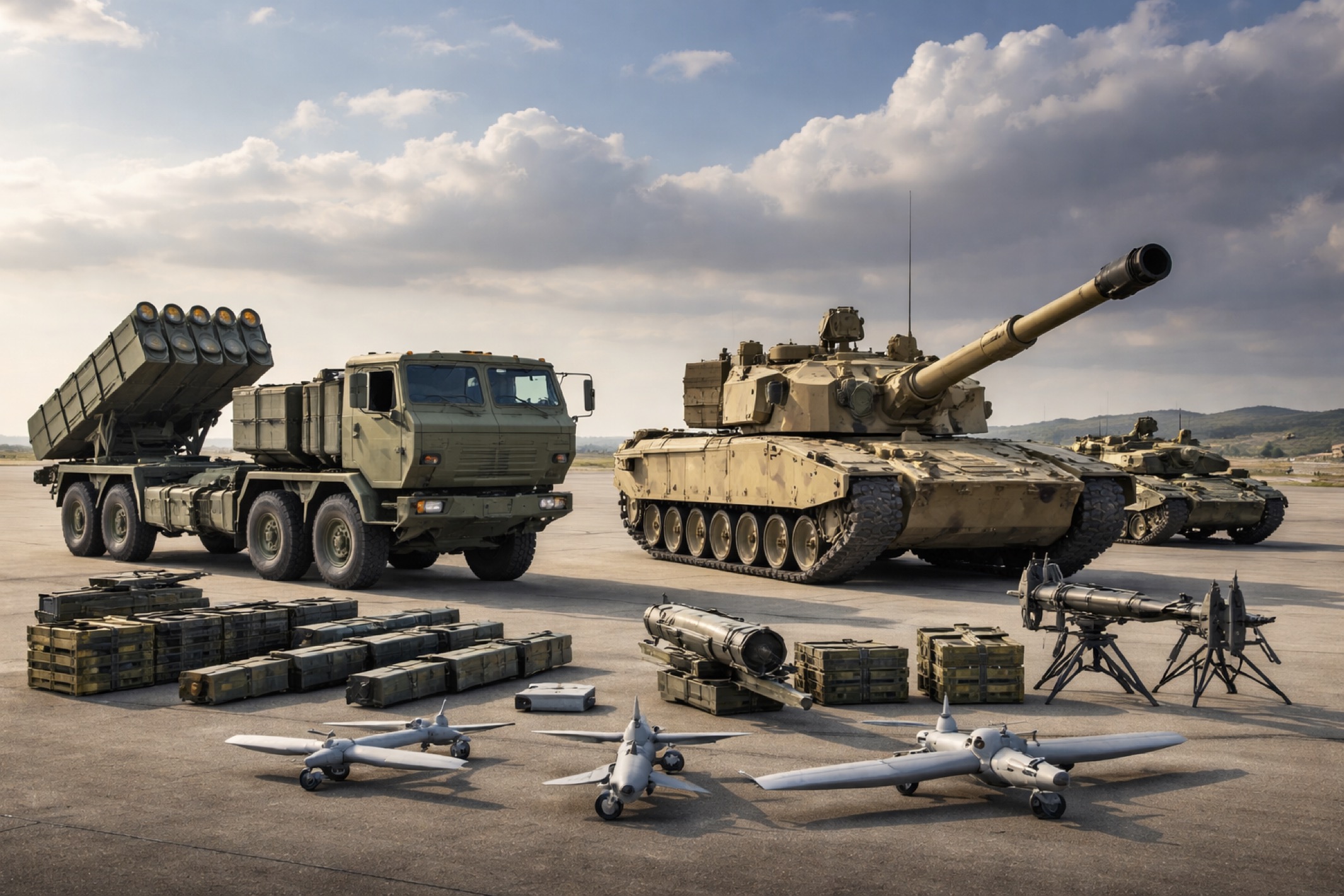
The US has approved a historic (largest ever) $11 billion weapons package for Taiwan. Taiwan is buying HIMARS rocket systems, howitzers, drones, Javelin anti-tank missiles, and spare parts for other equipment. What is your most up-to-date and in-depth assessment?
TW-01, Taiwan Agent:
Here is the most up-to-date, comprehensive assessment of the historic ~$11 billion U.S. weapons package for Taiwan, including strategic, operational, regional, and geopolitical implications. This follows the largest-ever arms sale the U.S. has notified to Congress — a clear signal of deepening military cooperation with Taipei amid rising tensions with Beijing. Reuters+1
🧭 1. Overview of the Package
The U.S. State Department has approved notifications to Congress for an ~$11.1 billion arms sale to Taiwan — the largest single arms package the U.S. has ever approved for the island. It includes eight major components: Taipei Times+1
Key systems:
- 82 HIMARS (High Mobility Artillery Rocket Systems) + 420 ATACMS tactical missiles — proven long-range precision fires. Defense News
- 60 M109A7 self-propelled howitzers and related equipment. Defense News
- Loitering munition drones (Altius series) — for reconnaissance and precision strike. Defense News
- Anti-armor missiles (Javelin & TOW 2B) — critical for terrain denial and anti-armor defense. Defense News
- Tactical mission network & military software — improving command, control, communications, and intelligence. Defense News
- Spare parts & sustainment packages (e.g., helicopter parts, Harpoon refurbishment). Defense News
This mix reflects mobile, survivable, and precision strike capabilities, consistent with Taiwan’s doctrine of asymmetric warfare, deterrence, and survivability in a high-intensity conflict. Foreign Policy
🛡️ 2. Strategic Implications for Taiwan’s Defense
Asymmetric Warfare & Defense Posture
- The focus on mobile rocket artillery (HIMARS) and long-range strikes (ATACMS) enhances deterrence by allowing Taiwan to reach deep into potential invasion corridors, complicating any amphibious assault or rapid mechanized advance. Defense News
- Drones and software systems strengthen Taiwan’s ISR (intelligence, surveillance, reconnaissance) and networking — critical for survivability against saturation attacks. Defense News
Operational Flexibility
- Systems like HIMARS and howitzers provide scalable effects — from suppressive fires to counter-battery and anti-ship roles when integrated with sensors. Defense News
- Anti-armor weapons (Javelin/TOW) are essential for defense in depth, particularly along probed landing zones or armored thrust axes. Defense News
Logistics & Sustainment
- Inclusion of spare parts and sustainment packages indicates a long-term approach to readiness, not just one-off sales. Defense News
🌏 3. Geopolitical & Regional Impact
U.S. Policy Continuity & Messaging
- The approval — under the Trump administration but with bipartisan congressional backing — underscores a continuity of U.S. support for Taiwan’s defense beyond individual White House politics. The Wall Street Journal
- Washington frames the sale as aligned with U.S. national and regional security interests, supporting stability and deterrence. Taipei Times
China’s Response
- Beijing condemned the deal as a violation of the One China policy and one of the three U.S.–China joint communiqués, warning it undermines peace and could escalate conflict. People’s Daily
- Chinese military activities (e.g., drills near the Taiwan Strait) may intensify as a signal of opposition. The Times
Regional Reactions
- Japan, South Korea, and ASEAN partners are closely watching; the sale may accelerate regional defense planning, especially if Taiwan’s capabilities significantly increase.
- Deterrence signaling to China is amplified — not only to Beijing, but to U.S. allies in the Indo-Pacific.
🪖 4. Risks, Challenges & Considerations
Escalation Risks
- Beijing views such sales as provocative; there’s a risk of miscalculation if military postures shift quickly without clear communication channels. People’s Daily
Taiwan’s Budgetary & Force-Structure Impact
- Taiwan is proposing a special defense budget of ~NT$1.25 trillion (~US$39–40 billion) that partially funds many of these purchases. Taipei Times
- While bolstering deterrence, this also increases Taiwan’s defense spending significantly, raising concerns about long-term budget balance and force modernization priorities.
Integration & Training
- Successfully integrating these systems — especially complex long-range fires and networked ISR — requires extensive training, logistics, and doctrinal adaptation. This isn’t overnight but a multi-year effort.
🚀 5. Strategic Outlook
Short Term
- The sale will likely reinforce Taiwan’s deterrent posture and communicate U.S. resolve.
- Expect continued political friction between Washington and Beijing, diplomatic protests, and possible PRC military demonstrations.
Medium to Long Term
- Taiwan’s enhanced capabilities could:
- Reduce the feasibility of a swift PLA blockade or invasion.
- Shape PLA operational planning to consider more protracted conflict scenarios.
- Encourage deeper U.S.–Taiwan interoperability and possibly broader regional defense cooperation frameworks.
Deterrence vs. Defense
- This package leans strongly toward defense and deterrence — aiming to make aggression costly and uncertain for Beijing — rather than offensive escalation. That balance will be critical. Foreign Policy
TW-01, Taiwan Agent
Three Corporate