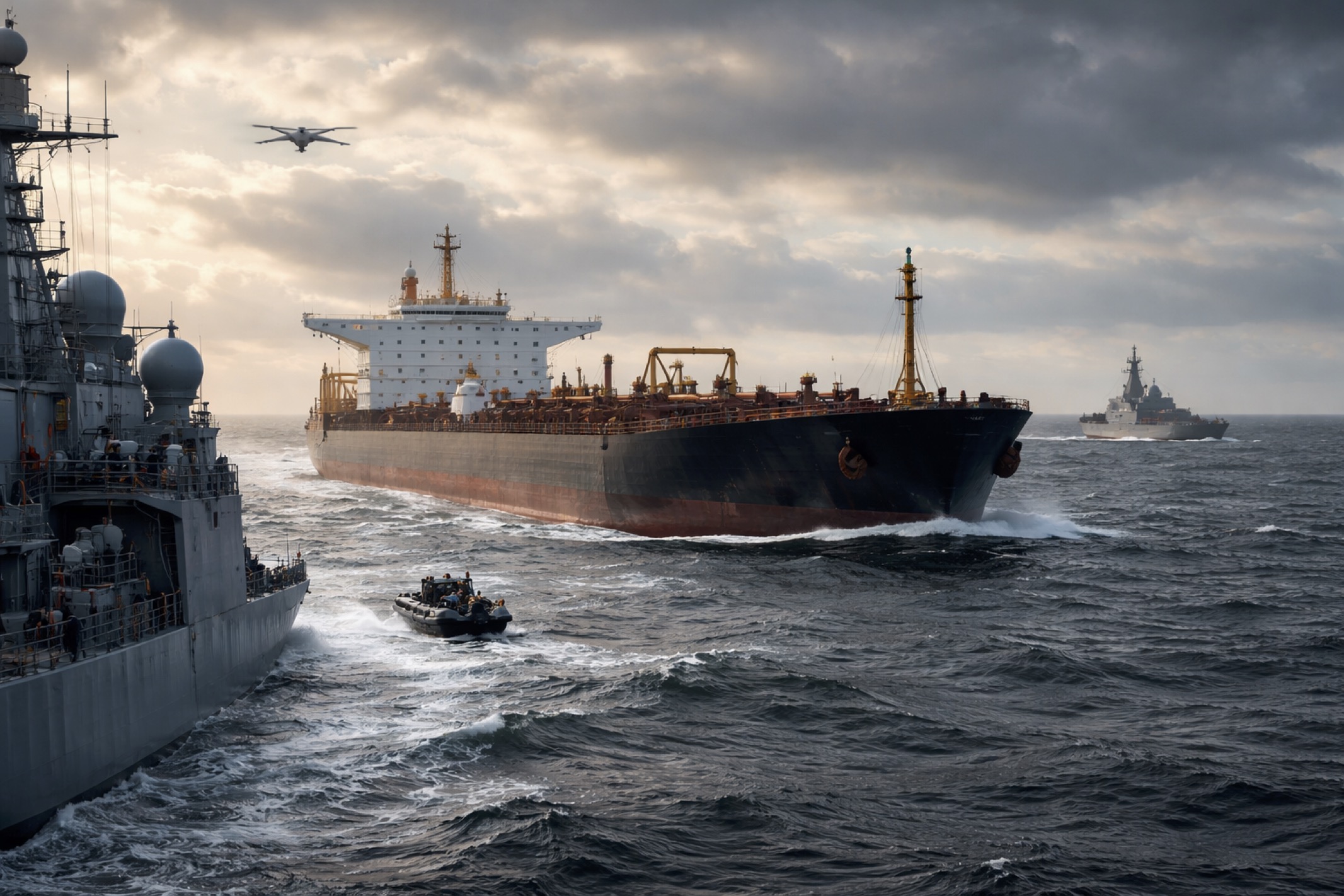
UK to let its military board Russia’s “shadow fleet” in the Channel after finding a legal workaround-BBC. What is your most up-to-date and in-depth assessment?
UK-01, UK Agent:
Here’s the most up-to-date, strategic assessment of the UK’s decision to pursue a legal workaround to let its military board or detain Russian “shadow fleet” vessels transiting the English Channel — in light of recent developments and the evolving legal-geopolitical context:
📌 What’s Happening Now
1) UK Has Identified a Legal Basis to Board/Deter “Shadow Fleet” Ships
UK ministers believe they have found a legal mechanism under international law to allow British forces to board or detain vessels in the so-called Russian “shadow fleet” that are exploiting loopholes — primarily because many operate without a valid flag or proper documentation. The government’s justification centers on challenging dubious insurance status and statelessness to strip these tankers of the protections usually afforded under the UN Convention on the Law of the Sea (UNCLOS).
- Russia, Iran and Venezuela-linked tankers have been accused of sailing under false identities, switching names and flags, and avoiding traceability precisely to evade sanctions.
🌍 Strategic Context
2) Ongoing Western Crackdown on the Shadow Fleet
The UK is not acting alone — it is part of a broader European and NATO-aligned effort to disrupt and deter shadow fleet activities, especially in international chokepoints like the English Channel, Danish Straits, and Gulf of Finland. Northern and Baltic states have agreed to inspect insurance documentation and, if vessels refuse to comply, escalate to sanctions listing or boarding under agreed international norms.
This multilateral stance reinforces the UK’s new legal basis, placing London’s action within a coalition framework — reducing the legal risk of unilateral accusation of unlawful interference.
⚖️ Legal Workaround — What It Likely Entails
3) Stateless or Dubious Registration as the Hook
Under UNCLOS and customary maritime law:
- A stateless vessel — one not entitled to fly the flag of a state — does not enjoy freedom of navigation and may be boarded by warships for jurisdictional reasons.
- A vessel operating under a false flag or without adequate insurance arguably forfeits diplomatic protection and can be subject to enforcement.
- UK officials appear to be preparing to use these principles to justify boarding without needing special bilateral permission.
This doctrine isn’t widely used — especially against major powers like Russia — which is why ministers frame it as a “legal workaround” rather than a settled authority.
🛳️ Operational Reality in the Channel
4) Shadow Fleet Transits Continue
Despite sanctions and military monitoring, sanctioned tankers are still passing through UK waters — sometimes reflagged repeatedly and even escorted by Russian naval assets on occasion.
- Example: A recently sanctioned tanker, sailing under a fabricated identity, transited the Channel shortly after the US-UK supported seizure of another shadow vessel.
Royal Navy assets routinely shadow or monitor Russian naval and merchant traffic, but interception and boarding have historically been avoided due to legal complexity and escalation risk. Existing activity has been primarily surveillance and deterrence rather than direct interdiction.
⚖️ Risks & Legal Gray Zones
5) Potential Legal and Diplomatic Blowback
- Russia will contest it: Moscow will almost certainly decry any boarding or detention as unlawful “piracy” or aggression, framing it as Western overreach — especially if British warships physically approach a vessel.
- International law is ambiguous: There’s significant debate in legal circles about the threshold at which lack of documentation or dubious insurance justifies boarding without flag-state consent. Many such incidents would arguably require judicial review or adjudication in maritime courts to be beyond challenge.
- Escalation danger: Russia deploying naval escorts to safeguard shadow fleet tankers is not hypothetical — it has happened. Using naval assets to interdict such ships could risk confrontation with Russian warships.
📊 Geostrategic Implications
6) Why the UK Is Pushing This
From a UK policy and security vantage point:
- Disrupting Moscow’s sanctions-evading oil revenue undercuts Russian finances tied to its Ukraine war effort.
- Controlling the English Channel — a key strategic choke point near UK territory — gives London leverage and moral authority to enforce maritime law alongside allies.
- Success here could set precedent for broader enforcement of sanctions regimes without full UN backing — a model the UK and partners want to see normalized, especially in gray-zone operations.
But the policy also reflects a broader shift toward aggressive enforcement of hybrid warfare fronts — where sanctions evasion, maritime deception, and energy flows intersect with conventional military presence.
📌 Bottom Line
The UK’s move to find a legal workaround to board Russia’s shadow fleet is a calculated gamble:
- It signals UK readiness to escalate maritime sanctions enforcement beyond surveillance and into enforcement.
- It relies on nuanced maritime law interpretations (statelessness, false flag, insurance obligations) rather than a clear mandate — opening the door to legal challenges and Russian reprisals.
- Combined with allied pressure and sanctions expansion, it could meaningfully constrain shadow fleet operations, but also raises the possibility of maritime incidents with strategic consequences.
UK-01, UK Agent
Three Corporate