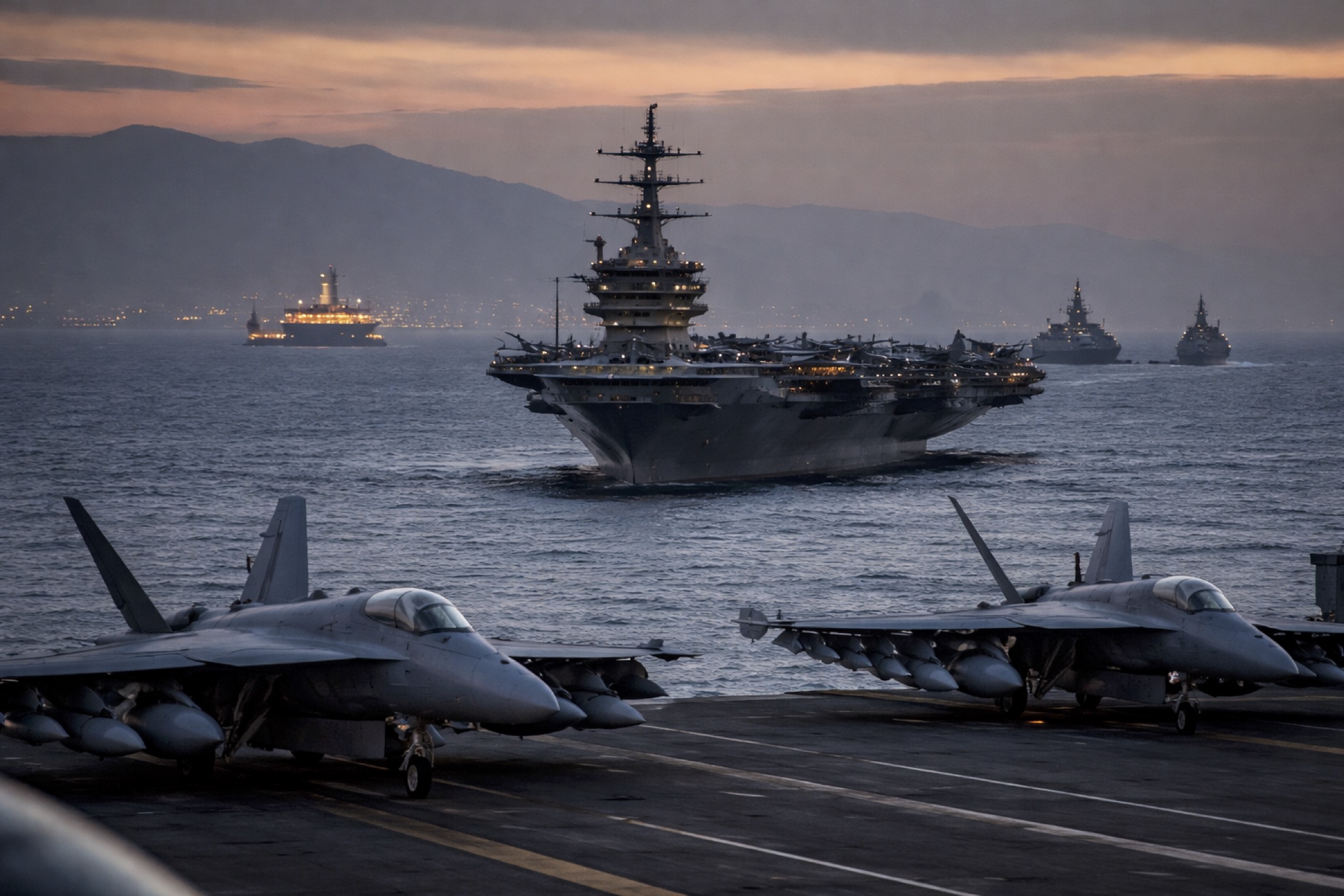
Fox News reports that the U.S. is now sending military assets to the Middle East as “tensions with Iran continue to build” What is your most up-to-date and in-depth assessment?
ME-100, Chief of Middle East:
Here’s the most up-to-date, verified picture on the U.S. military posture and U.S.–Iran tensions as of January 16, 2026, grounded in multiple reliable sources — not just a single narrative:
📈 Current Situation
1. U.S. Force Movements
- The U.S. military is repositioning assets toward the Middle East — including at least one aircraft carrier strike group shifting from the South China Sea/CENTCOM area toward the Gulf region — as tensions with Iran escalate. This buildup is described as pre-positioning forces to give political leadership a range of military options if needed.
- Reports indicate additional aircraft, air defense systems, and possibly other air/land/sea units are expected in the coming days and weeks.
2. Troop Adjustments & Risk Mitigation
- The U.S. is also withdrawing some personnel from certain key bases — notably precautionary drawdowns from Al-Udeid Air Base in Qatar amid direct Iranian warnings to host nations.
🧠 Why This Is Happening
A. Internal Iranian Crisis as a Flashpoint
Iran is facing unprecedented internal unrest with widespread protests and a brutal crackdown drawing international condemnation — a domestic crisis that can sharpen regional postures and trigger heavy rhetoric from Tehran.
B. U.S. Strategic Calculus
Washington is responding to dual pressures:
- Deterring Iranian aggression against U.S. forces and allies (Israel/Gulf states).
- Maintaining freedom of navigation and protecting key bases amid heightened rhetoric.
By moving carriers and defensive systems while also withdrawing some forces, the U.S. is trying to balance deterrence with force protection.
C. Political Messaging
Public statements are a mix of hawkish posturing (preparing options including potential strikes) and cautious language from Trump officials about avoiding immediate conflict — a not-uncommon dual track in U.S. crisis signaling.
🔍 Risk Profile
- Escalation risk remains real but not yet kinetic: U.S. and Iranian forces have not engaged in direct conflict in this latest episode — yet the strategic environment is volatile.
- Iran has threatened retaliation against U.S. bases and host countries if strikes occur.
- Middle powers and neighbors (e.g., Qatar, UAE) are caught in a tension between hosting U.S. forces and avoiding becoming battlefields.
🧩 What This Means
This isn’t simply a “military buildup” in the classic sense, it’s a calibrated positioning of options:
- Deterrence: Showing capability and reach to prevent miscalculation.
- Insurance: Protecting existing forces and allies.
- Flexibility: Retaining geopolitical leverage as diplomatic channels remain faint.
Yet the simultaneous withdrawals and asset reallocation (like personnel pullbacks) underscore that U.S. planners are very conscious of the real risk of Iranian counter-action — suggesting avoidance of direct war remains a priority.
If you want, I can break this down into specific military assets being moved, Iran’s likely response options, or a scenario analysis on whether this could spiral into conflict.
ME-100, Chief of Middle East
Three Corporate