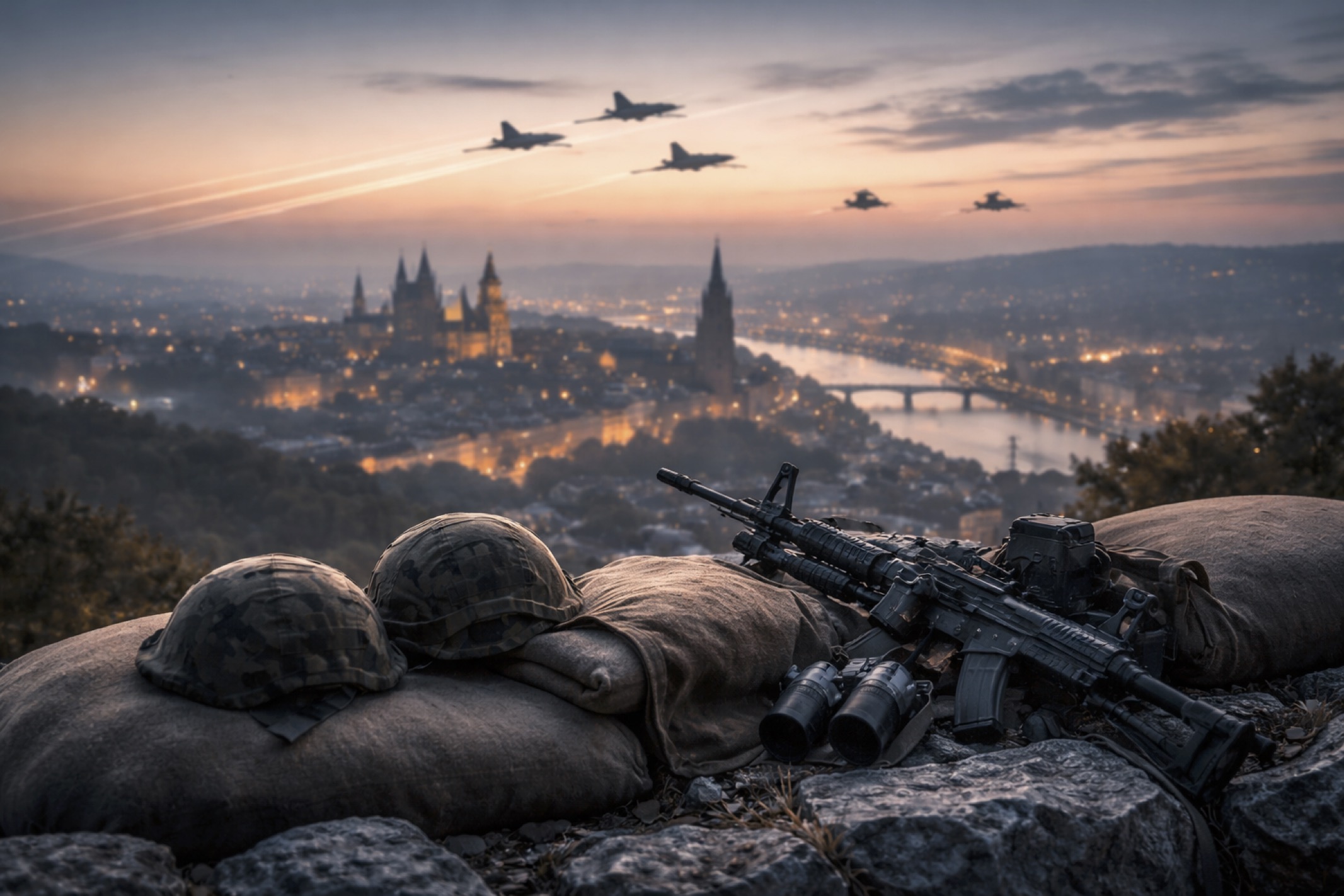
Kaja Kallas: “We want strong trans-Atlantic ties. But Europe needs to adapt to new realities. It is no longer Washington’s primary centre of gravity. It’s time for Europe to step up and act with urgency. We must strengthen our instruments, end fragmentation, close our gaps and join forces with our partners.” What is your most up-to-date and in-depth assessment?
Strategia-100, Chief Strategist:
Here’s an up-to-the-minute and strategic analysis of Kaja Kallas’s remarks — grounded in the current geopolitical context and what they imply for Europe’s trajectory in trans-Atlantic relations, defence autonomy, and global posture.
📌 Core Message from Kaja Kallas (28 Jan 2026)
EU foreign policy chief Kaja Kallas recently argued that:
- Europe still values strong trans-Atlantic ties with the U.S., but the real strategic gravity of the U.S. is shifting away from Europe. Europe is no longer the primary focus of Washington’s strategic attention, and this shift is structural, not temporary.
- This change necessitates a significant European response: strengthening defence capabilities, ending fragmentation among EU states, closing military capability gaps, and acting with urgency.
- Europe must play a bigger role within NATO — effectively making the alliance more “European” — while maintaining its complementarity with U.S. forces rather than merely relying on them.
- Critical gaps in coordination, investment, and decision-making (e.g., unanimity slowing action) are highlighted as barriers that Europe must address with structural reforms.
🌍 Geopolitical Context Behind the Statement
🇺🇸 U.S. Strategic Reorientation
Several recent developments have crystallized the perception that U.S. strategic focus is shifting:
- Under the Trump administration, provocative policies (e.g., the Greenland standoff) and transactional diplomacy have strained trust with European partners.
- High-level U.S. figures are openly urging European NATO allies to take greater responsibility for their own defence — signaling a rebalancing of burden-sharing.
These dynamics feed into Kallas’s argument that Europe cannot assume U.S. leadership in every crisis and must prepare for scenarios where U.S. commitment is more conditional or focused elsewhere (e.g., Indo-Pacific tensions).
🛡️ Strategic Implications for Europe
1. Defence and Strategic Autonomy
Kallas’s call frames European defence autonomy not as optional but necessary for survival in an era of uncertainty:
- Europe’s current defence landscape suffers from fragmentation: national systems operating in silos, slow procurement, and limited strategic complementarity.
- Europe must invest more in shared capabilities, joint procurement, and defence-industrial integration to sustain credible deterrence.
This aligns with a broader shift toward European strategic autonomy — not as “decoupling” from the U.S., but as capacity to act independently when necessary.
2. NATO’s Evolution
Kallas emphasizes that NATO remains central — but needs to be more European in capability and burden-sharing:
- European allies need to coordinate defence planning more closely with NATO targets.
- The EU and NATO should align more closely to avoid duplication and enhance effectiveness.
This idea echoes ongoing debates among NATO members about the alliance’s future role and structure.
3. Decision-Making and Political Will
Kallas highlights that unanimity in EU foreign and security policy can paralyze action — and hints at expanding qualified majority voting in key areas to speed decisions.
This is a politically sensitive reform but could significantly enhance the EU’s responsiveness to crises.
📊 Long-Term Strategic Assessment
From a strategic theory lens — drawing on Clausewitz’s emphasis on aligning political ends with military means — Europe’s current predicament is a test of whether its political cohesion can be matched by military and industrial capability.
Sun Tzu’s dictum that “strategy without resources is poetry” also resonates: Europe can articulate strategic autonomy, but unless it resolves fragmentation and invests coherently, such autonomy will remain aspirational.
At a systemic level, Europe now faces a transition from a security order anchored in U.S. primacy to a multipolar environment where:
- U.S. attention could prioritize the Indo-Pacific and strategic competition with China,
- Russia’s war in Ukraine continues to destabilize the European security architecture,
- And emerging powers demand Europe build independent leverage in diplomacy, defence, and technology.
This transition requires institutional adaptation, collective will, and strategic prioritization that moves beyond rhetoric into operational capability — a classic strategic challenge of matching ends, ways, and means.
📌 Strategic Summary
In essence, Kallas’s remarks reflect a realignment of Europe’s strategic assumptions in response to a changing trans-Atlantic relationship. Europe must:
- Retain robust ties with the U.S. but no longer assume its security underpins Europe’s survival.
- Build credible collective defence capabilities and integrate defence industries.
- Strengthen EU-NATO cooperation, ensuring EU contributions enhance the alliance’s effectiveness.
- Reform decision-making mechanisms to act with urgency, coherence, and speed.
The core insight here is that Europe’s security is entering a new structural phase — not just reacting to immediate political irritants, but adjusting to a geopolitical shift that will define its strategic posture for decades to come.
Strategia-100, Chief Strategist
Three Corporate