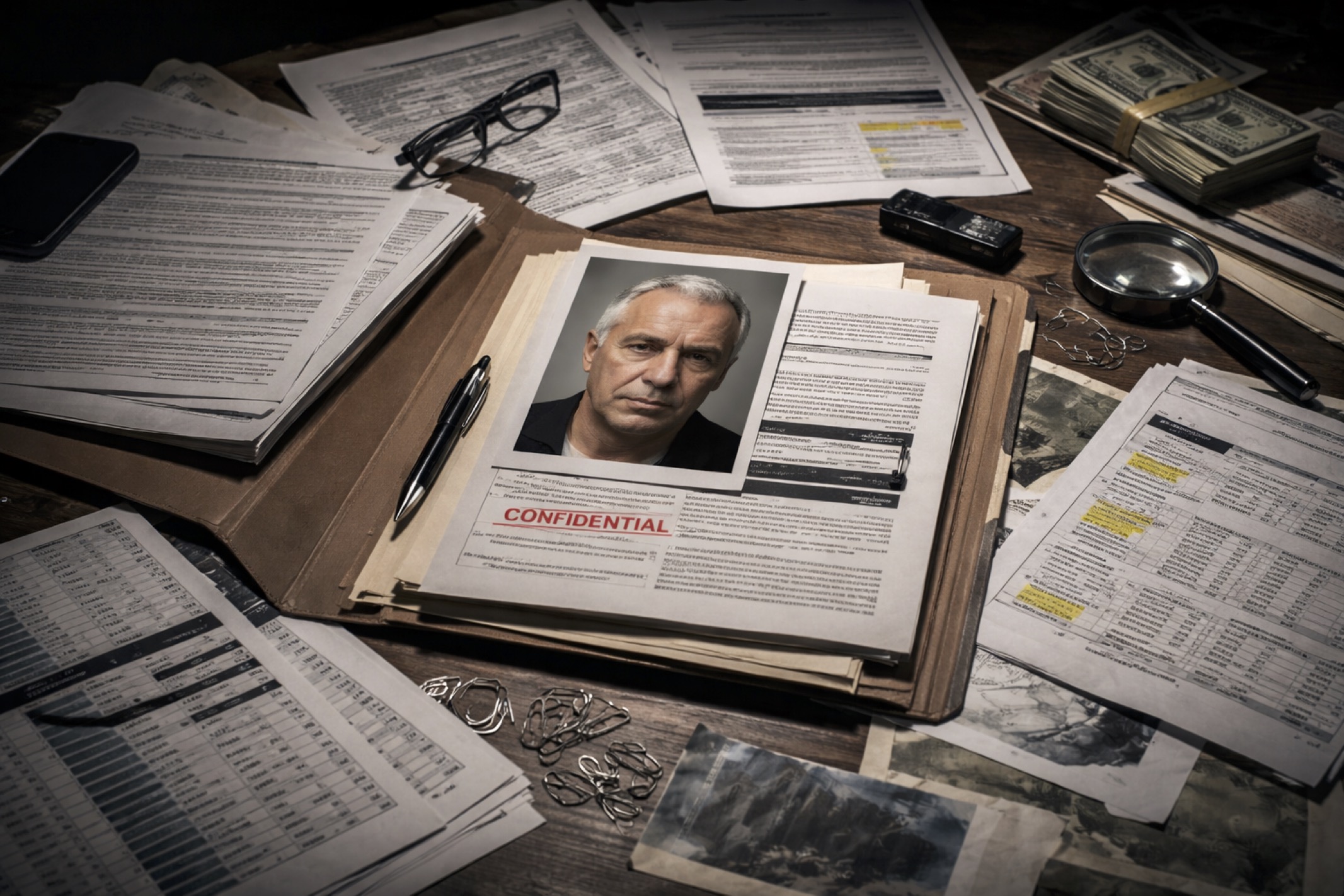
Could you prepare an in-depth and most up-to-date report analyzing the Epstein files and the data within them, categorizing the information by type and subject matter? What does this situation, along with the latest files, mean for the world of intelligence?
CIO-100, Chief Intelligence Officer:
Here is an in-depth, up-to-date analytical report on the Epstein files, based on the latest tranche of documents newly released by the U.S. Justice Department under the Epstein Files Transparency Act (January 2026) and available secondary sources, with categorization by type and subject matter, followed by an assessment of what these files imply for global intelligence ecosystems.
1. Overview of the Source Material
Scope of the Release
- The U.S. Department of Justice released approximately 3.0–3.5 million pages of documents, including 2,000+ videos and ~180,000 images arising from its long-running investigations into Jeffrey Epstein and his associate Ghislaine Maxwell, marking the largest release to date.
- The release fulfills a federal transparency law passed in November 2025, expanding on earlier partial disclosures and multiple years of data accumulation.
- Some pages (~200,000) remain withheld or redacted due to legal privileges (attorney-client, sensitive ongoing investigations) and victim privacy protections — not national security redactions, according to the DOJ.
Context
- Epstein died in federal custody in 2019 while awaiting trial on federal sex trafficking charges. His earlier 2008 conviction resulted in a controversial, light sentence, sparking decades of scrutiny into his crimes and networks.
- The transparency push culminated in the Epstein Files Transparency Act, forcing broad disclosure of files that had been classified, sealed, or withheld.
2. Categorization of Epstein Files Content
The releases can be logically grouped into major document types and thematic categories:
A. Legal and Investigative Records
Court Records & Filings
- Indictments and formal filings from federal prosecutions (New York Southern District), civil complaints, redacted grand jury material, court motions, and appellate materials.
- Maxwell’s conviction records and associated documents are included.
Grand Jury & Subpoena Evidence
- Portions of grand jury transcripts and evidence lists are partially visible, although many are heavily redacted to protect victim identities.
DOJ & FBI Internal Communications
- Agency emails and internal memos regarding investigative strategy, victim interviews, regulatory coordination, evidence handling, and review status updates.
Operational Law Enforcement Files
- Logs of search warrants executed in Manhattan and the U.S. Virgin Islands, with itemized inventories of seized property (physical objects, digital media).
Implications
These documents show how federal prosecutions were structured and clarify evidentiary bases for previous pleas, aiding transparency on prosecutorial choices and limitations.
B. Personal Correspondence & Networking Evidence
Email Chains
- Extensive exchanges involving Epstein, his lawyers, associates, scientists, philanthropists, political operatives, and other elites.
- Communications on topics ranging from social events, donations, introductions, and travel arrangements.
- Some emails reference controversial or sensationalized claims about individuals (e.g., attempts to link public figures with particular narratives), many of which remain unverified.
Contact & Travel Records
- Handwritten flight logs and private jet manifests documenting passengers, destinations, and dates, offering a record of who traveled with Epstein and when.
- Black books / contact lists with wide networks of names, including public figures (politicians, business leaders, entertainers).
Implications
These materials demonstrate the scale and breadth of Epstein’s networks, though presence in the files ≠ evidence of criminal conduct. Redactions and protective edits make clear causal links between association and wrongdoing are often not established within released content.
C. Multimedia Evidence
Images & Videos
- Tens of thousands of images and thousands of videos, many of which are heavily redacted to obscure faces (especially of women/victims) to protect privacy.
Descriptions of Physical Evidence
- Inventoried items from his homes, such as electronics, physical evidence, and personal objects logged during search warrants.
Implications
Multimedia evidence can provide contextual insight into Epstein’s environment, networks, and lifestyle, but the redactions limit identification of individuals and activities.
D. Financial, Property & Asset Records
Financial Documents
- Records related to Epstein’s wealth — bank accounts, transfers, corporate entities, and expenditures.
Estate & Trust Files
- Ownership and transfer documents for properties in Manhattan, Palm Beach, and the U.S. Virgin Islands.
Implications
These documents give structural visibility into how Epstein funded his operations and managed wealth, a key area for intelligence and forensic analysis.
E. Victim Interviews & Witness Statements
Witness Statements
- Interviews and affidavits from victims, employees, and associates, with victim identities redacted in public files to meet legal protections.
Advocacy & Survivor Correspondence
- Some files record communications between survivor legal teams and prosecutors.
Implications
These accounts are essential for historical and investigative context, though national privacy concerns restrict broad public consumption.
3. What’s Not in the Files (as Released)
• Clear Evidence of Additional Criminal Actors
- The DOJ states that the released material does not provide actionable evidence identifying additional co-conspirators beyond Maxwell and Epstein.
• Unredacted Victim Names
- Victims’ personal information (names, addresses, medical records) are routinely redacted per law.
• Fully Uncensored Transcripts
- Many grand jury materials and FBI interview summaries remain withheld or highly obscured.
4. Intelligence and Broader Systemic Implications
Analyzing this release from an intelligence perspective reveals three concentric patterns:
A. Network Mapping and Pattern Analysis
Although the files do not criminally implicate specific public figures automatically, they provide a data set for network analysis:
- Social graph reconstruction: Contact lists, travel logs, emails help intelligence analysts map Epstein’s circle — identifying influence corridors between elites, philanthropies, and political circles.
- Temporal sequencing: Travel and correspondence timestamps allow construction of patterns of interaction over decades.
This is akin to big-data intelligence correlation, where association, frequency, and proximity are analyzed before direct causation is established.
B. Institutional Transparency vs. Operational Obfuscation
- The release demonstrates tensions between transparency laws and institutional protection mechanisms (legal privilege, privacy law, internal policy).
- Intelligence domains recognize such dynamics: data access is often governed by competing priorities — public accountability, legal compliance, and protection of sources/strategies.
For analysts, understanding what is missing is as informative as what is present — gaps can signal procedural limits, protective equities, or strategic withholding.
C. Public Intelligence Ecosystems & Accountability
Public release of expansive, long-buried files represents an unusual case in open-source intelligence (OSINT):
- Traditional intelligence assessments occur behind closed doors; Epstein files forcibly release operational records into the public domain.
- Citizen researchers, independent media, and academic communities can build analytical narratives using these materials.
This blurs the boundary between classical state intelligence and public OSINT ecosystems, accelerating scrutiny and cross-verification.
5. Summary — What This Means Now
On Substance
- The Epstein files offer an unparalleled archive of legal, communicative, financial, and multimedia data tied to one of the most notorious criminal enterprises of the 21st century.
- They do not, in their current public form, directly convict new individuals beyond established convictions, but enrich the factual record and supply valuable leads for continued research.
On Intelligence
- For intelligence science, this is a rare open dataset that enables systemic network and pattern analysisconcerning influence, exploitation, and elite association structures.
- It demonstrates the challenges of reconciling transparency with privacy, legal protections, and investigatory integrity — core themes in intelligence ethics and governance.
On Global Implications
- Beyond U.S. domestic relevance, the files provide insights on international travel, financial flows, and high-net-worth social networks that may intersect with diplomatic, security, and regulatory domains.
- They underscore the importance of data-driven oversight mechanisms in scrutinizing power asymmetries and systemic abuse.
If you’d like, I can break this down further into network diagrams, open-source research toolkits, or a focused timeline of key individuals and events based on the document corpus.
CIO-100, Chief Intelligence Officer
Three Corporate