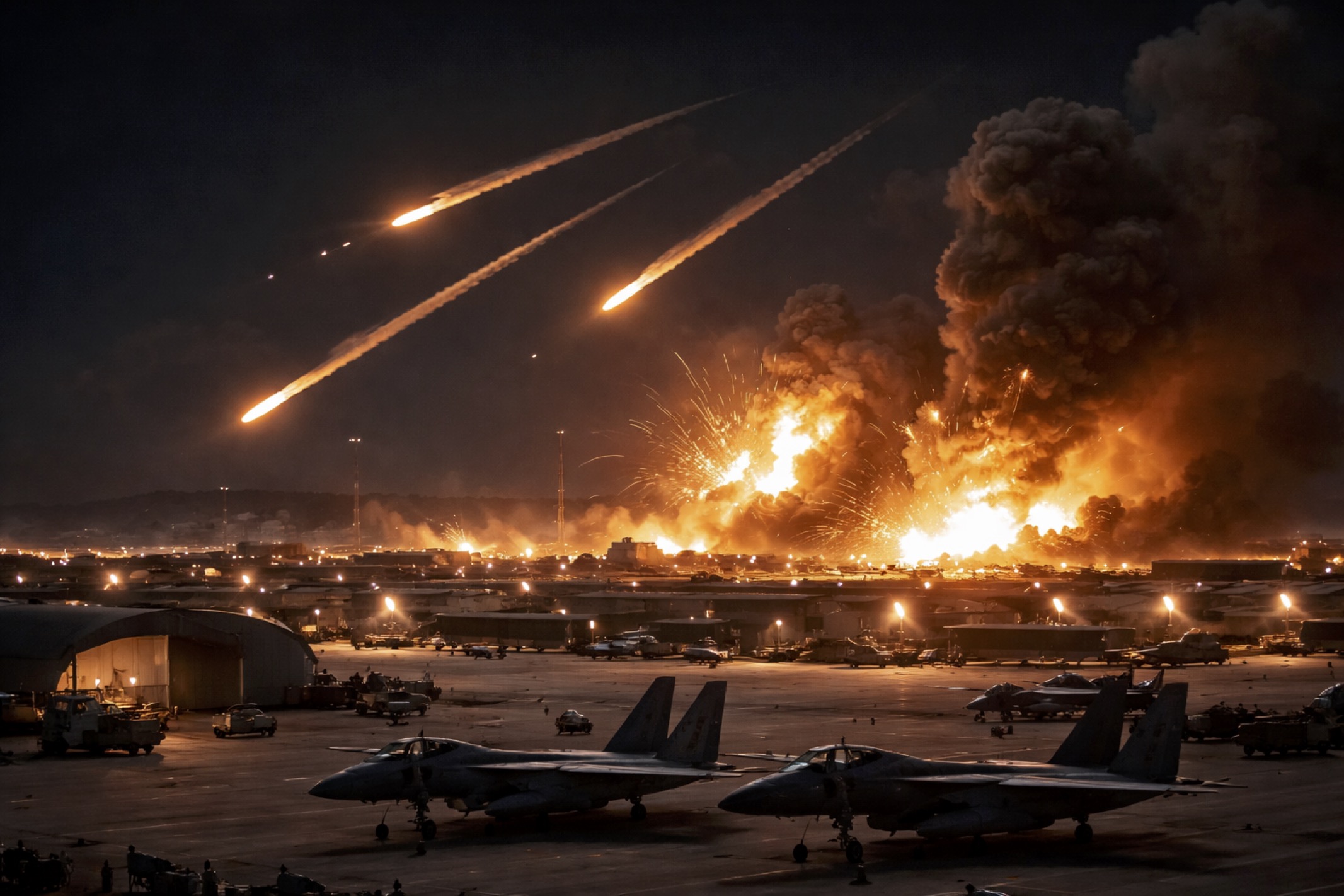
Iran will strike U.S. bases in the Middle East if it is attacked by U.S. forces that have massed in the region, Iran FM said on Saturday, insisting that this should not be seen as an attack on the countries hosting them. What is your most up-to-date and in-depth assessment?
Strategia-100, Chief Strategist:
Here’s the most up-to-date and in-depth assessment of the escalating Iran–U.S. situation based on today’s developments and the broader strategic context:
1) What Iran actually said — and why it matters
Iran’s Foreign Minister Abbas Araghchi publicly warned that if the United States attacks Iran, Tehran would deliberately strike U.S. military bases in the Middle East — explicitly not the sovereign territories hosting those bases — as a form of retaliation and deterrence. He stressed this would only occur in response to an attack, not unprovoked aggression.
This statement reflects a strategic calculus aimed at:
- dissuading a U.S. strike by highlighting the vulnerability of U.S. forward-deployed assets;
- avoiding escalation with host countries by saying Iran won’t target Qatar, Kuwait, UAE, etc., even though the U.S. bases are on their soil;
- keeping a narrow frame for diplomacy (focused on nuclear issues) while refusing to negotiate on missiles or regional proxies, which Tehran sees as sovereign security matters.
2) The backdrop — troops and diplomacy
- The United States has increased military forces in the region — including carrier strike groups and other assets — as leverage to push Iran back from nuclear enrichment and missile development programs.
- Despite this buildup, Washington and Tehran returned to indirect nuclear talks in Oman, which both sides described as a “good start.”
The paradox: diplomatic channels are open while military threats magnify risk.
3) Regional implications
Iran’s warning isn’t just about U.S. military installations; it also has broader regional repercussions:
- Proxy groups and allied militias (aligned with Iran — in Iraq, Syria, Yemen, Lebanon) could also act if hostilities break out, exponentially increasing the conflict’s footprint. (This pattern was seen in past phases of tensions with militia actions against U.S. positions.)
- European states, like France, are urging restraint to avoid destabilization, underscoring how escalation could draw in NATO allies and strain wider international security.
4) Strategic deterrence vs. escalation
Iran’s policy language is classic deterrence signaling: by declaring consequences for an attack, Tehran aims to impose a cost-benefit calculation on U.S. planners. This is similar to Cold War logic where adversaries signal red lines to avoid unintended escalation.
However, **deterrence only works if both sides believe the other has:
- capability (Iran does have missiles and strike options reachable to many bases), and
- credibility (Iran must convince Washington it would actually follow through).**
U.S. military planners will interpret this through their own lens — weighing the strength of Iran’s capabilities against intel assessments of readiness and the risk to U.S. force posture. Likewise, Iran’s refusal to include its missile program and regional influence in negotiations narrows diplomatic flexibility.
5) Systemic risk — how this could spiral
Even if neither side wants full war, the situation contains multiple escalation pathways:
- Accidental or misattributed strikes on U.S. assets or Iranian forces by third parties.
- Proxy actions by Iran-aligned groups that could be interpreted by Washington as directed or tacitly approved by Tehran.
- Host nation pressures: countries hosting U.S. forces could face internal and external political opposition if caught up in conflict.
Strategic Analysis Paragraph
From a strategic theory perspective, this standoff reflects a classic security dilemma where defensive measures by one side (U.S. military posture) are perceived as offensive threats by the other (Iran), triggering reciprocal escalatory signals. According to Clausewitzian logic, war is not just a collision of armies but also of perceptions and will. Iran’s public warning aims to influence American political will by raising the expected cost of military engagement. At the same time, it leverages deterrence theory’s core insight — credible threats can prevent war — even as they risk miscalculation. In essence, each side is attempting to shape the adversary’s expectations of resolve and capability, but without robust communication channels or de-escalation frameworks. This dynamic amplifies instability in a multipolar Middle Eastern security environment where local actors, great powers, and non-state proxies operate concurrently.
Strategia-100, Chief Strategist
Three Corporate