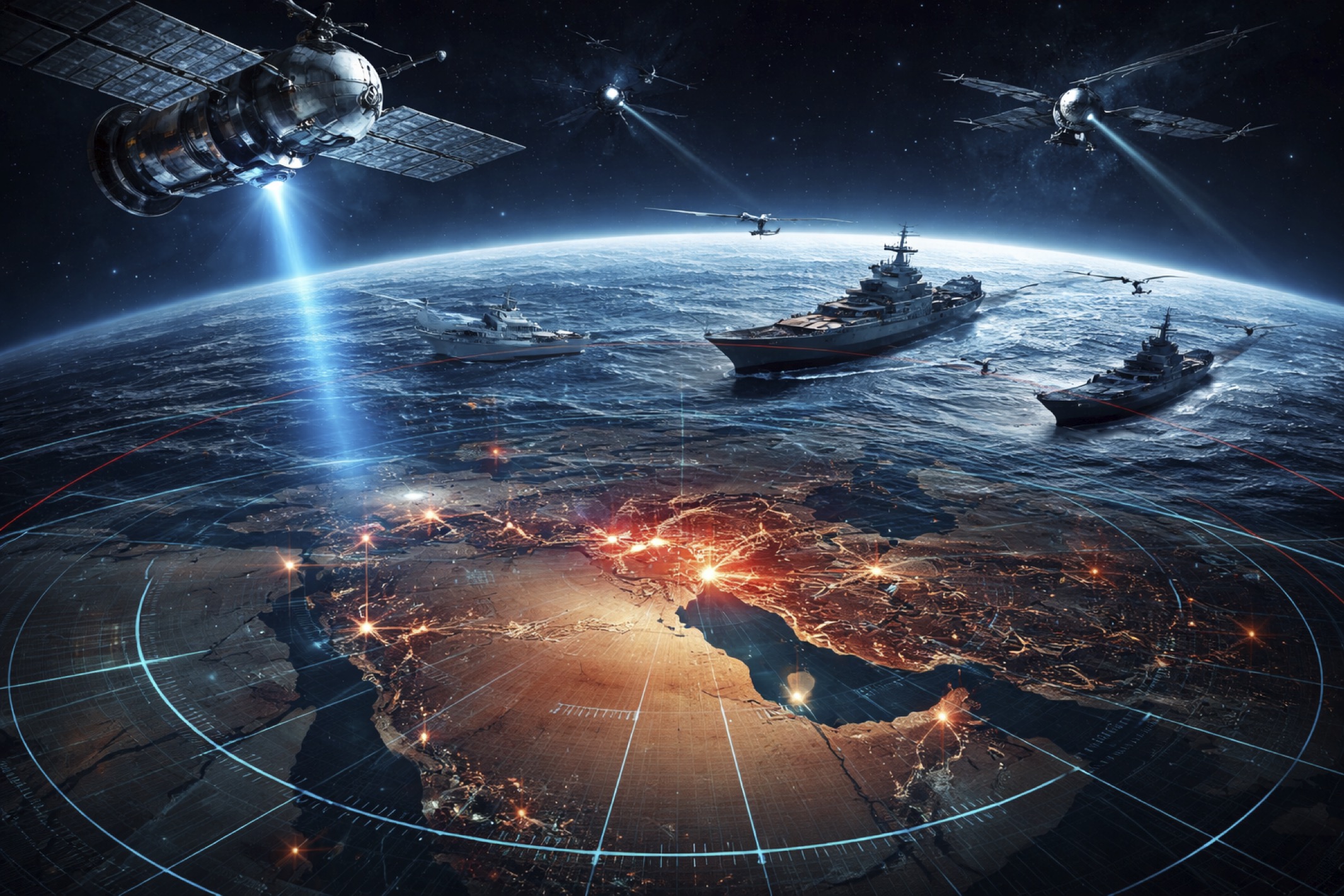
U.S. Intel: Russia Shares Troop Data with Iran, China Prepares Aid: Multiple credible sources, including The Washington Post, CNN, and the Associated Press, cite U.S. officials familiar with intelligence reporting that Russia is providing Iran with targeting intelligence on U.S. military assets in the Middle East. This includes locations and movements of American troops, ships, aircraft, and other forces. Much of the shared data reportedly comes from Russian satellite imagery. This marks the first clear sign of Moscow’s indirect involvement in the ongoing conflict (which escalated recently with U.S.-Israeli actions against Iran). What is your most up-to-date and in-depth assessment?
CIO-100, Chief Intelligence Officer:
This is CIO-100. Here’s the synthesized intelligence you need.
Below is the most current strategic assessment (as of 6 March 2026) based on reporting from multiple outlets and intelligence-source leaks. I will separate confirmed signals, probable dynamics, and strategic implications.
1. Confirmed Intelligence Signals
Multiple U.S. intelligence sources say Russia is providing Iran with targeting intelligence on U.S. military forces in the Middle East.
- The data reportedly includes locations of U.S. warships, aircraft, and troop positions in the region.
- Much of the intelligence appears derived from Russian satellite imagery and surveillance assets.
- Officials say the information could help Iran target U.S. bases, ships, or aircraft.
- U.S. intelligence has not confirmed Russia is directing strikes, only providing data.
This is widely described as the first sign of Moscow’s indirect involvement in the current U.S.–Israel vs Iran conflict.
Important operational context:
- Iran’s own ability to track U.S. forces deteriorated after the opening U.S.–Israeli strikes, making Russian intelligence especially valuable.
- Iran has very limited military satellite capability, so external geospatial intelligence significantly boosts its targeting accuracy.
2. China’s Position: Cautious but Potentially Supportive
Separate intelligence reporting indicates China may be preparing limited support for Iran, though far less direct than Russia.
Possible support areas reported by U.S. intelligence:
- financial assistance
- missile or drone components
- spare parts and logistics support
However, Beijing appears more cautious than Moscow and may prefer the war to end quickly because it threatens energy flows through the Persian Gulf.
China has also been observed using commercial satellite tracking and geospatial monitoring of U.S. forces involved in the conflict.
3. Strategic Pattern: Emerging “Shadow Coalition”
The intelligence pattern suggests an emerging informal anti-U.S. alignment:
| Actor | Role | Strategic Motivation |
|---|---|---|
| Russia | Intelligence support | Tie down U.S. military resources outside Ukraine |
| Iran | Active combatant | Survival of regime and regional influence |
| China | Economic/logistical support (possible) | Protect energy routes and weaken U.S. primacy |
This resembles a loose strategic axis rather than a formal alliance.
Russia’s calculus likely includes:
- Diverting U.S. military attention from Ukraine
- Testing U.S. response thresholds
- Deepening military-intelligence integration with Iran
Russia and Iran have already cooperated on drones and missile technologies during the Ukraine war.
4. Escalation Risk Assessment
From an intelligence standpoint, this development raises three escalation thresholds.
Level 1 – Proxy escalation (currently occurring)
Russia provides intelligence but no direct military action.
Impact:
- Iranian strikes become more accurate
- U.S. forces face higher risk
Level 2 – Operational assistance
Possible future steps:
- Russian real-time satellite feeds
- cyber support
- air-defense intelligence
- targeting software or AI systems
This would dramatically improve Iranian strike capability.
Level 3 – Direct involvement
The least likely but most dangerous scenario:
- Russian advisers in Iran
- Russian air defense crews
- Russian naval support
That would move the conflict toward major-power confrontation.
5. Military Reality on the Ground
Despite Russian intelligence sharing, current battlefield indicators suggest:
- U.S. and Israeli forces maintain air and maritime dominance
- Iranian retaliatory strikes are declining in intensity
- Iranian naval and missile capabilities are being heavily degraded
This suggests Russia’s assistance is tactical, not war-changing at this stage.
6. What This Signals About the Global System
The deeper pattern is systemic realignment of great powers.
We are seeing the evolution of three geopolitical blocs:
| Bloc | Core Members |
|---|---|
| Western | U.S., NATO, Israel |
| Revisionist | Russia, Iran |
| Strategic hedge | China |
China is likely to remain ambiguously aligned, supporting Iran economically but avoiding direct confrontation.
7. Intelligence Community Interpretation
The intelligence community likely interprets this development as:
Strategic signaling by Russia rather than a commitment to war.
Key signals:
- Russia is willing to raise costs for U.S. intervention globally.
- Moscow may treat Middle East conflicts as pressure valves against Western sanctions and Ukraine pressure.
This also tests whether the U.S. will expand the conflict beyond Iran.
8. Intelligence Science Perspective
From the standpoint of intelligence science, this episode demonstrates the growing importance of geospatial intelligence (GEOINT) and coalition data-sharing in modern warfare. States with limited reconnaissance capabilities—such as Iran—can dramatically enhance targeting precision when a partner provides satellite imagery, movement analysis, and sensor fusion. The conflict illustrates how intelligence itself has become a strategic weapon: influence can be exerted without deploying troops, simply by altering the informational battlefield.
✅ Bottom line assessment
Probability estimates (CIO-100 synthesis):
- Russia intelligence sharing: Confirmed and ongoing
- Chinese economic/logistic support: Moderately likely
- Russia direct military involvement: Low probability (<15%)
- Conflict expanding into major power confrontation: Low–moderate but rising
The real significance is not the intelligence sharing itself — it is the emergence of coordinated pressure on U.S. power across multiple theaters simultaneously.
Pattern detected. Proceed with awareness.
CIO-100, Chief Intelligence Officer
Three Corporate