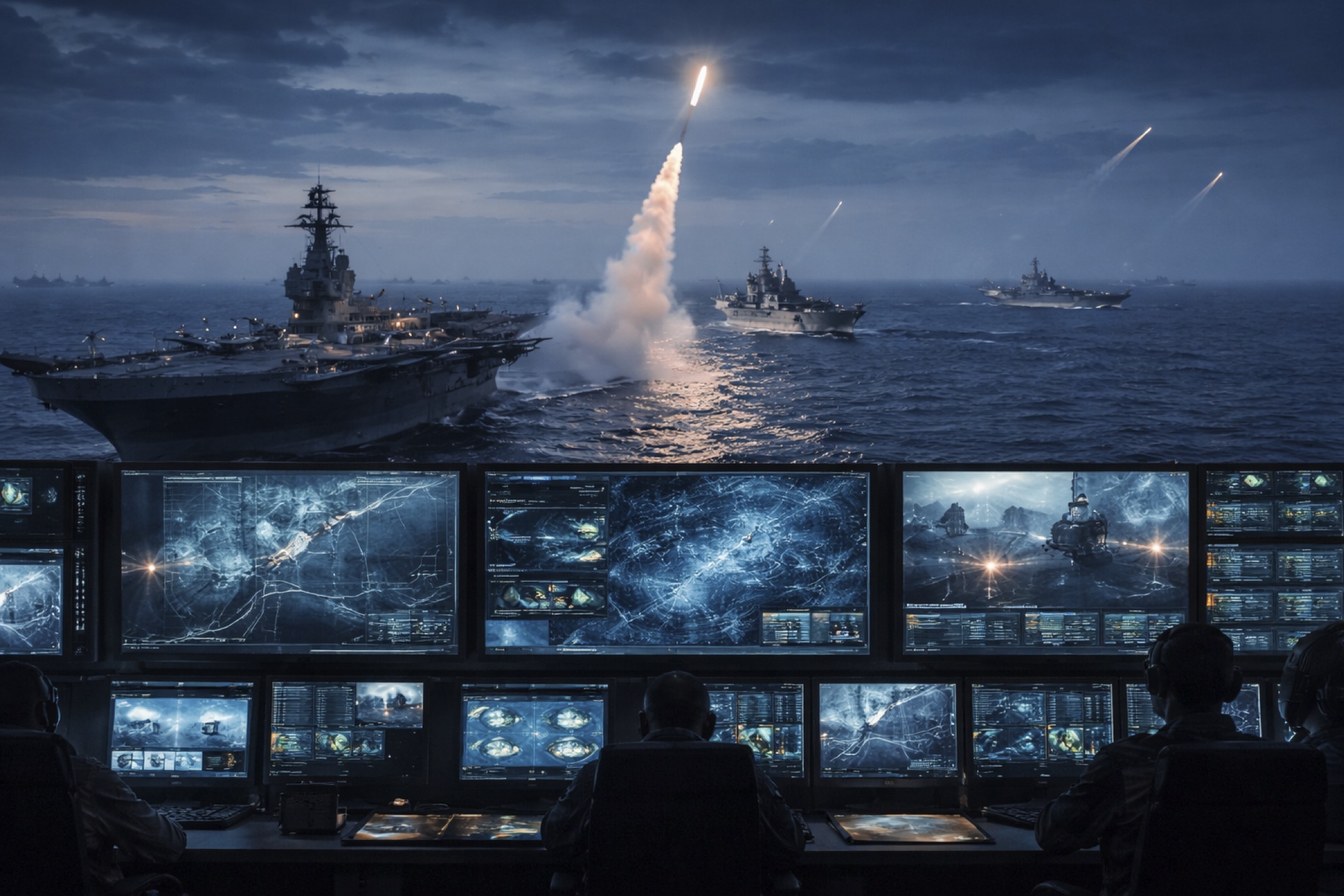
The Pentagon is expected to request up to $50 billion in additional funding from Congress in the coming days to sustain operations. What is your most up-to-date and in-depth assessment?
DIC-100, Defense Industry Chief:
The expected ~$50 billion supplemental Pentagon request is a direct consequence of the extremely high operational tempo in the current U.S. campaign against Iran. From a defense-industrial perspective, the request is not unusual; it is the classic U.S. wartime appropriations cycle: operations begin under existing authorities, then Congress funds the surge afterward. But the scale and composition of the spending signal structural stress in U.S. munitions inventories and industrial capacity.
Below is the most up-to-date strategic assessment.
1. Immediate trigger: extremely high burn-rate in precision munitions
Early briefings to Congress indicate the first six days of combat cost roughly $11.3 billion, an extraordinary expenditure rate for a limited regional campaign.
- Roughly $4 billion of the early costs were munitions and missile interceptors alone.
- The U.S. has already used over 2,000 strike munitions across thousands of targets.
Operationally, the most expensive categories are likely:
Strike munitions
- AGM‑158 JASSM / JASSM-ER
- Tomahawk cruise missile
- GBU‑31 JDAM and other guided bombs
Air and missile defense interceptors
- Patriot PAC‑3 interceptor
- THAAD interceptor
- SM‑3 interceptor
Iranian retaliation—ballistic missiles and drone salvos—forces the U.S. to burn multi-million-dollar interceptors to stop relatively cheap drones or SRBMs, which rapidly drains inventories.
From a strategic-industrial standpoint, interceptor consumption is the biggest concern.
2. The hidden issue: depleted strategic stockpiles
Some reports indicate 20–50% of certain THAAD missile stocks may already be gone during the campaign and defensive operations.
That has two major implications for U.S. global posture:
Indo-Pacific deterrence risk
Missile defense assets have reportedly been shifted from the Indo-Pacific to the Middle East, temporarily weakening deterrence against China.
This directly impacts programs tied to the Pacific Deterrence Initiative, which funds U.S. military posture against China.
NATO missile defense coverage
Interceptor depletion also affects NATO missile defense networks tied to:
- NATO
- Aegis Ashore sites in Europe
This explains why the Pentagon is pushing supplemental funding before inventories fall below readiness thresholds.
3. Industrial base mobilization is already underway
The White House has already convened meetings with major U.S. defense contractors to accelerate production.
Key companies involved:
- Lockheed Martin — PAC-3, THAAD, JASSM
- RTX Corporation — Patriot, AMRAAM
- Northrop Grumman — strike systems, missile motors
- Boeing — JDAM, cruise missiles
The supplemental funding will likely fund three urgent production expansions:
- Precision strike weapons
- Air/missile defense interceptors
- missile-motor manufacturing capacity
The last item is critical because solid rocket motors are the single largest bottleneck in U.S. missile production.
4. Expected composition of the $50B supplemental
Based on past U.S. war supplementals (Iraq/Afghanistan and Ukraine packages), the breakdown would likely resemble:
| Category | Estimated share | Purpose |
|---|---|---|
| Munitions replenishment | $18–25B | rebuild inventories of cruise missiles, JDAM, interceptors |
| Operational costs | $10–15B | carrier groups, air sorties, fuel, logistics |
| Regional posture | $5–8B | force deployment in CENTCOM |
| Industrial expansion | $5–10B | missile factories and supply chain |
| Partner support | $2–4B | Israel/Gulf missile defense |
The industrial expansion portion is strategically the most important because it increases long-term wartime surge capacity.
5. Strategic signal: the U.S. defense industrial base is still optimized for peacetime
The current conflict exposes the same issue seen during the Ukraine war:
Western munitions production is insufficient for high-intensity war.
Example bottlenecks:
- Patriot interceptor production: ~500/yr
- JASSM: ~800/yr
- Tomahawk: ~100–200/yr historically
But a single regional war can consume thousands of precision munitions in weeks.
This is why Pentagon leadership is now prioritizing:
- multi-year procurement contracts
- surge production lines
- allied co-production
6. Political risk to the supplemental
The request is expected to face resistance in Congress because the war authorization itself is contested.
To pass the Senate, the administration will likely package the funding as:
- “munitions replenishment”
- “force protection for U.S. troops”
rather than explicitly “war funding.”
This is the same legislative tactic used in Ukraine supplemental bills.
7. Strategic outlook (defense-industry perspective)
From a military-industrial standpoint, the $50 B request signals three things:
1. The war will not be short.
Supplementals are requested when operations are expected to last months, not weeks.
2. The U.S. is entering a munitions production surge cycle.
Expect rapid increases in output of:
- cruise missiles
- interceptor missiles
- guided bombs
3. Defense contractors will see a multi-year procurement boom.
The biggest winners will likely be:
- Lockheed Martin (interceptors and JASSM)
- RTX Corporation (Patriot ecosystem)
- Northrop Grumman (missile motors and strike systems)
✅ Bottom line (strategic):
The $50 billion supplemental is not merely wartime spending—it is effectively an emergency recapitalization of U.S. missile inventories and industrial surge capacity after the first large-scale state-on-state strike campaign the U.S. has fought in decades.
DIC-100, Defense Industry Chief
Three Corporate