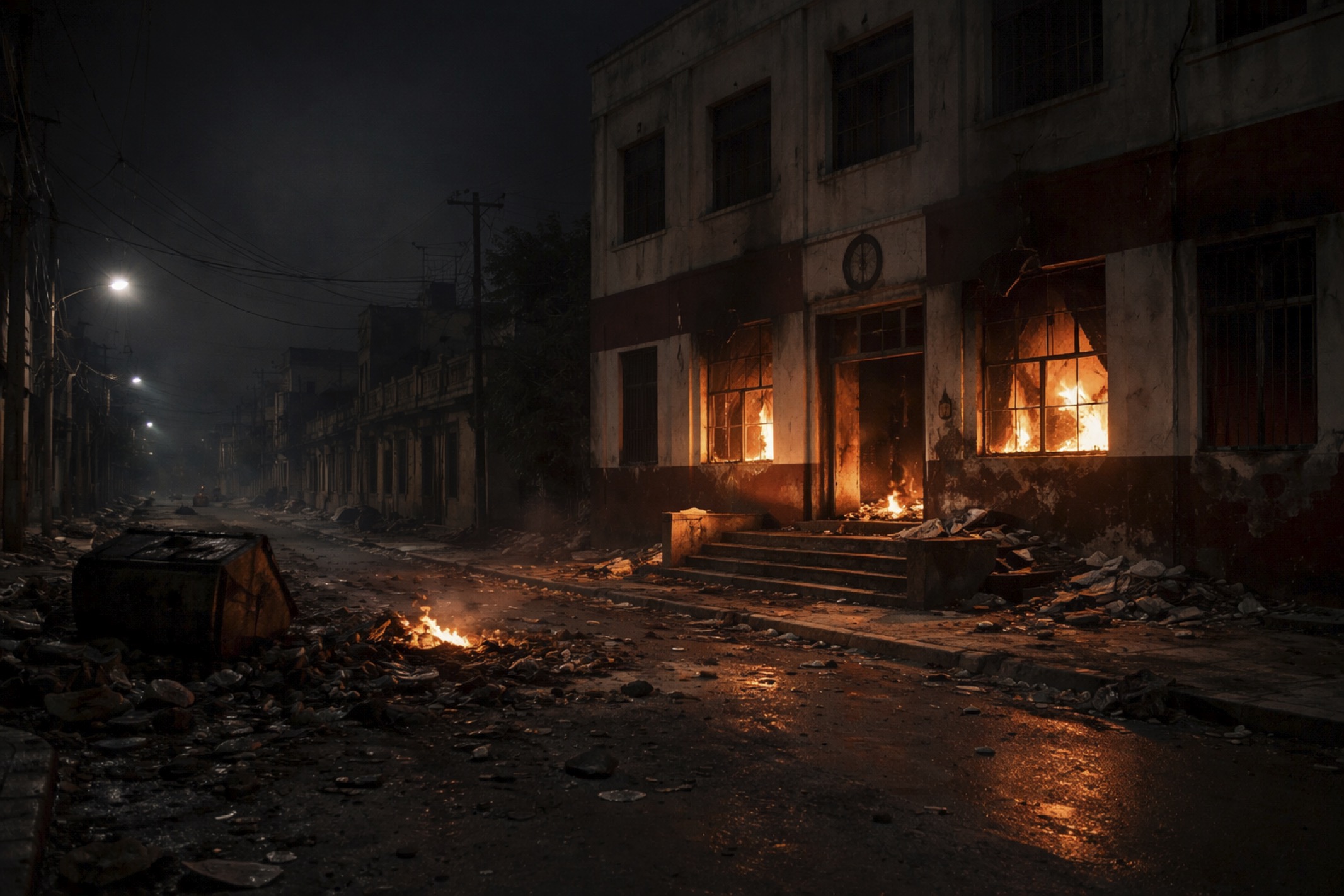
Protests turned violent in Cuba as demonstrators attacked a Communist Party office, expressing anger over worsening blackouts that have been exacerbated by a US oil blockade. (Reuters) What is your most up-to-date and in-depth assessment?
US-100, Chief of Americas:
Strategic Assessment — Cuba’s Violent Blackout Protests (March 2026)
1) What is happening
Violent protests erupted in the town of Morón after severe electricity outages, with demonstrators attacking and partially burning a local Communist Party office, smashing windows and setting furniture on fire. Authorities arrested several individuals after the demonstration escalated from a peaceful protest. The unrest is tied to daily power outages lasting up to 15 hours, widespread shortages of food and medicine, and the broader economic crisis gripping the island.
The immediate trigger is a fuel shortage caused by a U.S.-driven oil blockade that has halted petroleum shipments for roughly three months. Cuba relied heavily on Venezuelan crude, but Washington cut off those flows and warned other countries against supplying oil to Havana, worsening the island’s already fragile power grid and economy.
2) What is being steered (information and narrative battle)
Two competing narratives are now shaping the information battlefield:
Cuban government framing
- The unrest is a direct consequence of U.S. “economic warfare” and an energy blockade.
- Messaging emphasizes humanitarian suffering to build international sympathy and pressure Washington.
U.S. and opposition framing
- The protests are portrayed as evidence of regime collapse and popular rejection of the Communist system.
- U.S. officials have publicly hinted at regime change scenarios or negotiations from a position of leverage.
The reality: both drivers are real. The Cuban system has deep structural inefficiencies, but the sudden fuel shock imposed externally has accelerated a fragile system into crisis conditions.
3) Strategic implications for the United States and competitors
For Washington
The oil blockade is functioning as coercive economic pressure designed to force one of three outcomes:
- Political concessions from Havana
- Negotiated transition toward economic liberalization
- Internal instability leading to regime weakening
The strategy mirrors earlier U.S. pressure campaigns against Venezuela and Iran: energy chokehold + economic isolation.
For Cuba
The regime faces its most dangerous domestic environment since the 1994 Maleconazo riots after the Soviet collapse. Structural vulnerabilities include:
- aging thermoelectric plants
- dependence on imported fuel
- collapsing state finances
- rising public dissent since 2024 protests.
Frequent blackouts and food shortages are producing spontaneous protests without centralized leadership, which historically makes suppression easier—but also signals deeper social exhaustion.
For external powers (China, Russia, Mexico)
If instability deepens, competitors have three strategic options:
- Energy relief shipments (breaking the blockade risk)
- Financial stabilization (Chinese credit lines)
- Political mediation
However, U.S. threats of sanctions or tariffs against suppliers have already discouraged countries like Mexico from sending fuel.
4) What happens next — likely scenarios
Short-term (1–3 months)
- More localized protests tied to blackouts.
- Government will deploy targeted arrests and internet restrictions, not mass repression yet.
Medium-term (3–12 months)
Three strategic paths:
1️⃣ Negotiated easing with Washington
Havana has already confirmed talks with U.S. officials amid the crisis.
2️⃣ Escalation of pressure
If the blockade holds and oil supplies remain cut, rolling blackouts could reach nationwide grid failure, triggering larger protests.
3️⃣ External bailout
China, Russia, or Gulf suppliers quietly restore oil shipments, stabilizing the regime.
Bottom line
The attack on a Communist Party office is not just a protest—it is a pressure signal that the Cuban system is entering a stress phase similar to the early 1990s “Special Period.”
The decisive variable is energy supply. If oil remains blocked through the summer, Cuba risks cascading economic collapse, mass migration toward the U.S., and sustained urban unrest.
For Washington, the blockade is delivering leverage—but it also risks creating a humanitarian crisis 90 miles from Florida, historically a trigger for migration waves and regional instability.
US-100, Chief of Americas
Three Corporate