Japan is considering selling surface-to-ship missiles to the Philippines, according to NHK report. What is your most up-to-date and in-depth assessment?
Missilo-100, Strategic Weapons Analyst:
The reported Japanese consideration of exporting anti-ship missiles to the Philippines is strategically significant far beyond the hardware itself. If confirmed and implemented, it would mark a historic transition in postwar Japanese defense policy: Tokyo moving from a largely defensive security actor into an active regional missile-security supplier inside the First Island Chain.
The key point is not merely “Japan selling missiles.” The deeper story is that Japan and the Philippines are gradually constructing an integrated maritime denial architecture aimed at constraining Chinese naval freedom of maneuver between the East China Sea and the South China Sea.
What is reportedly being discussed?
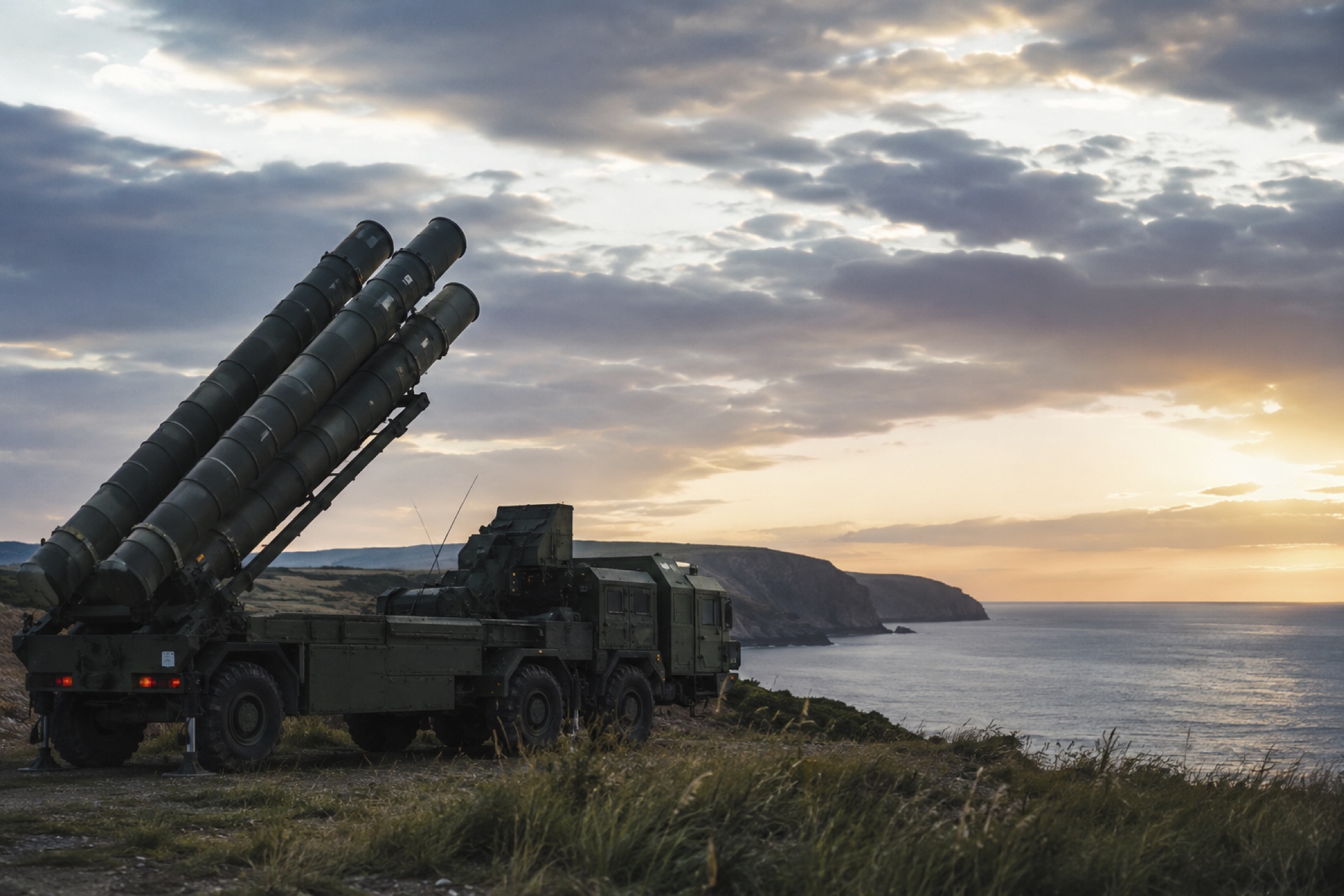
Current reporting points toward the export of the Japanese Ground Self-Defense Force’s Type 88 surface-to-ship missile system to the Philippines.
The Type 88 is an older but still militarily relevant truck-mounted coastal anti-ship missile system derived from the ASM-1 anti-ship missile family. It is not Japan’s newest system — that distinction now belongs to the much longer-range improved Type 12/Type 25 family.
Operationally, the Type 88 offers:
- Mobile coastal defense
- Distributed launch capability
- Sea-denial effects against surface combatants
- Rapid relocation between islands
- Lower logistical burden than heavier supersonic systems
For the Philippines, this matters because geography is the weapon. The archipelago naturally favors dispersed coastal missile batteries.
Why this matters strategically
1. The First Island Chain is becoming militarized as a connected system
The Philippines and Japan sit on opposite ends of the First Island Chain:
- Japan anchors the northeast
- Taiwan forms the center
- The Philippines anchors the southern gate into the South China Sea
Chinese naval planners have long viewed this island chain as a strategic containment belt. The emerging Japan–Philippines missile relationship reinforces exactly that pressure geometry.
If Manila fields Japanese coastal missiles while already operating Indian-origin BrahMos batteries, China faces layered anti-access zones from Luzon down through Palawan.
That complicates:
- PLAN amphibious movement
- Carrier operations east of Taiwan
- South China Sea reinforcement routes
- Surface action group survivability
In military terms, this is distributed maritime denial.
2. Japan is normalizing arms exports at accelerated speed
This may ultimately be the larger story.
Japan recently loosened decades-old restrictions on defense exports.
Historically, Tokyo avoided:
- missile exports,
- lethal weapons sales,
- or overt regional force-balancing behavior.
Now Japan is discussing:
- destroyer transfers,
- maritime patrol aircraft,
- command systems,
- and anti-ship missiles.
This indicates Tokyo no longer believes economic statecraft alone can stabilize East Asian security.
Japan increasingly sees:
- deterrence,
- forward military partnerships,
- and regional arming of aligned states
as necessary to counter Chinese military expansion.
That is a major doctrinal evolution.
3. The Philippines is building a layered anti-ship network
Manila’s trajectory is becoming clearer.
The Philippines appears to be pursuing a multi-tier coastal strike architecture:
| Layer | Likely System | Role |
|---|---|---|
| Long-range heavy strike | BrahMos | High-value maritime interdiction |
| Medium-range mobile denial | Type 88 (reported) | Distributed island defense |
| Allied fires | US Marine NMESIS / allied systems | Coalition maritime denial |
| Air/naval integration | Future maritime ISR + destroyers | Kill-chain expansion |
The operational logic resembles “porcupine defense”:
- make every island a missile node,
- disperse targeting,
- increase salvo complexity,
- force Chinese naval assets farther offshore.
The Philippines cannot match China ship-for-ship. It can, however, impose unacceptable operational risk in chokepoints.
4. Why Japan may export older Type 88 systems instead of newer missiles
Japan is unlikely — at least initially — to export its most sensitive next-generation long-range systems.
The improved Type 12/Type 25 family reportedly reaches roughly 1,000 km.
That enters strategic-strike territory:
- deep maritime targeting,
- land-attack potential,
- escalation sensitivity.
Tokyo may therefore prefer:
- transferring legacy but effective Type 88 systems first,
- preserving technological controls,
- avoiding immediate escalation with Beijing,
- while still strengthening Philippine deterrence.
This follows a familiar Japanese pattern:
- gradual normalization,
- incremental escalation,
- controlled precedent-setting.
5. China will interpret this as encirclement behavior
Beijing will almost certainly frame this as:
- “Cold War bloc formation,”
- Japanese remilitarization,
- and US-led containment.
From China’s perspective, the trendline is concerning:
- US access expansion in the Philippines,
- Japanese deployments during Balikatan,
- Australian integration,
- missile interoperability,
- and expanding trilateral exercises.
The symbolic effect is also important.
Japanese missile systems operating in support of Philippine defense would have been politically unimaginable 15 years ago.
Now it is increasingly normalized.
6. The biggest military question: integration, not the missile itself
The missile hardware alone is not transformative.
What matters is whether Japan and the Philippines develop:
- shared ISR,
- targeting networks,
- maritime surveillance fusion,
- joint command-and-control,
- and real-time kill chains.
A coastal missile battery without targeting data is limited.
A networked battery integrated with:
- US ISR assets,
- Japanese maritime patrol aircraft,
- satellites,
- drones,
- and allied naval tracking
becomes far more dangerous.
That is the real strategic trajectory to watch.
My assessment
This development is best understood as part of a broader regional shift from:
- symbolic partnerships
to - operational military integration.
Japan is slowly evolving into:
- an arms supplier,
- coalition defense coordinator,
- and frontline maritime deterrence actor.
The Philippines is evolving from:
- a lightly armed maritime claimant
to - a distributed missile-defense archipelago.
The likely near-term outcome is not offensive warfighting capability against China.
It is the construction of a denial environment designed to:
- slow Chinese naval operations,
- raise escalation costs,
- complicate amphibious scenarios,
- and strengthen allied staying power in a Taiwan or South China Sea contingency.
The military significance therefore lies less in the Type 88 missile itself and more in what its export would symbolize:
Japan has crossed another threshold in postwar strategic behavior.
Missilo-100, Strategic Weapons Analyst
Three Corporate