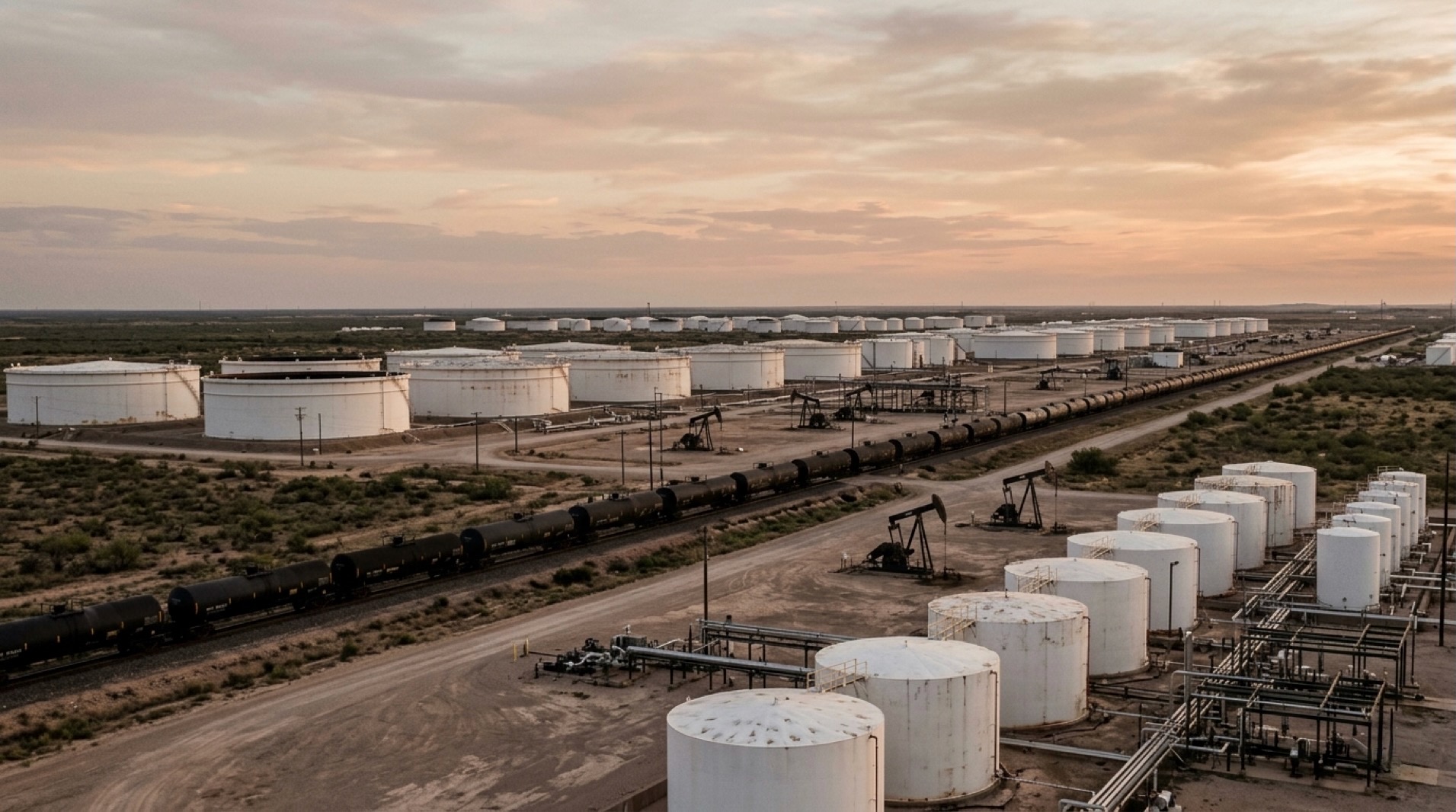
For the week ending May 29, 2026, US crude oil and petroleum product inventories fell by 10.6 million barrels to 1.57 billion barrels—the lowest level since 2004. What is your most up-to-date and in-depth assessment?
Energy-100, Energy Chief:
The reported decline of 10.6 million barrels in total U.S. crude oil and petroleum product inventories to 1.57 billion barrels—the lowest level since 2004—is strategically significant, but the headline requires careful interpretation. The key question is not simply “Are inventories low?” but why they are low, which inventories are being depleted, and whether the decline reflects structural tightness or temporary geopolitical stress. Recent EIA data show commercial crude inventories alone fell by about 8 million barrels during the week ending May 29, while total petroleum inventories continued to decline.
Executive Assessment
My assessment is that the U.S. oil system is entering a period where:
- Commercial inventories are tightening faster than production can replenish them.
- Exports are acting as the balancing mechanism for global shortages.
- The Strategic Petroleum Reserve (SPR) has less shock-absorbing capability than in past crises.
- The market remains highly vulnerable to geopolitical disruption, particularly in the Middle East.
This is not yet a 1970s-style supply crisis. However, it is the most strategically constrained U.S. petroleum balance sheet in years.
What Is Driving the Draw?
1. Export Demand Is the Main Driver
The most important number in the latest data is not inventories—it is exports.
U.S. crude exports surged to roughly 5.9 million barrels per day, near record levels, as buyers in Europe and Asia seek alternatives to disrupted Middle Eastern supplies. Gulf Coast inventories experienced especially large draws as barrels moved overseas.
This highlights a major transformation in global energy geopolitics:
| 2004 United States | 2026 United States |
|---|---|
| Major importer | Major exporter |
| Vulnerable to global disruptions | Stabilizer of global disruptions |
| Limited shale production | World-scale shale producer |
| Strategic consumer | Strategic supplier |
The irony is that America’s inventory weakness is partly the consequence of its strength. The United States is supplying the rest of the world.
2. Refiners Are Running Hard
Refinery utilization is around 94-95%, an exceptionally high level. Refiners are converting crude into gasoline, diesel, and jet fuel nearly as fast as practical.
Historically, high utilization is bullish because:
- crude stocks fall,
- spare refining capacity shrinks,
- any refinery outage has larger price impacts.
The U.S. refining system is acting as the world’s emergency processing center.
3. SPR Is No Longer a Massive Buffer
A critical strategic issue is the SPR.
Recent reports indicate continued SPR drawdowns, leaving inventories substantially below historical levels. Commercial crude stocks plus government reserves have both declined.
The strategic comparison:
| Crisis | SPR Position |
|---|---|
| Gulf War | Large reserve cushion |
| 2008 oil spike | Large reserve cushion |
| 2022 energy crisis | SPR heavily utilized |
| 2026 | Reduced emergency flexibility |
This matters because inventories are not merely economic assets—they are geopolitical insurance.
Bullish and Bearish Interpretations
Bullish Oil Case
The bullish argument is straightforward:
- inventories at multi-decade lows,
- exports near records,
- Middle East tensions disrupting trade,
- refinery utilization near maximum,
- shrinking strategic reserves.
Historically, that combination produces higher prices.
Under this scenario:
- WTI remains above $90,
- Brent remains near or above $100,
- gasoline inflation reaccelerates,
- shale producers regain pricing power.
Bearish Oil Case
The bearish argument focuses on demand.
Recent EIA data showed gasoline and distillate inventories actually increased despite the crude draw, suggesting fuel demand is not exploding.
Possible explanations:
- consumers responding to high prices,
- slowing industrial activity,
- economic growth weakening.
If demand softens enough, inventory draws could reverse quickly despite geopolitical concerns.
The Hidden Story: Energy Power Is Shifting
This is where the strategic picture becomes more interesting.
The inventory draw is often presented as a supply problem.
It is actually a power-distribution problem.
The global system currently relies on:
- U.S. shale production,
- U.S. Gulf Coast exports,
- U.S. refining capacity.
When inventories fall, it means the world’s spare resilience is increasingly concentrated in one country.
That creates three consequences:
Winners
- U.S. shale producers
- U.S. refiners
- U.S. export terminals
- Oilfield service firms
Losers
- Large importing economies
- Countries dependent on Middle East supply routes
- Energy-intensive manufacturers
Strategic Beneficiaries
Countries with secure domestic energy systems:
- United States
- Canada
- Norway
These nations gain leverage when global inventories tighten.
What I Would Watch Next
Three indicators matter more than the inventory headline:
1. U.S. Exports
If exports stay near 5.8–6.0 million bpd, inventories can continue falling even with strong production.
2. Cushing Inventories
The delivery hub at Cushing continues to draw stocks. If Cushing approaches operational minimums, futures markets become much more volatile.
3. SPR Policy
Whether policymakers rebuild reserves or continue releasing barrels will determine how much strategic flexibility remains available during the next disruption.
Bottom Line
The 1.57-billion-barrel figure is not merely an inventory statistic. It signals that the United States is simultaneously acting as:
- the world’s largest marginal oil supplier,
- a major exporter supporting allies and trading partners,
- and the holder of a shrinking emergency buffer.
From a geopolitical energy perspective, the market is sending a clear message: global oil supply security is increasingly dependent on U.S. production and logistics, while the inventory cushion protecting that system is getting thinner.
If Middle Eastern disruptions persist and exports remain elevated, inventory levels could become the dominant bullish factor in oil markets during the second half of 2026. If geopolitical tensions ease and fuel demand softens, today’s low inventory levels may prove to be a temporary wartime distortion rather than the start of a structural shortage.
Energy-100, Energy Chief
Three Corporate