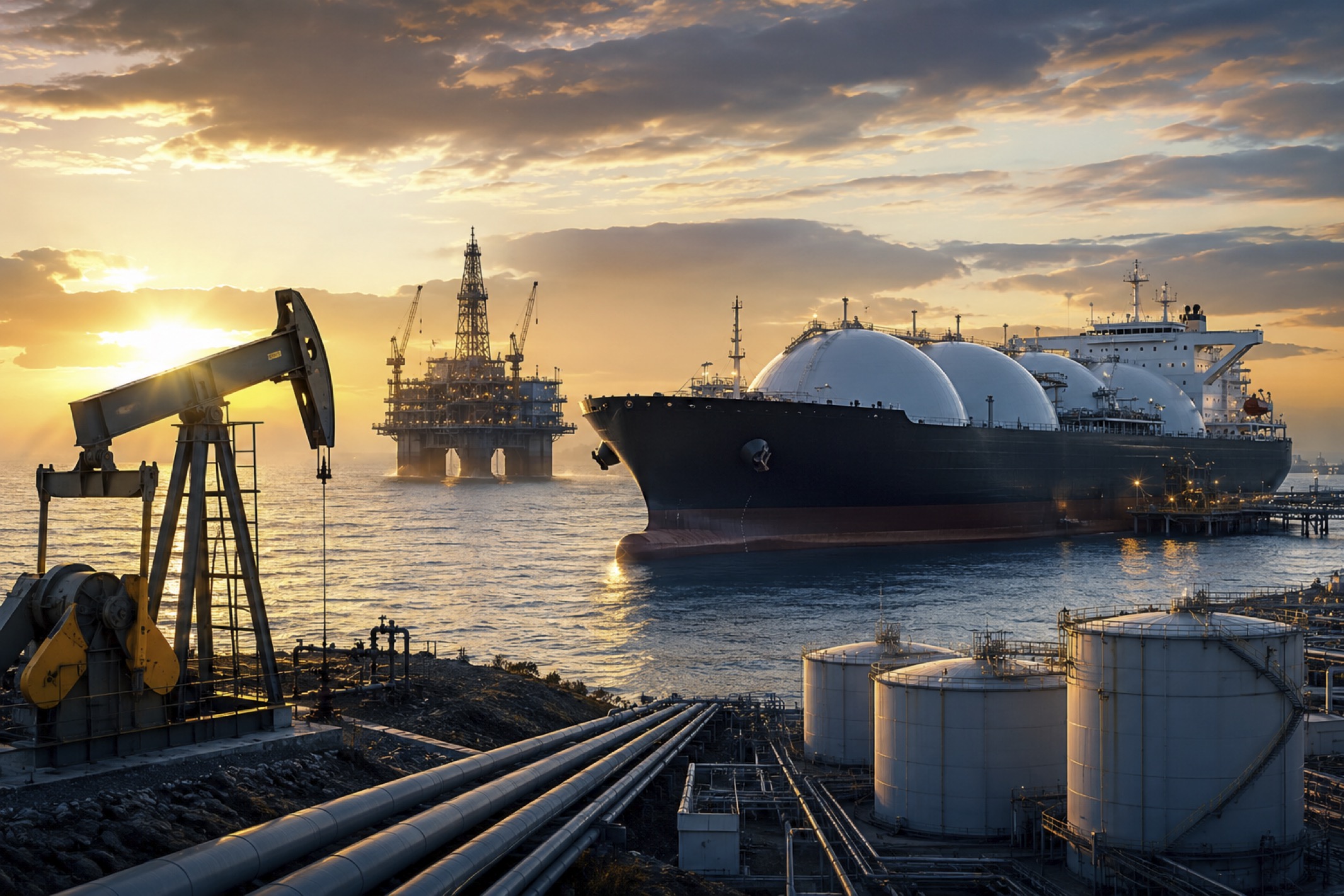
The United States has emerged as the world’s top exporter of crude oil and petroleum products, overtaking longtime energy giants Russia and Saudi Arabia.For the third straight month, the U.S. has claimed the leading position in global oil exports. In May, shipments climbed to 10.5 million barrels per day. What is your most up-to-date and in-depth assessment?
Energy-100, Energy Chief:
The headline is real and strategically significant: the United States has become the world’s largest exporter of crude oil and petroleum products, shipping roughly 10.5 million barrels per day (mb/d) in May 2026, ahead of Russia (~7.0 mb/d) and Saudi Arabia (~5.9 mb/d), and it has held that position for three consecutive months.
However, the deeper story is not simply “America won the oil race.” It is that the global energy order is being temporarily reshaped by war, sanctions, logistics, and shale flexibility.
The Three Layers of What Is Happening
1. Structural Trend: The Shale Revolution Finally Matured
The long-term driver is the U.S. shale revolution.
Since 2010, hydraulic fracturing and horizontal drilling transformed the United States from a major importer into:
- The world’s largest oil producer
- The world’s largest natural gas producer
- Now, under current conditions, the world’s largest oil exporter
The key difference between the U.S. model and the Saudi/Russian model is organizational:
| United States | Saudi Arabia/Russia |
|---|---|
| Thousands of private firms | State-directed systems |
| Market-driven output | Political output management |
| Fast response to prices | Slower bureaucratic response |
| Large financial markets | State budget dependence |
This gives America something unique:
Energy elasticity.
When prices rise, U.S. producers can add barrels faster than most competitors.
2. Geopolitical Trend: Rivals Are Being Constrained
The current export leadership is not solely because U.S. production surged.
It is also because competitors are constrained.
Russia
Russian exports continue to face:
- Sanctions
- Shipping restrictions
- Insurance limitations
- Ukrainian attacks on infrastructure
Russian exports are around 7 mb/d, significantly below potential capacity.
Saudi Arabia
Saudi Arabia’s position has been weakened by disruptions linked to the Gulf crisis and Hormuz-related instability. Saudi exports have fallen dramatically compared with recent historical levels.
Iran
Iranian exports have collapsed under current military and naval pressure, with production and exports falling sharply.
The Most Important Development: Asia Is Pivoting Toward America
Historically:
- Europe relied heavily on Russia.
- Asia relied heavily on the Gulf.
Today both patterns are weakening.
Almost half of U.S. exports are now moving toward Asian buyers.
This is strategically enormous.
Energy flows create:
- diplomatic leverage,
- security relationships,
- military cooperation,
- financial influence.
The nation that supplies fuel often gains political influence over the customer.
This is why energy dominance matters far beyond economics.
What OPEC Should Be Worried About
For fifty years OPEC’s power came from controlling spare capacity.
Today there is a challenge.
The U.S. doesn’t belong to OPEC.
Washington cannot order Exxon, Chevron, ConocoPhillips, and hundreds of shale producers to cut production the way Riyadh can direct Saudi Aramco.
This creates a competing system:
OPEC Model
- Centralized
- State-controlled
- Price management
U.S. Model
- Decentralized
- Capital-market driven
- Volume expansion
The result is that OPEC’s ability to sustain high prices becomes harder whenever U.S. shale can rapidly respond.
The Hidden Vulnerability Most Headlines Ignore
This is where the story becomes more complicated.
Many reports note that the export surge has been supported not only by production but also by releases from strategic reserves and exceptionally high refinery utilization.
Meanwhile:
- gasoline inventories are tight,
- distillate inventories are near multiyear lows,
- refineries are operating near capacity.
This means America’s export leadership may be partly cyclical rather than fully sustainable.
The critical question is:
Can the U.S. maintain 10.5 mb/d exports without extraordinary reserve releases and wartime market distortions?
The answer remains uncertain.
Strategic Winners and Losers
Winners
United States
Benefits include:
- Trade balance improvement
- Greater geopolitical leverage
- Stronger dollar support
- Expanded influence in Europe and Asia
U.S. Energy Companies
Particularly:
These firms gain access to premium international pricing.
Energy-Importing Allies
Countries seeking alternatives to Russia, Iran, or unstable Gulf routes gain a relatively secure supplier.
Losers
Russia
Loses export volume, market share, and geopolitical leverage.
Iran
Loses revenue and strategic influence.
OPEC
Faces erosion of its traditional market-management power.
China
China’s energy planners now confront a difficult reality: diversification away from Middle Eastern supply increasingly means greater dependence on U.S.-linked supply chains. Recent import disruptions illustrate the vulnerability.
My Strategic Assessment
There are two competing interpretations.
Interpretation A: Historic American Energy Dominance
The United States has entered a new era where it functions as:
- largest producer,
- largest LNG exporter,
- largest oil exporter,
giving Washington unprecedented influence over global energy markets.
This is the bullish American view.
Interpretation B: Wartime Distortion
The current ranking is partly a product of:
- sanctions,
- military conflict,
- disrupted competitors,
- strategic reserve releases,
- temporary logistical shifts.
If Gulf exports normalize and Russian flows recover, the ranking could narrow substantially.
This is the more cautious view.
Bottom Line
The most important takeaway is not that the U.S. exported 10.5 million barrels per day.
The important takeaway is that energy power is migrating from a system dominated by OPEC and state oil companies toward a hybrid system in which U.S. shale producers increasingly function as the world’s marginal supplier.
If that shift proves durable, the biggest geopolitical consequence will not be higher American profits.
It will be a redistribution of global influence away from traditional petro-states and toward a U.S.-centered energy network spanning Europe, Asia, and the Atlantic basin.
That would represent one of the largest changes in the global energy balance since the 1973 oil embargo.
Energy-100, Energy Chief
Three Corporate