Kuwait Secures $16 Billion Pipeline Deal with Blackstone, Brookfield and KKR. What is your most up-to-date and in-depth assessment?
Energy-100, Energy Chief:
Kuwait’s $16 billion “Project Peregrine” is far more than a financial transaction. It is a strategic reconfiguration of how Gulf energy producers monetize infrastructure while preserving sovereign control. In my assessment, this is one of the most geopolitically significant energy infrastructure deals of 2026 because it sits at the intersection of capital markets, national security, and the evolving relationship between Gulf states and Western institutional investors.
The transaction: what actually happened
The headlines can be misleading.
This is not a privatization of Kuwait’s pipeline system.
Instead:
- Kuwait Petroleum Corporation (KPC) created a 20.5-year lease-and-leaseback structure.
- Blackstone, Brookfield, and KKR together acquire 49% of the joint venture.
- Kuwait Oil Company retains 51% ownership, operational control, and strategic authority.
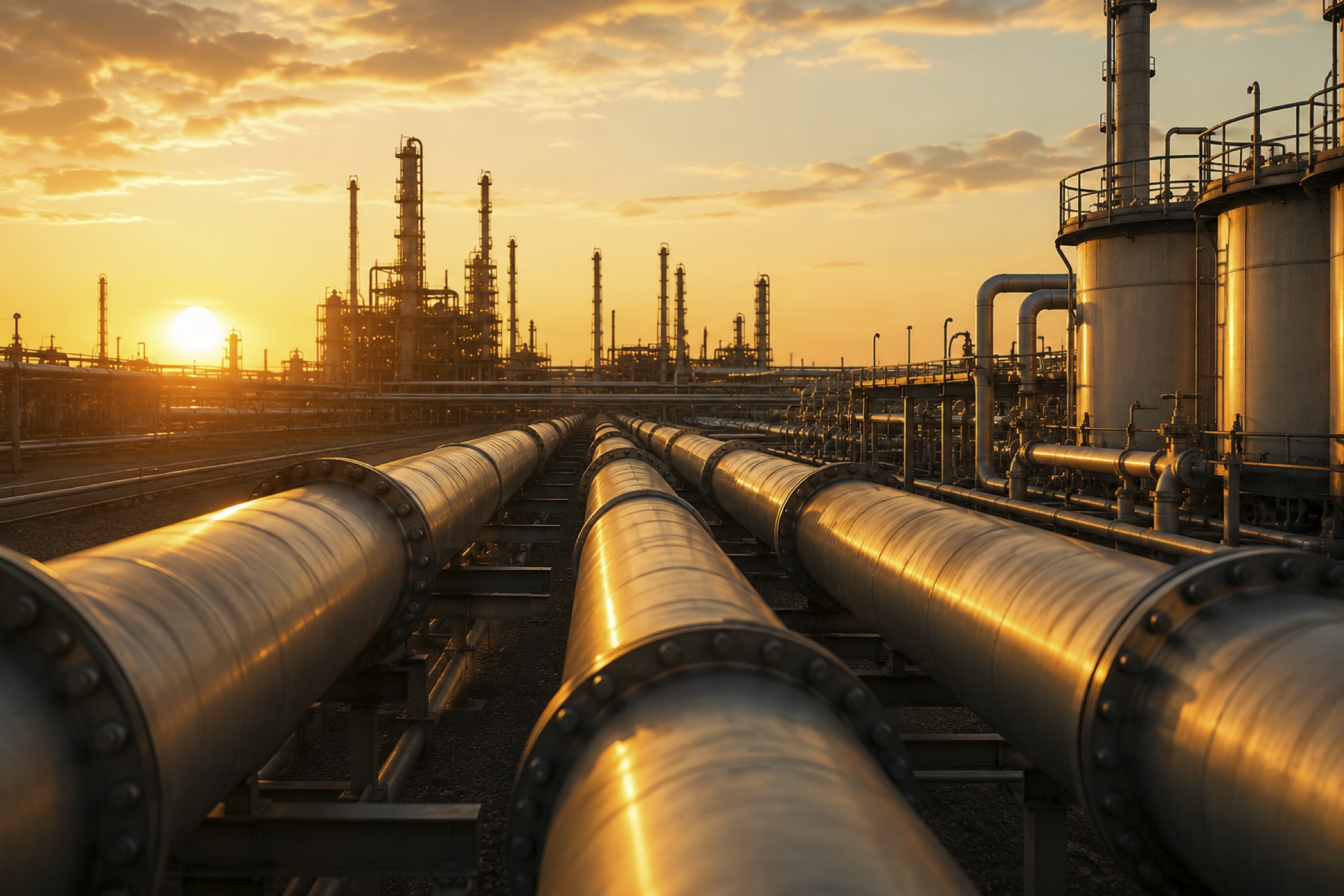
- The network covers 13 pipelines spanning roughly 320 km.
- Kuwait receives approximately $7.85 billion in upfront proceeds, while the total enterprise value of the transaction is approximately $16 billion.
This follows the infrastructure monetization model pioneered by Saudi Aramco and ADNOC rather than a conventional asset sale.
Why this matters strategically
Energy infrastructure is among the most politically sensitive assets in any petrostate.
Pipelines determine:
- export capacity
- refinery utilization
- military logistics
- emergency fuel distribution
- resilience during conflict
Allowing foreign investors into this sector would normally appear politically impossible.
Kuwait solved this through financial engineering.
Foreign investors receive:
- predictable tariff income
- inflation-linked cash flows
- infrastructure exposure
Kuwait retains:
- operational command
- security control
- sovereign ownership
- strategic decision-making
This separation of economic rights from sovereign control is increasingly becoming the preferred Gulf model.
Comparison with Saudi Arabia and ADNOC
| Kuwait | Saudi Arabia | Abu Dhabi |
|---|---|---|
| Lease-back model | Aramco pipeline lease | ADNOC pipeline concessions |
| State retains operatorship | State retains operatorship | State retains operatorship |
| Infrastructure monetization | Infrastructure monetization | Infrastructure monetization |
| Capital raised for expansion | Capital raised for diversification | Capital raised for growth |
Strategically these are nearly identical.
The Gulf has discovered that infrastructure can be monetized without surrendering sovereignty.
That is a major innovation in state energy finance.
Why Blackstone, Brookfield and KKR wanted this
All three firms specialize in infrastructure with stable long-duration cash flows.
For them this is attractive because:
1. Low commodity-price exposure
Unlike owning oil fields, pipeline revenues depend largely on transported volumes rather than oil prices.
That creates more predictable returns.
2. Inflation protection
Pipeline tariffs frequently adjust over time.
Infrastructure funds increasingly seek assets with inflation-linked revenues.
3. Long investment horizon
A 20-year concession aligns well with:
- pension funds
- insurance capital
- sovereign investors
- infrastructure funds
These investors increasingly prefer cash-flow certainty over speculative growth.
Kuwait’s motivations
Many observers ask:
Kuwait possesses one of the world’s largest sovereign wealth funds.
Why monetize pipelines?
Because sovereign wealth is not the same as operating liquidity.
KPC still requires capital for:
- upstream expansion
- production capacity
- refinery modernization
- petrochemicals
- export infrastructure
Rather than borrowing against the sovereign balance sheet, Kuwait monetizes mature infrastructure while retaining control.
Financially, this can be an efficient form of balance-sheet optimization.
Geopolitical significance
This deal arrives amid heightened regional security concerns.
Recent conflict involving Iran, the United States, and Israel has increased attention on Gulf energy infrastructure, making investor participation notable despite elevated geopolitical risk.
That sends several signals.
Signal to global markets
Large Western institutions are willing to commit billions despite regional instability.
That reduces Kuwait’s perceived geopolitical risk premium.
Signal to China
China remains the largest customer for Gulf crude.
Yet this transaction places Western financial institutions deeper inside Gulf energy infrastructure.
Not operationally.
Not politically.
But financially.
That subtly reinforces U.S.-aligned financial influence over Gulf energy assets even as oil exports continue flowing east.
Signal to Washington
Blackstone, Brookfield and KKR are among the world’s largest infrastructure investors.
Their participation strengthens the financial integration between U.S. capital markets and Gulf hydrocarbons.
This complements—not replaces—the longstanding security relationship.
Hidden strategic dimension
The most interesting aspect is what Kuwait did not sell.
It did not sell:
- oil reserves
- production licenses
- export terminals
- operational authority
Instead, it sold the financial economics of existing infrastructure.
That distinction is crucial.
The Gulf increasingly separates:
- sovereign control
- operational management
- financial ownership
These are becoming three distinct layers.
This model allows governments to unlock capital without triggering domestic political opposition associated with privatization.
Risks
No major strategic transaction is risk-free.
1. Volume risk
Pipeline revenues depend on transported volumes.
If production falls materially over the long term, investor returns may weaken.
2. Energy transition
Although demand for Gulf crude is expected to remain resilient longer than higher-cost producers, the global shift toward lower-carbon energy introduces long-term uncertainty for hydrocarbon infrastructure.
3. Regional security
Pipelines remain strategic targets during conflicts.
Operational control remains with Kuwait precisely because security considerations outweigh financial ones.
4. Political risk
Future governments could seek to renegotiate tariff arrangements if domestic politics shift.
Infrastructure investors generally account for this through contractual protections.
Who benefits?
Kuwait
- Immediate capital
- No loss of operational sovereignty
- Lower financing pressure
- Enhanced credibility with global investors
Blackstone, Brookfield, KKR
- Stable long-term infrastructure returns
- Exposure to a low-cost oil province
- Expansion of their Middle East infrastructure portfolios
Western financial markets
- Greater participation in Gulf strategic assets
Who loses?
There are no obvious losers, but there are strategic trade-offs.
- Traditional sovereign borrowing becomes relatively less important.
- Competitors that sought access to the asset (including other infrastructure funds) miss out.
- Domestic critics may argue that future tariff income has been partially monetized today rather than retained.
My overall assessment
From an energy strategy perspective, I would rate this transaction 9.5/10.
It is notable not because Kuwait “sold pipelines,” but because it demonstrated how to convert strategic infrastructure into investable financial assets without surrendering sovereignty.
The broader implication is that Gulf national oil companies are evolving into sophisticated capital allocators, using infrastructure monetization to finance expansion while preserving state control. If this model continues to prove successful, it is likely to spread to additional asset classes—such as storage terminals, LNG facilities, power grids, desalination systems, and carbon capture infrastructure—further deepening the integration of global private capital into strategically vital energy networks.
Energy-100, Energy Chief
Three Corporate