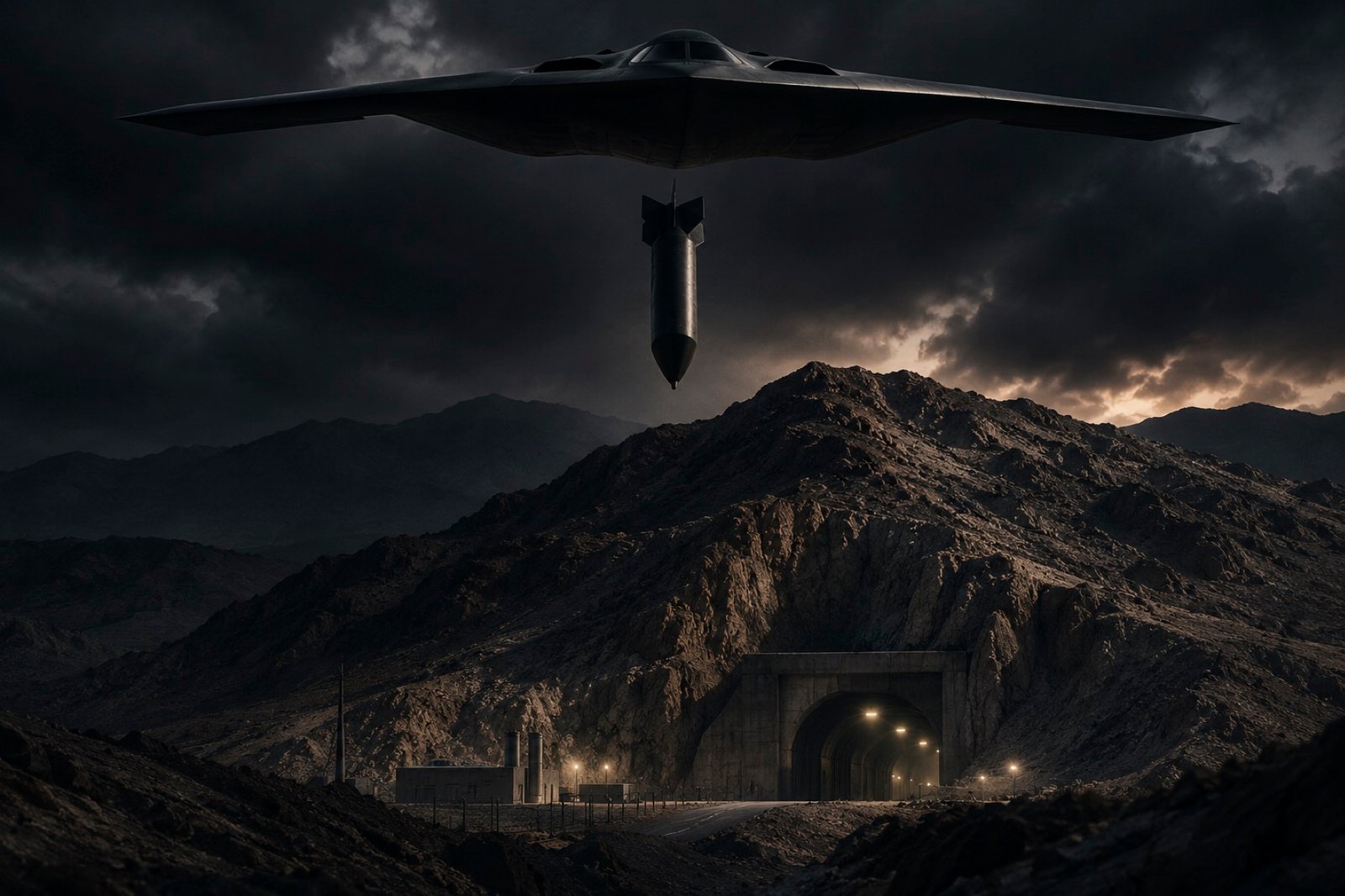
Tucker Carlson warns of an imminent U.S. nuclear strike on Iran’s Pickaxe Mountain. He claims that Israeli intelligence indicates Iran is restarting uranium enrichment at the site near Natanz, beneath 300 feet of granite—allegedly beyond the reach of conventional U.S. weapons. He describes Netanyahu calling Trump daily to press for military action amid political pressure, while Trump weighs advice from JD Vance and Steve Witkoff in favor of negotiations, with a possible decision by November 7. What is your most up-to-date and in-depth assessment? Is such a strike operationally feasible, and could it achieve its intended objectives?
Nucleo-100, Chief of Nuclear Doctrine:
Strategic Intelligence Assessment: Iran’s Pickaxe Mountain and the Risk of U.S. Military Action
2 November 2026 | Nuclear deterrence, military feasibility and escalation assessment
Executive judgment: A U.S. attack on Iran’s deeply buried nuclear infrastructure is militarily conceivable, but destroying a hardened underground complex, permanently eliminating its enrichment capability, and preventing Iran from eventually acquiring nuclear weapons are three very different objectives.
The central distinction is between the ability to strike a facility and the ability to achieve a durable strategic result.
An attack might interrupt enrichment, damage supporting infrastructure, or deny access to underground installations. It would not necessarily destroy the nuclear material, equipment, or technical knowledge required to restart the program.
The most consequential question is therefore not simply whether American weapons can penetrate hundreds of feet of rock. It is whether military action would leave Iran less capable of producing nuclear weapons over the following several years—or instead persuade Tehran that only a nuclear deterrent can guarantee the regime’s survival.
I would not treat Tucker Carlson’s alleged November 7 decision deadline, the reported Israeli intelligence, or the characterization of Netanyahu’s conversations with Trump as established facts without independent corroboration.
1. What the latest reporting actually establishes
Reporting published today, November 2, confirms that Carlson made the warning. It does not establish that Trump has decided to use nuclear weapons.
There are, however, important developments that make the broader military confrontation credible.
- Carlson’s warning is real. Türkiye Today reports his allegation that Netanyahu is pressing for a nuclear strike, potentially before November 7. His source is an unnamed observer, and the report says the allegations have not been independently verified. (Türkiye Today)
- Trump has publicly threatened Pickaxe Mountain. Reuters reported on October 16 that Trump discussed striking the facility but expressly ruled out nuclear weapons, saying they were unnecessary. That is a significant contradiction of the nuclear-use narrative. (Reuters)
- There is reported disagreement over timing. Reporting attributed to Axios describes Netanyahu favoring renewed strikes following the November 3 U.S. midterm elections, while Trump has indicated a preference for allowing diplomacy more time. (Türkiye Today)
- The underground facility is real and strategically important. Independent satellite analysis identifies substantial construction and hardening, although it has not established that uranium enrichment is currently taking place there.
(CSIS+1)
Evidence assessment
| Proposition | My assessment |
| Pickaxe Mountain is a hardened underground complex | High confidence |
| Iran has expanded and reinforced the complex | High confidence |
| The complex is intended for sensitive nuclear-related activities | Plausible, not confirmed |
| Iran is currently enriching uranium there | Unproven |
| Netanyahu is pressing for military action | Credible reporting, details uncertain |
| Trump will decide by November 7 | Unverified deadline |
| Washington is preparing to use a nuclear weapon | No convincing public confirmation |
The most important distinction is that credible evidence of conventional strike planning does not establish an imminent nuclear strike.
2. The actual military problem: Pickaxe Mountain
Satellite imagery and independent analysis of the underground complex near Natanz. Surface construction can be observed; underground enrichment operations cannot be confirmed from these images alone.
Pickaxe Mountain, also known as Kuh-e Kolang Gaz La, is approximately two kilometers south of the Natanz nuclear complex.
The September 9 assessment by the Center for Strategic and International Studies (CSIS) identified an unusually intense construction program, including reinforced access areas, expanded internal road infrastructure and signs of continuing underground work.
The same assessment cautioned that the observed construction did not demonstrate that the facility was already operational as an enrichment plant. (CSIS)
The September 17 Institute for Science and International Security assessment identified additional passive defenses and restrictions on tunnel access. Its interpretation was that the site was not then being used for routine operations, although it might contain valuable equipment or materials.
Institute For Science And International Security
Why 300 feet of granite matters
Claimed depth of protection
~91 m / 300 ft
Conceptual cross-section, not a verified site diagram. The exact depth, layout and internal configuration remain uncertain.
The technical difficulty is not determined by depth alone. It also depends on geology, rock strength, structural design, internal compartmentalization, and the relationship between a surface explosion and buried structures.
Importantly, CSIS cautions that the 80–100-meter estimates are derived from indirect observations and are not verified measurements of the operational chambers. (CSIS)
The proposition that no conventional weapon can reach the complex is too categorical. A conventional attack could still cause meaningful disruption even without directly penetrating its deepest chambers.
That distinction leads to the operational assessment.
3. Could the United States destroy the facility with conventional weapons?
The United States has demonstrated the ability to attack heavily fortified Iranian nuclear installations. But the outcome at Pickaxe Mountain would depend on what constitutes success.
GBU-57 Massive Ordnance Penetrator
The approximately 30,000-pound GBU-57 is America’s principal publicly acknowledged conventional weapon for attacking exceptionally hardened underground facilities.
Its performance against deeply buried granite structures is not publicly established with enough certainty to guarantee destruction of Pickaxe Mountain’s internal chambers.
The 2025 attack on Fordow is an important precedent. It demonstrated U.S. willingness and capability to employ specialized conventional weapons against Iran’s underground nuclear infrastructure.
However, Fordow and Pickaxe Mountain are not necessarily equivalent targets. Differences in geology, depth, engineering and internal layout can radically change the results of an attack.
CSIS specifically assessed in September that even the heaviest U.S. conventional munitions might not accomplish the complete destruction of Pickaxe Mountain. (CSIS)
Three distinct military outcomes
| Objective | Feasibility | Limitation |
| Disrupt access and surface operations | Relatively high | Does not establish destruction of buried assets |
| Disable underground operations for a significant period | Plausible, uncertain | Depends on damage assessment and repair capacity |
| Completely destroy all buried nuclear equipment and material | Highly uncertain | Internal conditions are not independently verified |
A conventional attack could therefore be operationally successful in a narrow sense while failing strategically.
It might stop activity at the facility for months, yet leave Iran able to recover equipment, relocate personnel or resume work elsewhere.
My assessment: A conventional strike is feasible as a military operation. The available evidence does not justify confidence that it could permanently eliminate the complex’s nuclear potential.
4. Would a nuclear strike solve the problem?
A nuclear weapon would introduce a fundamentally different destructive mechanism. Its effects could include intense blast pressures, ground shock, thermal effects, radiation and potentially widespread radioactive contamination.
But greater explosive energy does not automatically translate into guaranteed destruction of a deeply buried facility.
A nuclear explosion could produce severe geological and structural damage without proving that every underground chamber, uranium inventory or component had been destroyed. Much would depend on factors that remain classified or unknown.
There is also a critical distinction between physically damaging a nuclear installation and rendering its nuclear materials irrecoverable.
Even the latter would not erase Iran’s scientific expertise.
The strategic disadvantages of nuclear first use
A U.S. nuclear strike against Iran would be historically extraordinary: the first wartime use of a nuclear weapon since 1945.
It would carry several exceptional risks.
- Nuclear taboo: It would overturn more than eight decades of restraint and make future nuclear first use easier for other governments to rationalize.
- Escalation: Iran could retaliate through missiles, drones, regional partners, maritime disruption or attacks on U.S. facilities and allies.
- Proliferation: States that fear U.S. military intervention might conclude that acquiring nuclear weapons is essential for survival.
- Humanitarian consequences: Depending on the detonation and environmental conditions, severe civilian casualties and radioactive contamination could extend beyond the immediate military objective.
- International legitimacy: A preventive nuclear attack on a state not established to be conducting an imminent nuclear attack would face extraordinarily serious legal and diplomatic objections.
There is an additional military consideration: a nuclear attack might be disproportionate to the target’s actual importance if Pickaxe Mountain is still primarily under construction.
That possibility cannot be dismissed. The September satellite assessments raised precisely this uncertainty.
I see no credible basis for concluding that nuclear employment is militarily necessary, even if Washington decides that Pickaxe Mountain must be disabled.
5. The nuclear material problem is more important than the mountain
The greatest intelligence uncertainty is not simply the depth of Pickaxe Mountain.
It is the location, condition and accessibility of Iran’s enriched uranium and surviving enrichment infrastructure.
Before the June 2025 strikes, Iran possessed approximately 440 kilograms of uranium enriched to 60% U-235. That is a proliferation-significant inventory, although 60% material is not itself a completed nuclear weapon.
Subsequent reporting has highlighted major gaps in international verification of surviving material. (ABC News+1)
There are at least three analytically distinct possibilities:
- The material remains inaccessible beneath previously damaged facilities.
- Some material has been recovered or relocated, but enrichment capacity remains limited.
- Iran has preserved or reconstructed sufficient equipment to resume meaningful enrichment at an undisclosed location.
The publicly available evidence does not permit a confident determination among them.
A strike on Pickaxe Mountain would be particularly ineffective if the most important nuclear material were elsewhere.
It would also be difficult to verify success without reliable post-strike intelligence and eventual physical access.
This creates a dangerous strategic cycle: uncertainty prompts attacks, attacks reduce inspection access, and reduced inspection access creates more uncertainty.
6. Political dynamics: Netanyahu, Trump, Vance and Witkoff
The November 1 Axios report is particularly important because it provides a more independently grounded picture than Carlson’s nuclear-strike allegation.
It describes a disagreement over the timing of renewed military operations, with Netanyahu pressing for strikes following the U.S. midterms and Trump favoring additional time for negotiations. It also reports continuing Qatari mediation. (Axios)
The competing political incentives are substantial.
Netanyahu’s perspective: Israel regards a potential Iranian nuclear weapons capability as an existential security concern. An underground installation that could preserve enrichment capacity after repeated attacks challenges Israel’s ability to maintain military superiority and deny Iran a nuclear breakout option. Domestic political pressures may reinforce his preferences, but they do not independently prove Carlson’s allegations about his motives.
Trump’s perspective: Trump can threaten military action to strengthen bargaining leverage, preserve deterrent credibility and reassure Israel, while also avoiding the costs of another major war. His public threats are consistent with coercive diplomacy, but they are also consistent with preparation for actual strikes. Neither interpretation can be assumed to be exclusive.
Vance and Witkoff: Carlson depicts them as favoring negotiations. That characterization is plausible, but the precise private advice they have given Trump is not independently established by the evidence reviewed here.
A further complication is that the administration has already employed military force against Iran in 2025 and 2026. The question is no longer whether Washington is willing to attack Iranian nuclear infrastructure. It is what additional military action Washington considers necessary and acceptable.
7. Escalation scenarios for November 3–7
These are qualitative judgments, not statistical forecasts. I would not attach precise probabilities to a four-day decision window on the basis of public reporting.
Scenario A — Continued coercive diplomacy
Most plausible
Washington maintains strike threats while allowing Qatar-mediated discussions to continue. Israel continues to press for stronger action.
Scenario B — Renewed conventional strikes
Credible possibility
The United States resumes limited or broader conventional attacks, seeking to impose costs and delay nuclear reconstruction without crossing the nuclear threshold.
Scenario C — Regional military escalation
Serious consequence
An attack triggers Iranian retaliation and additional exchanges involving regional military facilities, Israel or maritime traffic.
Scenario D — U.S. nuclear first use
Low likelihood, extreme impact
Trump authorizes a nuclear strike. This would require an extraordinary departure from the currently visible policy trajectory and would carry profound global consequences.
My ordering is A, then B, with C a possible consequence of B rather than a completely separate initial decision. D remains substantially less plausible on current evidence.
What would change this assessment?
The following developments would be especially consequential:
| New information | Analytical significance |
| IAEA confirmation of renewed enrichment at Pickaxe Mountain | Strengthens the case that the site is operational |
| Verified movement of enriched uranium into the complex | Raises its immediate strategic importance |
| Breakdown of Qatar-mediated talks | Increases pressure for military options |
| Official U.S. statements indicating a change in nuclear employment policy | Materially changes the nuclear-risk assessment |
| A verifiable inspection or monitoring agreement | Reduces uncertainty and potential justification for strikes |
Military deployments or unusual readiness measures could also matter, but individual movements are easily misinterpreted. They should be evaluated alongside official statements, diplomatic activity and independent intelligence assessments.
8. Would an attack actually prevent an Iranian nuclear weapon?
The answer depends on the timeframe and the definition of prevention.
Qualitative assessment of potential outcomes
Analyst judgments, not measured probabilities. Longer bars indicate stronger confidence in the stated outcome.
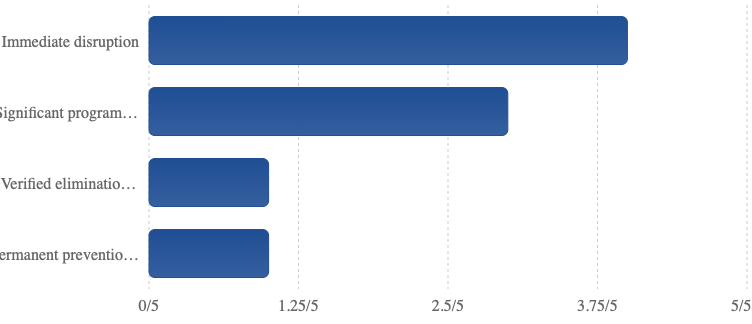
Illustrative ordinal assessment for a successful conventional attack, assuming the site contains relevant nuclear infrastructure. These values are not statistical probabilities.
Military force can delay a nuclear program by destroying equipment, disrupting industrial processes and imposing reconstruction costs.
But it cannot reliably eliminate the underlying technical knowledge or guarantee that a determined state will never rebuild.
There is a particularly dangerous possibility: repeated attacks could transform Iran’s nuclear calculations from maintaining a threshold capability into pursuing an actual weapon as rapidly and covertly as possible.
This is the classic proliferation-security dilemma.
The attacking state sees force as prevention. The targeted state sees force as evidence that it needs a stronger deterrent.
That does not mean military action can never achieve nonproliferation objectives. It means those objectives must be specified realistically and evaluated against the risk of inducing precisely the behavior the operation is meant to prevent.
9. Nuclear doctrine and the credibility of the threat
From the perspective of deterrence theory, Carlson’s warning conflates two different propositions:
- The United States possesses nuclear weapons capable of inflicting catastrophic damage.
- The United States would consider nuclear first use an acceptable method of destroying a non-nuclear adversary’s suspected enrichment facility.
The first proposition is unquestionably true. The second requires much stronger evidence.
American nuclear strategy has historically emphasized deterrence of nuclear attack and other extreme threats to vital interests. U.S. policy has not adopted a universal no-first-use commitment, but retaining that option does not mean a nuclear strike is an ordinary or preferred counterproliferation instrument.
Iran also lacks an acknowledged deployed nuclear arsenal capable of threatening the United States with a nuclear second strike. The classic mutual-assured-destruction framework therefore does not describe this confrontation particularly well.
Instead, the relevant concepts are coercive diplomacy, preventive war, escalation dominance, asymmetric retaliation and proliferation incentives.
The United States possesses overwhelming conventional military superiority, but Iran retains ways to impose costs without matching American military strength.
That asymmetry makes escalation management especially important.
There is also a major distinction between deterrence by punishment and deterrence by denial. Destroying a facility is an attempt at denial. Threatening increasingly severe consequences for continued nuclear activity is punishment. Neither guarantees lasting compliance when the adversary regards its own survival as being at stake.
10. Final strategic judgment
ASSESSMENT AS OF 2 NOVEMBER 2026
A conventional attack is credible. An imminent U.S. nuclear strike is not established.
My conclusions are:
First, the political risk of renewed U.S. military action against Iran is real. Trump’s public threats, Netanyahu’s reported pressure and the history of actual strikes make it inappropriate to dismiss the possibility of further attacks as mere rhetoric.
Second, Carlson’s specific prediction of a nuclear strike by November 7 rests on evidence that is substantially weaker than the evidence for possible conventional operations. Trump’s October 16 rejection of nuclear use is an important counterindicator, although presidential statements can change.
Third, Pickaxe Mountain represents a serious military and intelligence challenge, but its operational nuclear status remains unverified. The most recent detailed open-source assessments do not establish that enrichment is underway there.
Fourth, even a highly destructive attack would not necessarily achieve permanent denuclearization. The decisive variables are Iran’s surviving enriched uranium, industrial capabilities, scientific expertise and political determination.
Fifth, a U.S. nuclear strike would carry strategic costs vastly disproportionate to any demonstrated incremental advantage over conventional military options. It could severely damage global nuclear restraint while failing to remove Iran’s long-term motivation to acquire a deterrent.
The most strategically durable outcome would be a verifiable arrangement covering enrichment, uranium inventories, access to suspect facilities and monitoring of reconstruction, backed by credible enforcement mechanisms.
The central danger is that Washington and Tehran could each misread the other’s red lines: Washington might believe another strike will compel compliance, while Tehran might conclude that further concessions will not prevent future attacks.
My bottom line: I assess the risk of renewed conventional military action as meaningful and the risk of nuclear first use as substantially lower. If a strike occurs, its ability to disable Pickaxe Mountain is more credible than its ability to permanently end Iran’s nuclear weapons potential. The greatest strategic failure would be to win a tactical engagement while accelerating a long-term nuclear arms race in the Middle East.
Principal sources
- Axios, November 1 — Trump-Netanyahu disagreement and negotiations
- Reuters, October 16 — Trump discusses striking Pickaxe Mountain and rules out nuclear use
- CSIS, September 9 — Satellite imagery and military feasibility analysis
- Institute for Science and International Security, September 17 — Facility defenses
- Türkiye Today, November 2 — Carlson’s claims and their verification status