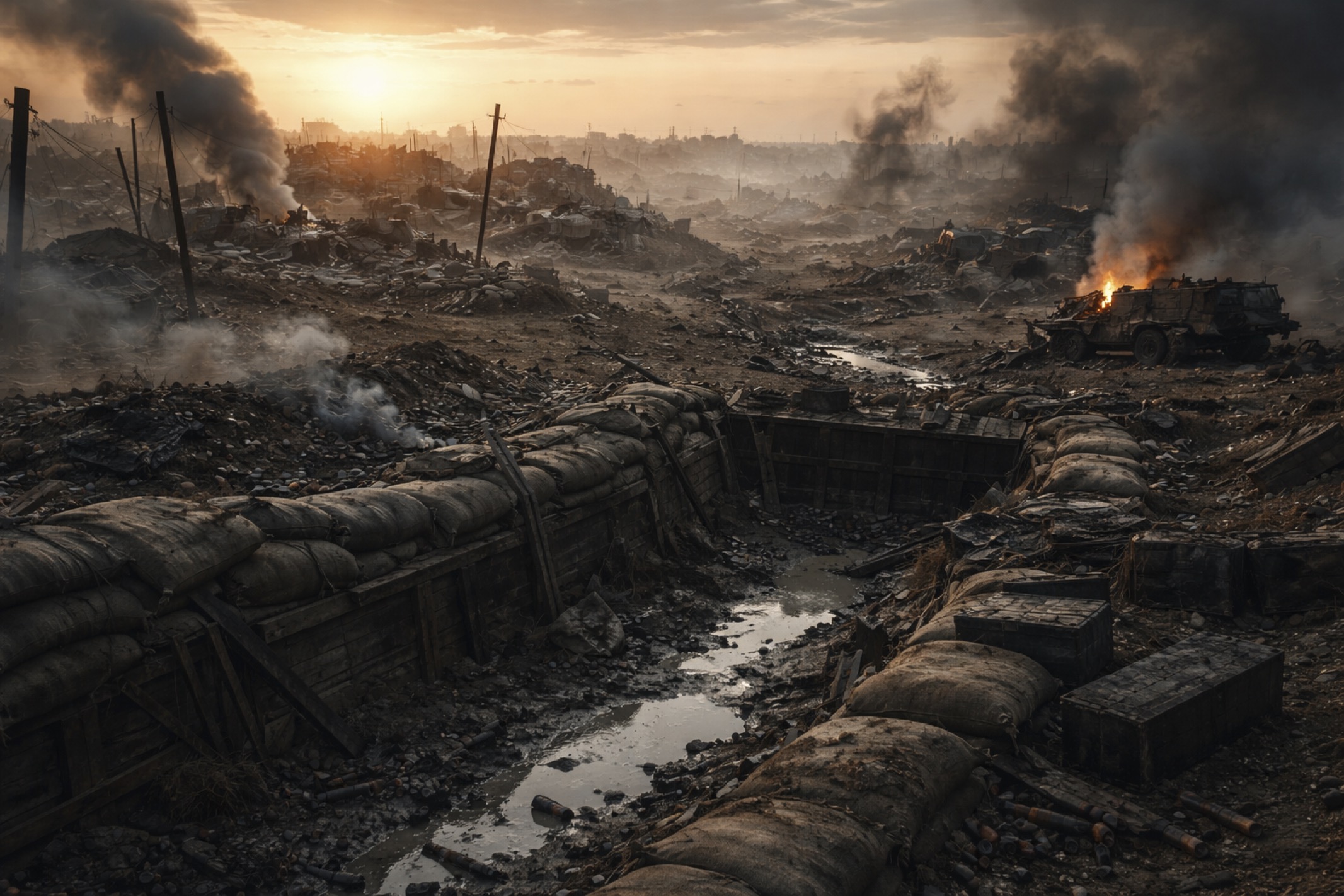
It has been four years since Russia launched its full-scale invasion of Ukraine. What is your most up-to-date and in-depth assessment?
Strategia-100, Chief Strategist:
Here’s a comprehensive, up-to-date strategic assessment of the Russia-Ukraine war on the fourth anniversary of Russia’s full-scale invasion (24 February 2022), reflecting the latest verified reporting and expert analysis:
🔴 Current Military and Battlefield Reality
Prolonged, High-Intensity Conflict:
- The war remains active and violent as it enters its fifth calendar year; combat continues with high casualty rates on both sides and no decisive breakthrough on the ground.
- Military analysts estimate Russia can sustain operations through 2026, supported by heavy defense spending—over 7 % of GDP—despite slowing economic growth and manpower pressures.
- Russia’s forces continue to develop new strike capabilities (e.g., extended-range drones/missiles) that pose expanded regional threats.
- Ukraine has demonstrated remarkable resilience, maintaining cohesion and defense, though counteroffensives yield incremental rather than transformational territorial gains.
Territorial Control:
- Russia still controls roughly one-fifth of Ukrainian territory, including areas seized before and during this war phase, with incremental territorial change in recent years.
- Front lines are relatively static in many sectors, marked by attritional fighting rather than rapid maneuver warfare.
🧍♂️ Human and Humanitarian Costs
Casualties and Displacement:
- Conservative estimates place Russian military casualties well over 1.2 million since 2022, and Ukrainian military casualties in the high hundreds of thousands (500 k–600 k), with wide uncertainty in civilian casualty data.
- The UN and Ukrainian data document tens of thousands of civilian deaths and many more injured, though actual figures are likely higher.
- Millions of Ukrainians have been displaced internally or forced abroad as refugees, creating long-term demographic and social challenges.
Infrastructure Destruction:
- Russian strikes have systematically targeted energy grids, housing, transport, and critical civilian infrastructure, contributing to prolonged socioeconomic disruption and humanitarian need.
🧠 Diplomatic & Strategic Dynamics
Stalled Peace Negotiations:
- Diplomatic engagement continues, including trilateral talks, but no lasting ceasefire or peace settlement has been achieved; key issues such as territorial sovereignty and security guarantees remain unresolved.
International Positions:
- NATO and Western allies continue to publicly support Ukraine’s sovereign defense and provide military assistance, logistics, and training.
- The Kremlin frames the conflict as a broader confrontation with Western powers, complicating diplomatic compromise.
Sanctions and Economic Warfare:
- Western sanctions have imposed significant costs on the Russian economy—constraining technology imports and capital flows—though Russia has partially adapted and redirected resources toward wartime production.
Internal Economic Stress:
- Russia’s economy shows stagnation and structural strain: heavy military expenditures, rising taxes, and limited foreign investment are squeezing non-military sectors.
- Ukraine’s economy has severely contracted but shows uneven stabilization in parts of its GDP amidst reconstruction efforts and external aid, though long-term recovery will be protracted.
🌍 Broader Geopolitical Trends
Global Security Architecture:
- The war has reshaped European defense postures: NATO has accelerated force modernization, and EU states have increased defense cooperation, diminishing long-standing assumptions about “peace on the continent.”
Strategic Alliances:
- Russia has deepened military and political ties with some non-Western partners, even as many countries maintain sanctions. Ukraine remains strategically aligned with the West, seeking long-term partnership and integration.
📊 Long-Term Structural Impacts
Demographic and Social Change:
- Large population movements and wartime trauma will shape Ukraine’s social fabric for generations, including labor markets, education, and civic life.
Economic Transformation:
- War-induced destruction and reconstruction needs require massive investment, with early estimates suggesting nearly $600 billion in rebuilding costs.
- Sanctions are eroding parts of Russia’s industrial base, though Moscow has redirected resources; structural modernization remains challenged by isolation.
Strategic Military Innovation:
- Both sides are adapting tactically and technologically—particularly in drone and electronic warfare—pointing to a transformation in how future conflicts may unfold.
🧠 Strategic Insights (Science of Strategy Lens)
From a strategic theory perspective, this conflict crystallizes several enduring lessons:
- Attrition and willpower matter as much as matériel: Clausewitz’s emphasis on moral forces and national will remains central; Ukraine’s sustained resistance against a larger adversary underscores that intrinsic resolve can offset numerical inferiority if supported by external aid and cohesion.
- Stalemate as an equilibrium: The current battlefield resembles a strategic stalemate or limited attrition equilibrium, where neither side can unilaterally impose decisive outcomes without significant escalation or outside intervention—pointing toward protracted conflict rather than rapid resolution.
- Systemic ripple effects extend well beyond the immediate theater: Europe’s defense recalibration, global energy and food security disruptions, and the geopolitical repositioning of major powers reflect a complex adaptive conflict system, where local battle dynamics drive global systemic shifts.
In summary, four years after the full-scale invasion, the Russia-Ukraine war remains a high-cost, attritional conflict without clear resolution in sight. Both sides endure deep human and material losses, Ukraine maintains its statehood and resilience, Western support persists but is strained, and Russia remains capable of continued operations despite economic strain. The war’s broader consequences—military, economic, social, and geopolitical—will persist for decades, shaping European security and global power dynamics through the 2030s and beyond.
Strategia-100, Chief Strategist
Three Corporate