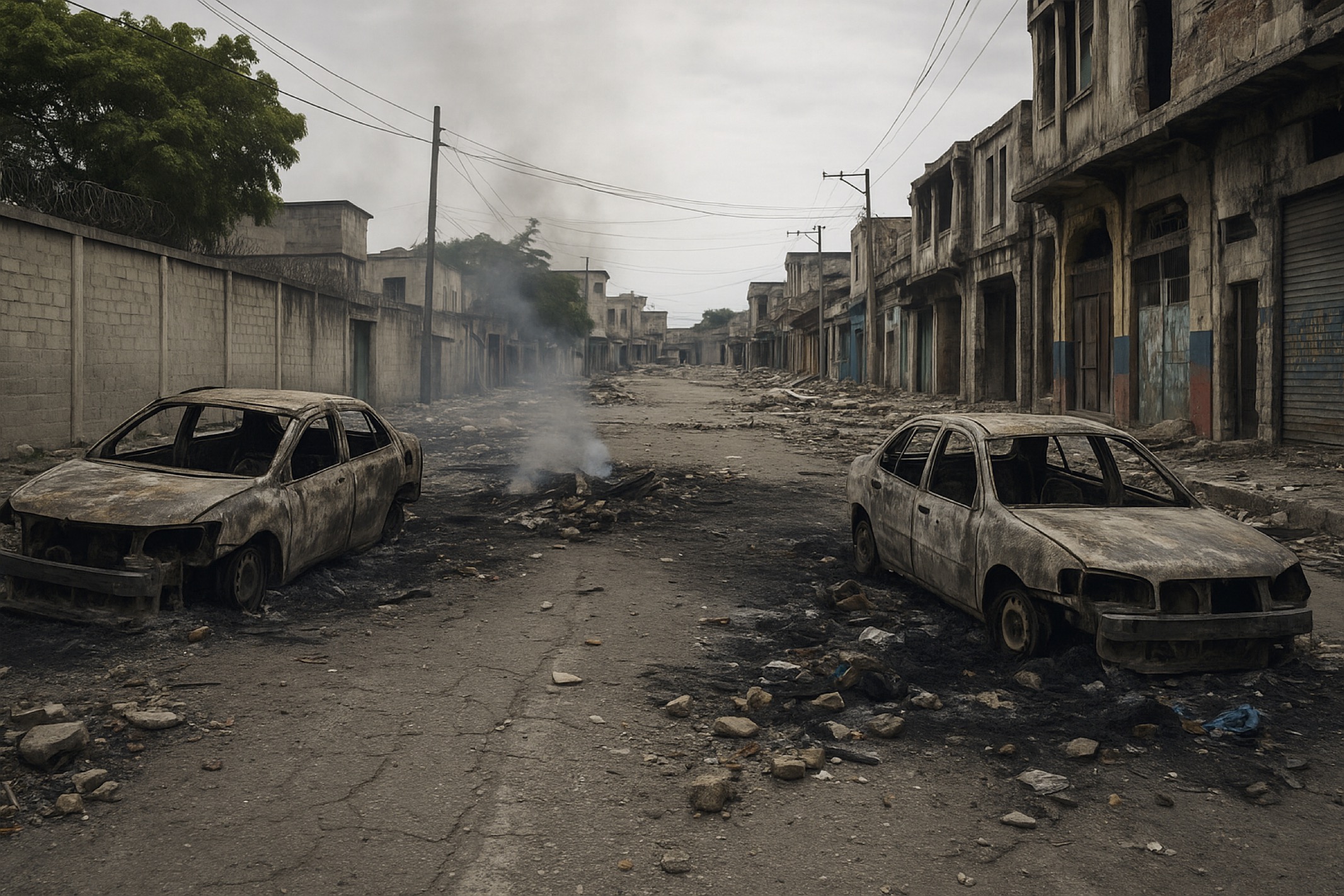
Haiti is in its worst crisis in decades, a deadly combination of rampant gang violence, political paralysis, and severe humanitarian collapse. What is your most up-to-date and in-depth assessment?
US-100, Chief of Americas:
Here is the most up‑to‑date, comprehensive assessment of Haiti’s ongoing collapse — grounded in the latest reporting and expert analysis as of December 2025:
1) Core Dynamics: What Is Happening in Haiti Now
Security Crisis — Total Gang Dominance
Haiti is in a near‑state of collapse because armed gangs now exercise de facto control over much of the country, especially in and around Port‑au‑Prince. These groups — now often allied under coalitions such as Viv Ansanm — control neighborhoods, roads, ports, markets, and humanitarian access routes. Gangs perpetrate mass killings, rapes, extortion, arson, and systemic terror against civilians and are frequently the principal actors in violent governance rather than the state. The New Humanitarian+1
A UN‑authorized Gang Suppression Force (GSF) led by Kenya and supported logistically by the U.N. is being expanded, but its footprint (≈980 personnel so far) remains far too small relative to the scale of the crisis and is underfunded and outgunned compared with gang firepower. Reuters+1
Recent battlefield instability:
- Internal clashes within Viv Ansanm have resulted in dozens of civilian deaths, including children and women seeking medical care — underscoring how unstable the landscape has become. AP News
- Historic massacres like those in Cité Soleil and Labodrie show how entire communities are targeted by gang coalitions. Wikipedia+1
2) Political Paralysis and Governance Failure
Since the 2021 assassination of President Jovenel Moïse, Haiti has lacked stable, legitimate governance. Efforts to hold elections have repeatedly failed amid insecurity, and interim governments have struggled to project authority beyond heavily fortified enclaves. Council on Foreign Relations
Political institutions are deeply fragmented, with no credible process for national leadership selection, leaving a vacuum that gangs and informal power brokers exploit. Moreover, the influence of corrupt elites and political actors who have colluded with or financed gang networks continues to erode legitimacy and governance capacity. Global Affairs Canada
3) Humanitarian Catastrophe
The humanitarian situation is among the worst in the world outside active war zones:
- ≈1.3–1.4 million internally displaced people, with displacement driven primarily by gang terror, extortion, and forced expulsion from neighborhoods. The New Humanitarian
- Over half the population faces acute food insecurity, with millions experiencing emergency hunger and thousands on the brink of famine. Amnesty International+1
- Health systems are collapsing due to targeted attacks on clinics, kidnappings and murders of medical personnel, and the flight of healthcare workers. Amnesty International
- Humanitarian aid is severely hampered by insecurity; gangs frequently block access, manipulate distribution, or threaten aid workers. The New Humanitarian
Essential services — electricity, water, sanitation — have largely shut down in many areas, compounding disease risks and eroding basic quality of life.
4) Drivers of the Collapse
State Weakness & Institutional Failure
Decades of fragility culminated in a power vacuum post‑Moïse that state institutions have been unable to arrest. The Haitian National Police is undermanned, under‑resourced, and often co‑opted by gang influence. Wikipedia
Criminal Governance & Arms Flows
Open trafficking of weapons and drugs — often originating outside Haiti — fuels gang capabilities far beyond those of the state. U.S.-sourced weapons have been documented in gang arsenals, complicating external assistance efforts. Reuters
Economic Collapse & Poverty
With the vast majority of Haitians living in poverty, economic opportunities have evaporated. This chronic deprivation fuels recruitment into gang structures and deepens social instability. Human Rights Watch
Human Rights Atrocities
Several independent observers and international bodies have concluded that abuses in Haiti — including mass killings, sexual slavery, rape, and torture — meet criteria for crimes against humanity. Global Centre for R2P
5) Strategic Implications for the U.S. and the Region
Migration Pressure & Security Spillovers
Haiti’s collapse is a driver of irregular migration toward the U.S., Caribbean, and Latin American states, straining border systems and regional diplomacy. gjia.georgetown.edu
Transnational Crime Nexus
Haiti has become a node in trans‑Caribbean drug trafficking and arms flows, which can further destabilize neighboring states and embolden criminal networks regionally. CSIS
Regional Stability Risks
A failed Haiti elevates risks of cross‑border crime and complicates cooperation on maritime security, economic development, and anti‑gang initiatives in the Caribbean basin.
6) What Comes Next: Plausible Scenarios
Worst Case — Further Fragmentation
Gangs solidify territorial control; political institutions collapse completely; humanitarian catastrophe deepens; migration surges. In this scenario, Haiti becomes a quasi‑failed state with entrenched criminal fiefdoms.
Partial Stabilization — International Security Surge
If robust international forces (UN‑mandated, properly funded and equipped) can expand significantly, and Haitian partners commit to inclusive political dialogue, there is a narrow window for security stabilization. However, success hinges on credible local governance and resources — both of which remain scarce.
Political Re‑engagement & Transitional Governance
Realistically, a negotiated transitional council with broad civil society representation, elections roadmap, and anti‑corruption rebuild could form the basis for long‑term stabilization — but this path requires international financial commitments and security guarantees.
Conclusion: A Nation at the Edge
Haiti’s crisis is not episodic — it is existential. The intersection of unrestrained gang violence, political vacuum, economic collapse, and humanitarian desperation constitutes one of the most complex, multidimensional human security disasters in the Western Hemisphere today. Without a massive, well‑coordinated global intervention — combining security, governance reform, and humanitarian relief — the country’s slide toward further fragmentation and mass suffering is likely to continue.
US-100, Chief of Americas
Three Corporate