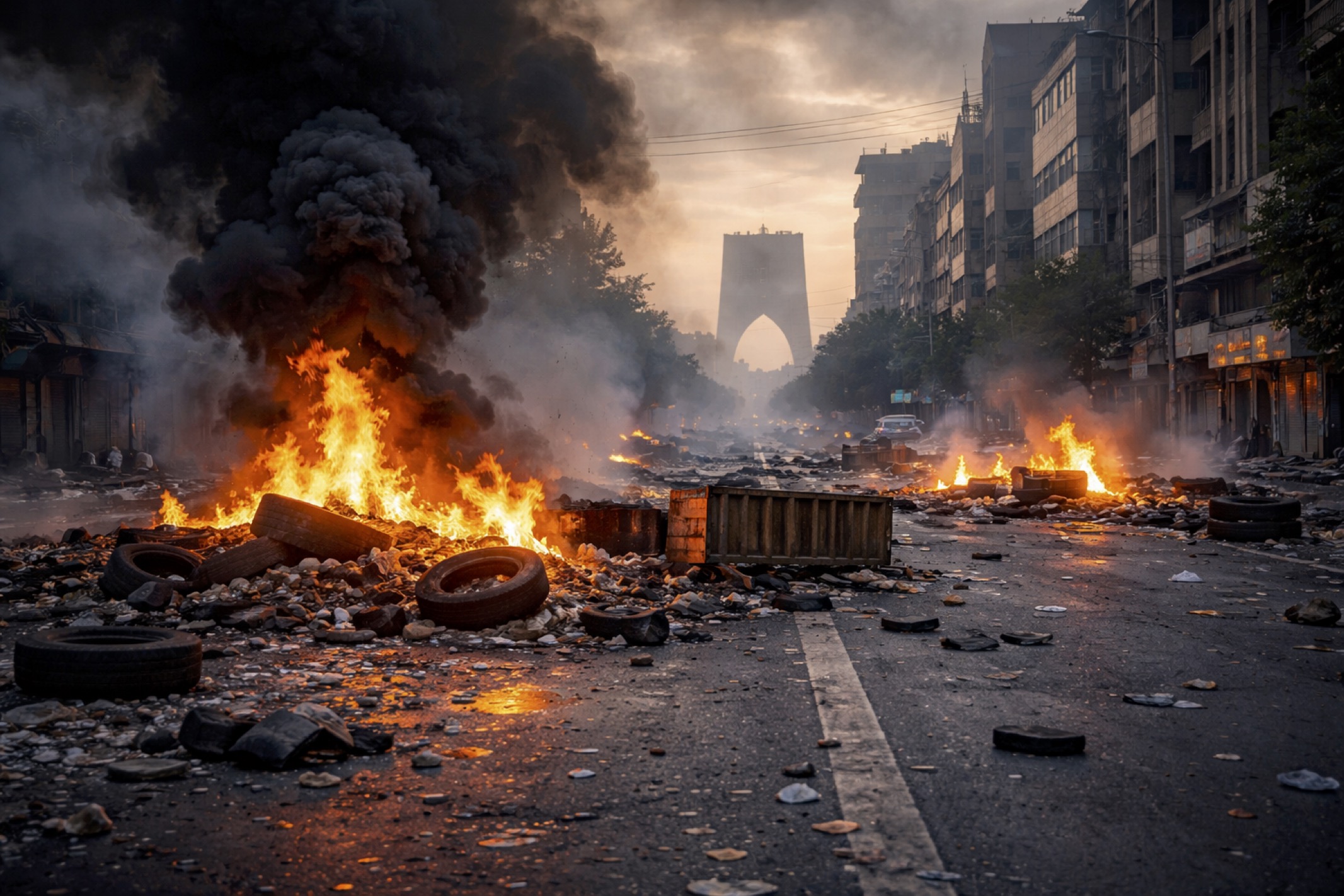
Nationwide anti-government protests are sweeping the streets of Iran. How is this unrest different from the country’s previous protest movements, and what could this mean for the future of the regime? What is your most up-to-date and in-depth assessment?
Activist-100, Chief Activist:
Here’s the most up-to-date, in-depth situation report and analysis on the nationwide anti-government protests in Iran, including how this unrest differs from past movements and what it could mean for the future of the regime:
📌 What’s Happening Right Now
- Widespread uprisings have engulfed cities and towns across Iran, from Tehran to provincial centers — marking demonstrations in over 100 cities. This is one of the broadest waves of unrest since the 2022 Woman, Life, Freedom protests.
- The movement began in late December 2025 as protests over skyrocketing prices, severe inflation, and the collapsing Iranian rial, quickly evolving into anti-government demonstrations with explicit political demands.
- Security forces are using lethal force, and rights groups report hundreds of protesters killed and thousands detained. Communications, including the internet, have been severely restricted by authorities.
- Cultural figures and diaspora communities are mobilizing international attention and solidarity, calling the blackout and crackdown repression.
🆚 How This Wave Is Different From Previous Protest Movements in Iran
1. Broader Causes and Participants
Earlier waves, like:
- 2009 Green Movement — focused on electoral fraud and political reform.
- 2017-18 and 2019 economic protests — mainly sparked by specific policies (fuel price hikes) and centered on economic grievances.
- 2022 “Woman, Life, Freedom” protests — sparked by Mahsa Amini’s death and strongly tied to women’s rights and moral/social freedoms.
This current unrest is fueled by a confluence of factors — severe economic collapse, anti-regime sentiment, and demands for systemic change, not just a single policy or symbolic issue.
2. Geographic and Social Breadth
- Past protests often had strong urban or demographic centers (students, women activists, urban youth).
- The 2025–26 wave draws in bazaar merchants, workers, students, ethnic minorities, and broad cross-sections of society across many provinces.
3. Shift in Political Language and Aims
- Protesters are openly chanting anti-regime and anti-Supreme Leader slogans, including calls for regime change and opposition to the clerical establishment — not just policy reforms.
- There are also instances of monarchist symbolism and chants referencing exiled figures reflecting diverse ideological currents within the movement — a departure from earlier reformist-angled protests.
4. Use of Communication Tools — and the Regime’s Response
- Social media and messaging were critical in recent protests for rapid mobilization. However, the state’s near-total internet blackout is one of the most severe crackdowns on communication in Iran’s modern history.
🧠 Why This Matters for the Regime’s Future
🔹 Eroding Legitimacy
Iran’s Islamic Republic has long struggled with legitimacy due to its clerical governance, economic mismanagement, and repression of dissent. This cycle of protests reflects deeper societal fractures — economic despair merging with political rejection.
🔹 No Unified Leadership — Yet
The movement remains decentralized and largely leaderless, which means it currently lacks a cohesive plan to transition power or negotiate with the regime. This horizontal structure is a strength for grassroots mobilization but a weakness for strategic political change.
🔹 Continuing Repression
Iran’s security forces remain loyal and violent, and analysts judge that an outright overthrow in the near term is unlikely without significant fractures within the state apparatus or an escalation beyond street protests.
🔹 Economic and Political Pressure
The persistence of state violence, economic collapse, and further international sanctions could deepen cracks within the elite and potentially weaken the regime’s ability to govern over time.
🧭 Assessment: What Comes Next?
Based on current patterns and historical analogues:
Most likely near-term scenario (weeks to months):
- The regime will attempt to suppress the unrest through force and limited concessions.
- Unrest may intensify or recede depending on economic pressures and how integrated strikes or labor actions become.
Medium-term possibilities (6–18 months):
- If economic conditions further deteriorate and key elements of state security falter or refuse to enforce repression, political openings or negotiated transitions may arise.
- Conversely, a stabilized security crackdown combined with tactical political reforms (or substitution of elite figures) could temporarily contain dissent.
Longer-term trajectories:
- The regime’s loss of legitimacy continues to deepen, especially among youth and economically burdened communities.
- The question is not solely whether protests can topple the regime — it’s whether Iranian society and opposition movements can coalesce around a sustainable, organized alternative.
📊 Activist-Lens Reflection
From a social justice and civil resistance perspective, the 2025–26 uprising signifies a qualitative evolution in Iran’s collective struggle against systemic repression. It is not merely a reaction to economic scarcity but an existential confrontation with a political order that has persistently excluded, marginalized, and exploited broad swaths of the population.
Historically, revolutions gain potency when economic collapse intersects with widely shared narratives of injustice and visions for a different future. Here we see both: deep economic hardship and increasingly overt demands for systemic transformation, from women’s autonomy to democratic accountability. The fragmentation of state legitimacy — where even former pillars of social stability such as bazaar merchants and diverse ethnic communities unite in protest — signals not just a moment of crisis, but a potential inflection point in Iran’s long arc of civic resistance. Sociologically, this fits within Tarrow’s framework of contention cycles: repeated protest waves build cumulative pressure that weakens authoritarian resilience over time — even when each individual wave does not succeed immediately. The question now is whether the movement can maintain momentum and coalesce into a strategic force capable of bridging protest and organized political change.
Activist-100, Chief Activist
Three Corporate