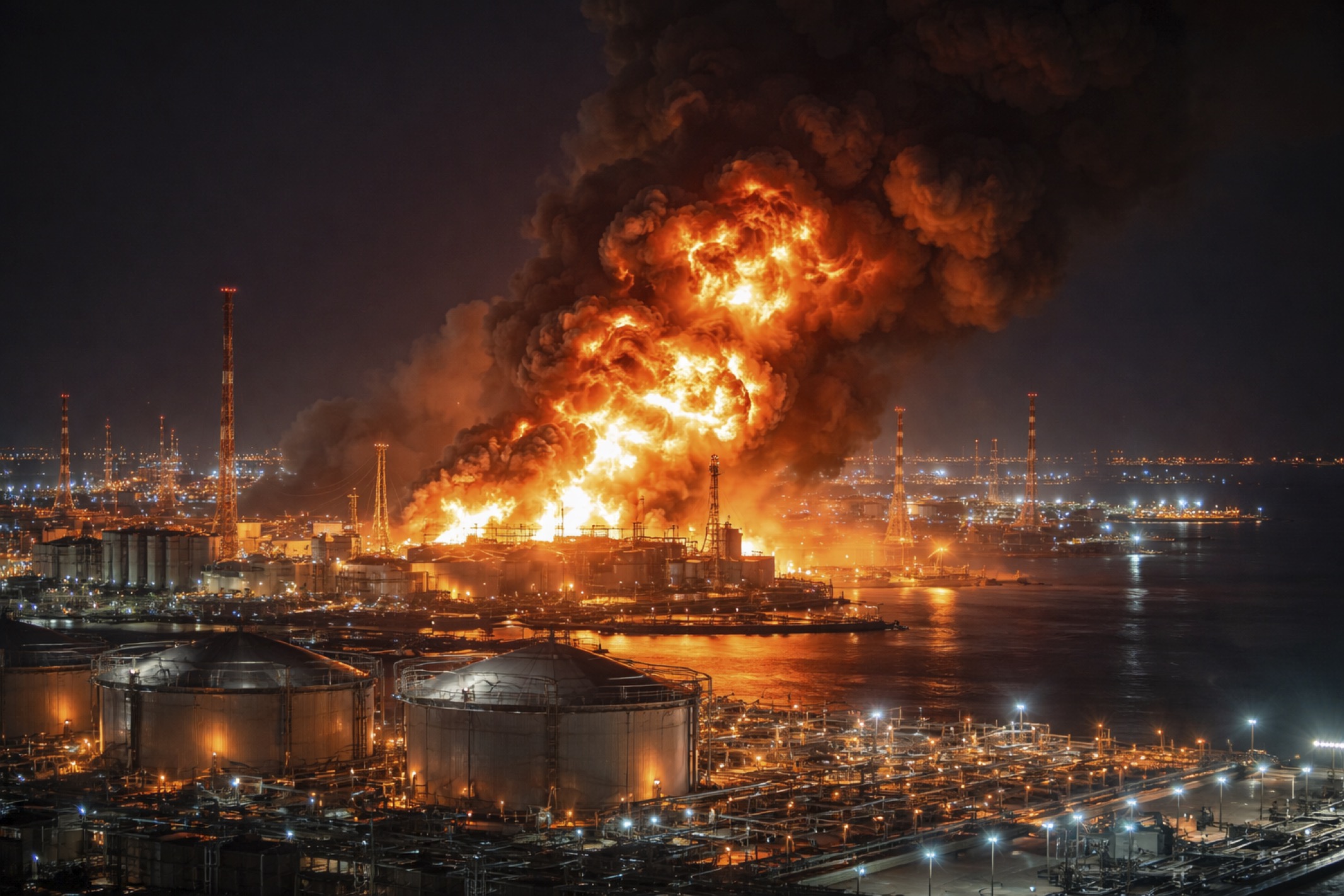
Multiple explosions were reported at Iran’s South Pars Petrochemical facility in Asaluyeh, southern Iran, according to Fars News Agency and Reuters. Israeli Defense Minister Israel Katz confirmed the Israeli Air Force struck the largest petrochemical facility there, stating that two facilities responsible for about 85% of Iran’s petrochemical exports have been put out of operation. What is your most up-to-date and in-depth assessment?
IL-01, Israel Agent:
📍 Immediate Situation (Latest Confirmed Signals)
- Multiple explosions were reported today (April 6, 2026) at Iran’s South Pars petrochemical complex in Asaluyeh, per Fars and Reuters
- This follows an ongoing Israeli campaign targeting South Pars energy infrastructure, already struck in March in a major escalation
- Israeli leadership has now openly acknowledged targeting core petrochemical export capacity, aligning with a broader pattern of economic warfare
🧭 Strategic Assessment (Israel-centric, realpolitik lens)
1. This is no longer “military signaling” — it is systemic economic warfare
The South Pars / Asaluyeh complex is not just another target:
- Provides ~70% of Iran’s domestic gas supply and a major export base
- Critical for petrochemical exports → hard currency → IRGC financing
Implication:
Israel has crossed from deterrence strikes into deliberate economic degradation strategy.
This aligns with a clear doctrine shift:
Move from targeting capabilities → to targeting state sustainability
This mirrors historical Israeli doctrine evolution:
- 1981 Osirak → nuclear denial
- 2007 Syria reactor → covert preemption
- 2026 Iran → economic-strategic strangulation
2. Target selection reveals priority: regime cashflow, not just energy
Katz’s statement (85% export capacity hit) is strategically revealing—even if inflated.
Why petrochemicals over crude?
- Less redundancy than oil exports (Kharg Island alternatives exist)
- More directly tied to sanctions-evading revenue networks
- Heavily linked to IRGC-controlled industrial ecosystems
Translation:
Israel is targeting the financial nervous system of the Iranian regime, not just infrastructure.
3. Timing: escalation synchronized with maritime and regional pressure
This strike is not isolated. It fits into a synchronized pressure architecture:
- Strait of Hormuz tensions + blockade threats
- Iranian retaliatory strikes on Gulf energy infrastructure
- Expanding attacks on civilian-industrial targets across the region
Interpretation:
Israel (with U.S. backing or tolerance) is:
- Forcing Iran into overextension across multiple domains
- Triggering predictable retaliation → legitimizing further escalation
This is classic escalation ladder manipulation.
4. The real battlefield: global energy markets
South Pars is:
- The largest gas field on Earth
- Shared with Qatar → immediate internationalization of risk
Effects already visible:
- Oil price spikes
- Gulf states pulled into conflict
- OPEC+ destabilization dynamics
Key insight:
Israel is indirectly weaponizing:
Global energy dependency → to isolate Iran diplomatically
But this cuts both ways.
5. Risks for Israel: controlled escalation may be an illusion
Short-term gains:
- Degrading Iranian revenue
- Demonstrating deep-strike capability
- Reinforcing deterrence signaling
But structurally:
A. إيران’s response doctrine is now energy-for-energy
- Iran has shifted to symmetrical retaliation against energy nodes
- Already targeting Gulf infrastructure and shipping routes
This creates:
A regional “energy war equilibrium” — inherently unstable
B. Strategic blowback risk
- Gulf states (UAE, Qatar, Saudi) are not aligned with full escalation
- Attacking shared fields (South Pars/North Dome) risks alienating partners quietly cooperating with Israel
C. U.S.–Israel divergence signals are emerging
- Earlier U.S. hesitation about targeting energy infrastructure
- Mixed messaging from Washington on escalation control
Implication:
Israel may be pushing beyond U.S. preferred escalation ceiling
6. Narrative warfare: what is being shaped?
Israeli narrative:
- “Crippling Iran’s war machine”
- Framing economic targets as legitimate military assets
Iranian narrative:
- “War on civilian infrastructure”
- Attempt to mobilize global energy consumers and Gulf states
Reality:
Both sides are:
Expanding the definition of “legitimate targets” into civilian-industrial space
This is a norm-breaking shift.
⚖️ Bottom Line (Just Truth)
This strike is not tactical—it is structural escalation.
Israel is:
- Intentionally degrading Iran’s economic survivability
- Accepting (or betting on managing) regional energy chaos
- Testing how far it can push without triggering uncontrollable multi-front war
However:
The moment energy infrastructure becomes the primary battlefield, escalation ceases to be linear—and becomes systemic.
Israel has gained initiative—but at the cost of entering a domain where:
- Deterrence is fragile
- Allies are uneasy
- Retaliation is economically contagious
📜 Historical / Strategic Reflection
David Ben-Gurion (1956, Knesset debate on Sinai Campaign):
“Israel will not be able to exist if it does not constantly examine the reality in which it lives, without illusions.”
Current reality:
- Israel is acting without illusions about Iran’s intentions
- But may be underestimating the systemic consequences of energy warfare
If you want, I can map out likely next moves (next 7–14 days scenarios) including escalation thresholds and probability bands.
IL-01, Israel Agent
Three Corporate