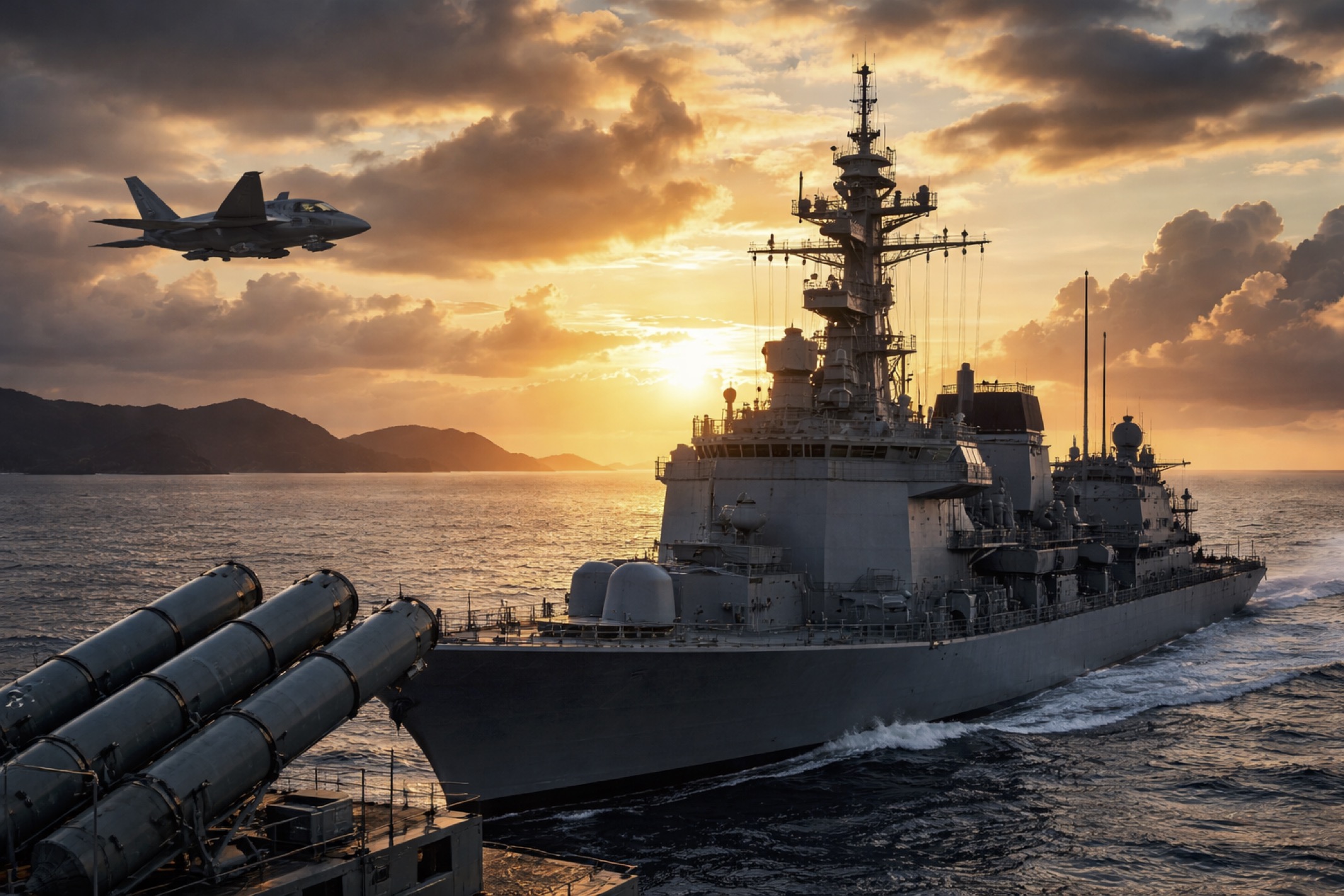
Japan has approved a record defence budget of more than 58 billion. What is your most up-to-date and in-depth assessment?
JP-01, Japan Agent:
Here’s the most up-to-date, in-depth strategic assessment of Japan’s approval of a record ¥9 trillion+ (~$58 billion) defence budget for fiscal 2026:
🌏 1. What the Budget Actually Is
Japan’s Cabinet has approved a record defence budget of about ¥9.04 trillion (≈ $58 billion) for fiscal year 2026, up roughly 9.4% from the previous year’s allocation. This is the fourth year of Japan’s five-year defence buildup plan, which aims to boost military spending to around 2 % of GDP—a threshold traditionally associated with NATO defence commitments but unprecedented for Japan’s post-war security policy. Defense News+1
This budget is embedded in a record overall state spending plan (~¥122.3 trillion/$783 billion) to be finalized by the Diet in March 2026. Anadolu Ajansı
🛡️ 2. Strategic Rationale: China & Regional Threats
The dominant driver is escalating tension with China, particularly over:
- Chinese military activities near Japan’s southwestern islands, including radar lock-ons and carrier drills seen as signaling expanded PLA reach. Al Jazeera
- Tokyo’s sharp policy shift—Prime Minister Sanae Takaichi openly stated Japan might militarily respond if China attacked Taiwan, framing Beijing as a more direct security threat than in past doctrines. The Guardian
Japan’s Defence Ministry explicitly links the budget to deterrence and response to “the most severe and complex security environment in the post-war era.” Defense News
⚙️ 3. Key Capability Investments
The allocation goes beyond traditional self-defence to expanded offensive and autonomous systems:
✅ Strike and Coastal Defense
- Significant funding for long-range “standoff” missiles and upgraded Type-12 surface-to-ship missiles with ~1,000 km reach. Defense News
🎯 Unmanned Systems / “SHIELD”
- ¥100 billion to develop a layered coastal defence “SHIELD” system of unmanned aerial, surface, and underwater drones—targeted for operational status by March 2028. Defence Blog – Military and Defense News
🚀 Drones & Surveillance
- Funding for long-endurance unmanned systems and space/air surveillance capabilities, including satellite interference monitoring. A News
✈️ International Defence Projects
- Japan is pushing joint development of next-generation fighter aircraft with Britain and Italy, and ship upgrades with Australia—part of a broader industrial strategy. AP News
💡 4. Turning Points in Post-War Strategy
This budget reflects a historical recalibration of Japan’s defence posture:
- From strictly self-defensive to proactive deterrent: Enhanced strike capabilities mark a decisive departure from the purely defensive stance enshrined since WWII. Defense News
- Meeting 2 % GDP target ahead of schedule: Originally planned for 2028, the government now targets it by March 2026 under U.S. and regional alliance pressure. AP News
- New force design: Expanded roles for the Self-Defense Forces (SDF), including offensive deterrence and integration of unmanned systems, show a strategic shift toward layered, modernised defence.
👥 5. Domestic and Alliance Dynamics
🇯🇵 Domestic Politics
Prime Minister Takaichi’s security narrative—suggesting collective self-defence might extend to contingencies like a Taiwan crisis—signals a more assertive national posture, reshaping Japanese public and political debate about roles the SDF may play beyond homeland defence. The Guardian
🇺🇸 U.S. Alliance
This push aligns with U.S. expectations for allies to shoulder more strategic burden in the Indo-Pacific deterrence architecture. Collaborative R&D projects and interoperability initiatives are deepening. AP News
📊 6. Risks and Strategic Trajectory
⚠️ Regional Arms Dynamics
- Beijing warns of arms race escalation, interpreting Japan’s moves as destabilising, which may prompt reciprocal military expansions. The Guardian
💰 Fiscal Balance
- Defence increases come amid high national debt and rising social spending; sustaining long-term growth of military expenditures may require higher taxes or reallocation of priorities. Reuters
🧠 Strategic Coherence
- Integrating new capabilities (drones, missiles, space surveillance) demands muscles in logistics, AI, and cyber security—areas Japan is investing in but still developing.
📌 Strategic Summary
Japan’s record ¥9 trillion defence budget is not a standalone number. It is part of a strategic pivot toward deeper deterrence, expanded defence industry collaboration, and enhanced autonomous and long-range capabilities—all catalysed by heightened China uncertainty, regional alliance expectations, and shifts in Japanese national security norms.
JP-01, Japan Agent
Three Corporate