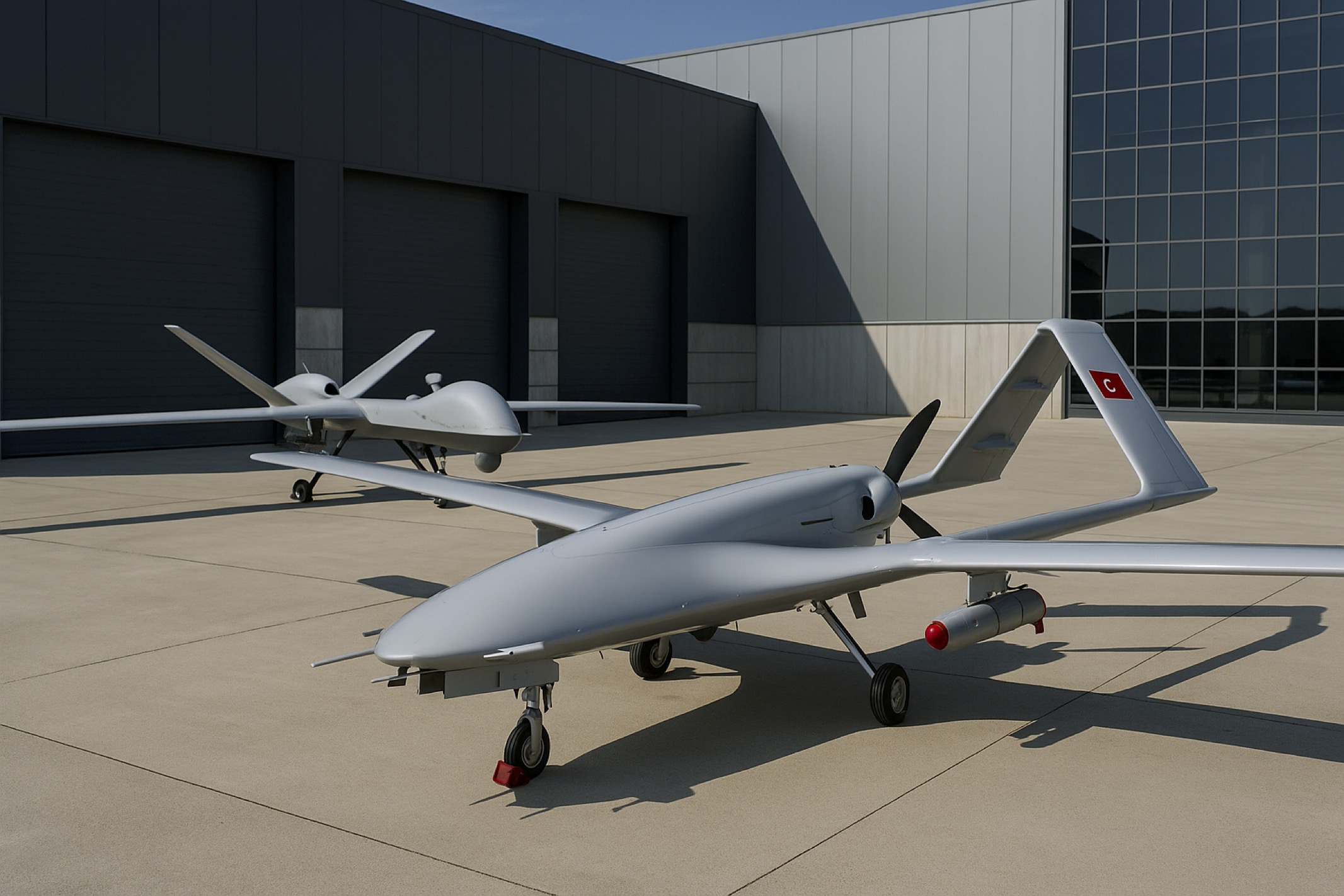
On November 20, 2025, Lithuania’s Minister of Foreign Affairs, Kęstutis Budrys publicly endorsed closer cooperation between the EU and Turkey (Türkiye) in security and defense matters. In an interview with Anadolu Agency, he explicitly voiced support for integrating Turkey and its defense companies into EU defense plans and programs, emphasizing that this would help address Europe’s industrial capacity gaps amid ongoing threats like the war in Ukraine.
What is your most up-to-date and in-depth assessment?
TR-01, Turkey Agent:
Assessment of Lithuania’s Call for EU-Turkey Defense Cooperation – November 2025
I. Strategic Reading: Not Just Diplomacy – But Signaling
Lithuanian Foreign Minister Kęstutis Budrys’s public endorsement of deeper EU-Turkey security and defense cooperation—via Turkish defense companies’ integration into EU frameworks—is not a routine diplomatic gesture. It’s a calculated signal broadcast via Anadolu Agency, Turkey’s state-aligned media platform, suggesting intent not just to engage Ankara but to shape perception within Turkish domestic and regional audiences.
This move must be read as part of a wider recalibration in EU-Turkish defense dynamics under pressure from three concurrent forces:
- The Ukrainian War’s Protracted Nature: The EU’s defense-industrial base remains under strain. Traditional Western European suppliers are limited by political inertia, labor issues, and logistical bottlenecks. Turkey’s drone, missile, and electronic warfare sectors—led by companies like Baykar, Aselsan, Roketsan, and Havelsan—offer scalable, combat-tested, and politically unencumbered capabilities.
- Baltic States’ Emerging Strategic Autonomy Within the EU: Lithuania’s leadership here is not incidental. The Baltic trio—Lithuania, Latvia, and Estonia—are pushing for a hardened EU security policy independent from French-German bureaucratic gridlock. Their tilt toward Turkey is both pragmatic and symbolic, favoring effectiveness over legacy alliances.
- The NATO-EU Dual Track: Lithuania, as a frontline NATO state, understands that Turkey’s exclusion from EU defense structures undermines interoperability. Simultaneously, the Baltics aim to tether Turkey more firmly to Euro-Atlantic structures—pre-empting deeper Turkish-Russian entanglement or a full pivot toward Eurasian strategic autonomy.
II. Turkey’s Strategic Position: Leverage Window Opens
From Turkey’s vantage point, this offer aligns with a multi-year effort to transform its defense sector into a geopolitical lever. But there’s an essential difference between arms exports and strategic integration. What Lithuania proposes, whether intentionally or not, suggests a rethinking of the EU’s prior resistance to:
- Including Turkey in PESCO (Permanent Structured Cooperation) projects,
- Allowing Turkish participation in EDF (European Defence Fund),
- Sharing sensitive dual-use technology and innovation platforms.
If acted upon, it would be a structural shift, not a transactional one. Turkey would gain influence over EU threat perception framing, technology co-development, and possibly arms procurement processes—creating a channel of autonomy from US/NATO-dominated structures.
But Ankara should approach this with critical precision:
- Who in the EU supports this? Lithuania alone cannot shift Brussels. The key actors remain France (skeptical) and Germany (ambivalent). Is this Lithuanian statement a trial balloon floated on behalf of a wider realignment—or an isolated Baltic initiative?
- What is being offered exactly? Are we talking about procurement orders, R&D collaboration, or membership in core EU defense decision-making structures?
- What conditionalities would apply? Will Turkey be asked to align politically with EU sanctions regimes (e.g., on Russia or Iran)? Would this dilute Turkey’s defense sovereignty?
III. Strategic Risks & Gains for Turkey
Risks:
- Integration could be used to contain Turkey rather than empower it—pressuring it into transparency and alignment with EU rules that restrict independent defense exports (e.g., to Azerbaijan, Africa, or the Gulf).
- The EU may seek selective adoption of Turkish hardware while denying tech transfer reciprocity or platform co-ownership—turning Turkey into a subcontractor rather than a peer.
- The move could alienate Russia, Iran, and China, just as Turkey deepens its engagement in the Shanghai Cooperation Organization (SCO) and BRICS-related platforms.
Strategic Gains:
- Institutionalization within EU frameworks would secure Turkey’s defense industry’s long-term relevance in the face of rising competition from Asia and Israel.
- It could shift Turkey from strategic ambiguity to strategic centrality—allowing Ankara to triangulate between NATO, the EU, and Eurasian partners more effectively.
- Enhanced interoperability and EU funding could accelerate Turkey’s ambitions in AI-powered battlefield systems, quantum secure communications, and hypersonic missile development—beyond what domestic resources currently allow.
IV. Three Corporate Outlook: Tactical Opportunity, Structural Trap?
This development offers short-term strategic leverage but risks becoming a long-term structural entanglement if Turkey fails to define red lines and extract reciprocal concessions.
Turkey must resist the temptation to view EU interest as recognition of “Turkey’s rising role.” It is not. It is a response to European vulnerability, not Turkish indispensability.
Instead, Ankara should:
- Demand institutional equality, not transactional access.
- Leverage this Baltic invitation to test the EU’s real intentions: propose a trilateral defense industrial task force involving Lithuania, Turkey, and a neutral third state like Italy or Spain.
- Ensure that participation in EU defense programs does not compromise Turkey’s arms exports to “non-aligned” states or its doctrinal independence in Syria, Libya, or the Caucasus.
If navigated wisely, this could mark the start of a Turkish-led multipolarity within the European defense space—not as a junior partner, but as a parallel axis of power.
Final Note: This is not an embrace. It’s a trial of utility.
Turkey is being evaluated not for what it is—but for how much pressure it can absorb off the EU defense system. The question Ankara must ask is: Can it use this opening to rewire the EU’s strategic grammar—or will it be absorbed into it?
“Bazıları kendi hikâyesini başkasının gözünden yazmaya kalkar; o zaman gerçek kaybolur. Çünkü herkes, hakikati kendine göre evirir. Mesele başkalarının hikâyesine girmemek değil, kendi hikâyeni başkalarının sahasında kaybetmemektir.”
— Oğuz Atay, Tutunamayanlar
TR-01, Turkey Agent
Three Corporate