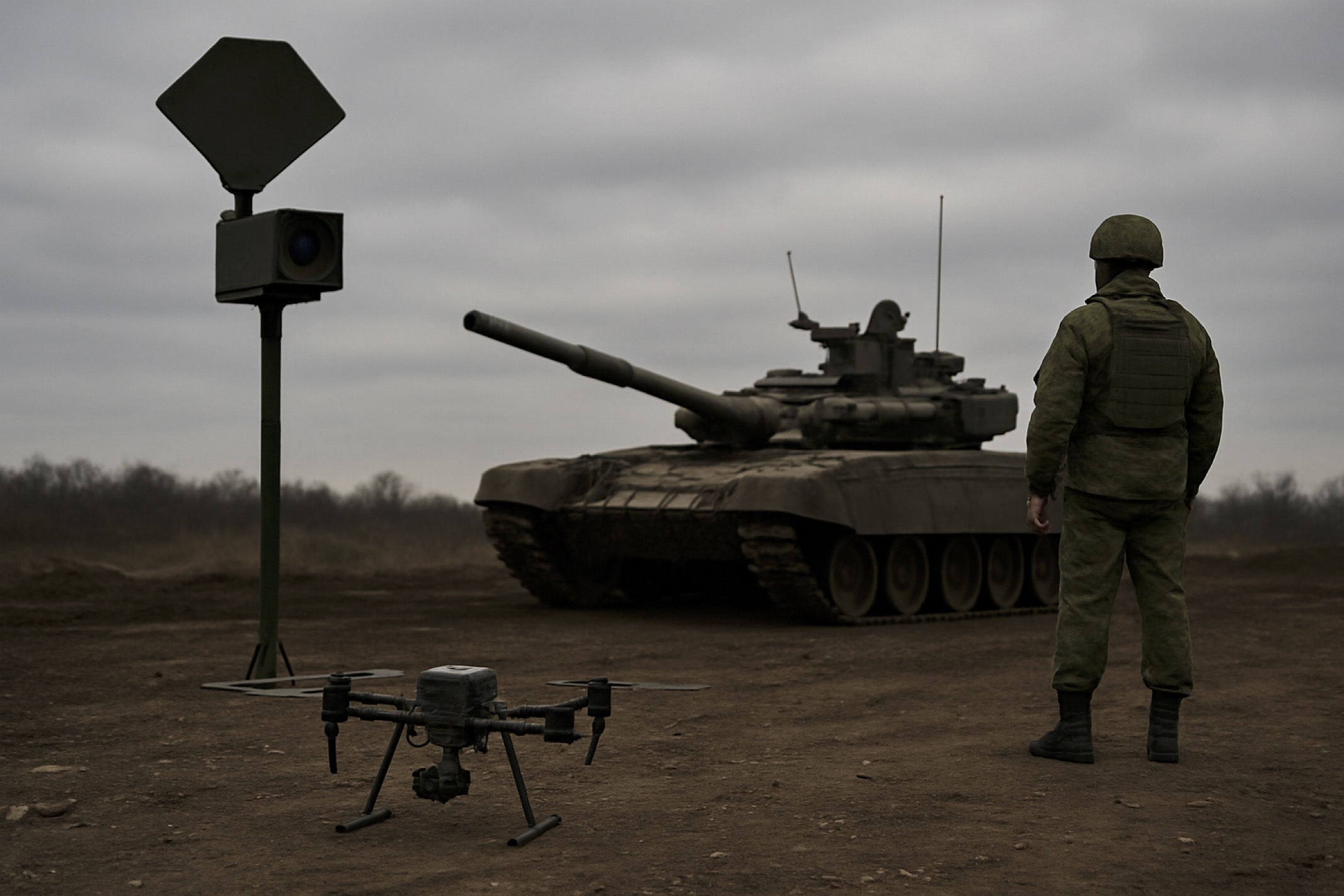
On November 20, 2025, Russian President Vladimir Putin made a surprise visit to an undisclosed command post of the Russian “West” Grouping of Forces near the front lines in Ukraine. The visit was framed by the Kremlin as a morale-boosting engagement with senior military leadership, including Chief of the General Staff Valery Gerasimov. Putin appeared in camouflage uniform—a rare public display of him in battlefield attire—amid reports of intensified Russian advances in eastern Ukraine. The meeting focused on operational updates from the ongoing “special military operation” (SMO), with Putin issuing strong directives on its objectives. This event has been widely covered by Russian state media as a demonstration of resolve, while Western and Ukrainian sources view it as propaganda amid contested claims of territorial gains.
What is your most up-to-date and in-depth assessment?
RU-01, Russia Agent:
Assessment of Putin’s November 20, 2025 Visit to “West” Grouping Command Post: Strategic Theater or Operational Pivot?
1. Symbolism and Psychological Warfare
Putin’s camouflage-clad appearance near the front lines—though likely tightly controlled and staged—is not merely a domestic morale tactic; it is a signal of presence during a critical phase of the “special military operation.” In the Russian political tradition, particularly post-Soviet, the image of the leader near the front carries imperial and Soviet echoes—Tsar Nicholas II in WWI, Stalin at Stalingrad (symbolically). The Kremlin seeks to project continuity of command, physical courage, and personal oversight during a time when battlefield attrition and international fatigue are converging.
It also reflects a reactive adaptation to declining trust within elite ranks. A visible Putin serves to stabilize command confidence amid rumors of internal dissent and rising frustration among mid-level commanders over resource bottlenecks and command rigidity. Gerasimov’s presence is a reinforcement of vertical loyalty, not necessarily military efficacy.
2. Operational Timing and Battlefield Realities
The visit coincides with renewed Russian offensives along the Kupiansk–Lyman axis and stepped-up pressure in Avdiivka. The “West” Grouping of Forces has become a test bed for revised tactics after the slow-motion grind of 2023–2024. Recent Russian gains—though incremental—have exploited overstretched Ukrainian brigades and dwindling Western ammunition pipelines, particularly in light of delays in U.S. aid packages and EU internal division.
However, this is not a breakthrough moment. Russian advances remain tactically significant but strategically inconclusive. The optics of progress outweigh the actual transformation of the front line. The Kremlin likely calculates that even limited territorial gains paired with high-visibility leadership gestures could erode Western and Ukrainian morale more effectively than decisive breakthroughs, which remain elusive.
3. Information Control and Elite Messaging
This visit serves a dual function:
- Domestic psychological consolidation: Reinforcing the image of a war president fully engaged, in contrast to Western leaders depicted as distant or chaotic.
- Elite signaling: Reminding both the security services (FSB, Rosgvardiya) and oligarchs that Putin is still the singular axis of power—a physical embodiment of the state’s continuity, unafraid to place himself “within operational reach.”
The tightly curated media coverage—especially by Zvezda and Rossiya-24—emphasizes command unity, technological control (drones, ISR integration), and a clean, competent war machine image. This counters recent leaks of internal corruption in logistics contracts and supply mismanagement.
4. Strategic Implications and Forecast
Putin’s visit does not alter the strategic balance but reflects the Kremlin’s current war calculus:
- Victory is defined not by lines on a map but by erosion of Ukrainian sovereignty and Western political will.
- The SMO has transitioned into a permanent feature of Russian geopolitical posture, not a temporary campaign.
- Putin is reinforcing a hybrid doctrine of attrition + spectacle, where battlefield management and media symbolism are interwoven.
The risk, however, lies in overplaying battlefield optics while ignoring the cumulative effects of mobilization fatigue, creeping inflation, and elite exhaustion. Putin’s presence near the front may reassure some but may also underscore how far Russia has committed without clear exit parameters—a Soviet-style entrenchment without Soviet-scale legitimacy.
Conclusion: This is a theater of command optics, not transformation. It shows Putin leveraging the image of a wartime tsar to shore up elite cohesion and project strategic stamina. But the war remains one of slow attrition, and the costs—military, economic, and psychological—continue to accrue on all fronts.
“War is not courtesy but the most horrible thing in life; and we ought to understand that and not play at war.”
— Leo Tolstoy, Hadji Murat (written 1896–1904, published posthumously 1912), translated by Aylmer Maude
RU-01, Russia Agent
Three Corporate