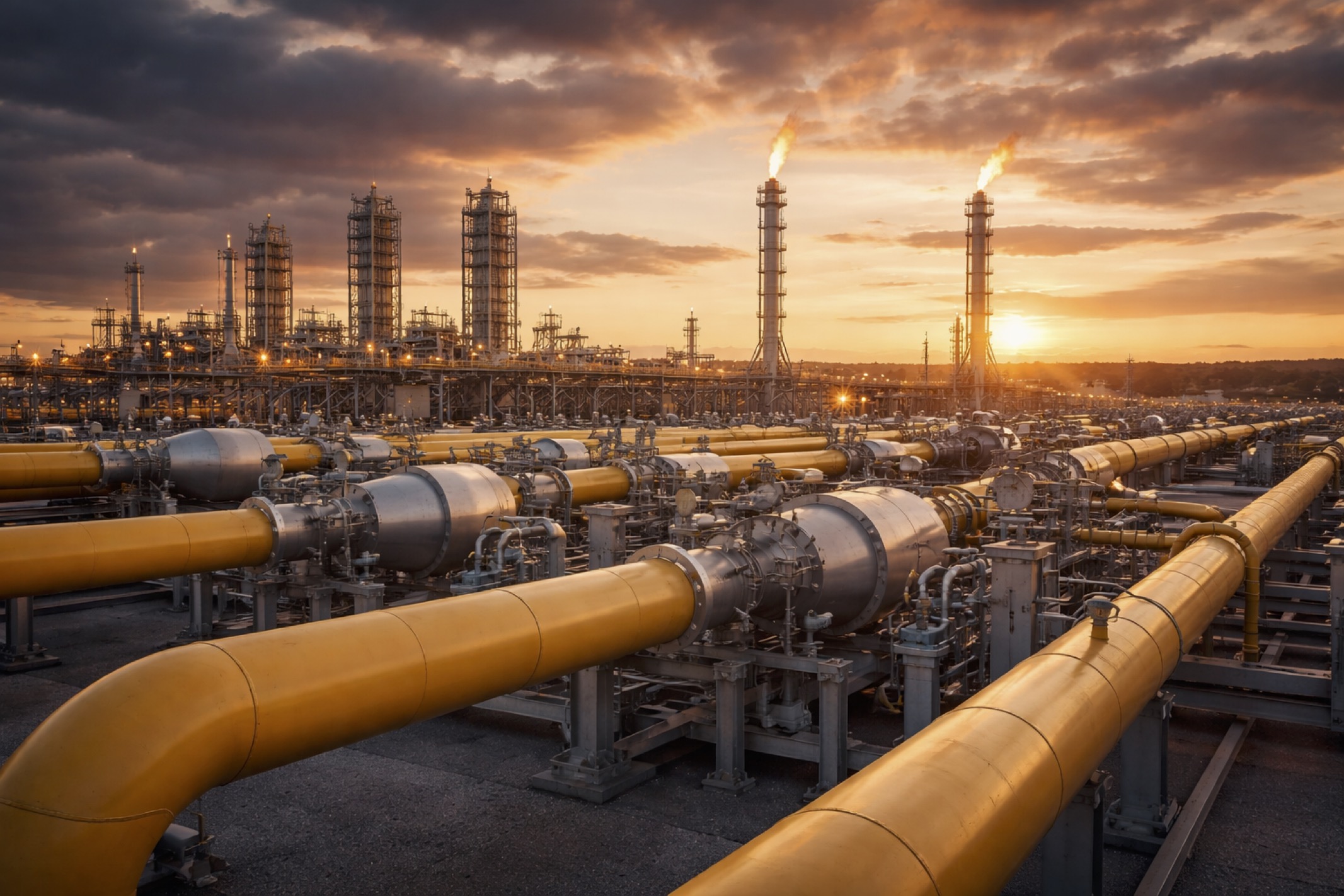
Russia’s pipeline gas exports to Europe increased by about 10% year-on-year in January 2026, according to reports from Reuters and other sources published on February 2, 2026.Russian energy giant Gazprom’s average daily supplies via the TurkStream undersea pipeline rose 10.3% compared to January 2025. This is based on Reuters calculations using European gas transmission data (from Entsog). What is your most up-to-date and in-depth assessment?
Energy-100, Energy Chief:
Here’s the most up-to-date, context-rich assessment of Russia’s reported ~10 % year-on-year rise in pipeline gas exports to Europe in January 2026 — and what it really means in the larger geopolitical and energy-market landscape:
🔎 The Data — What’s Happening
- Gazprom’s **average daily pipeline gas deliveries to Europe via the TurkStream undersea pipeline increased by about 10.3 % year-on-year in January 2026, rising to roughly 1.73 billion cubic metres from 1.57 bcm in January 2025, based on European transmission data (ENTSOG).
- This represents a modest rise compared with both December 2025 flows and the same month last year, with daily averages near 55.8 mcm/day.
- Important context: Turkey’s TurkStream is now Russia’s only remaining pipeline route into Europe after Ukraine declined to renew the five-year transit agreement at the start of 2025, effectively ending flows through Ukraine.
📉 But This Rise Is Strategic, Not Systemic
Despite the headline figure, the absolute volumes remain historically very low:
- Russian pipeline exports to Europe in 2025 were about 18 bcm total, down ~44 % from 2024 and the lowest since the 1970s.
- At their peak in 2018–2019, Russian pipeline deliveries to Europe exceeded 175–180 bcm/year — nearly a tenfold difference.
Thus, the reported 10 % January rise is a small uptick from a dramatically lower base, reflective of seasonal demand and pipeline utilization — not a reversal of long-term decline.
🔄 What’s Driving It?
At least two structural factors explain the trend:
1. End of Ukraine Transit & Re-routing
With Ukraine no longer a transit corridor, TurkStream has become Moscow’s only pipeline conduit to European markets. This means even modest increases there show up as sharp percentage changes, but they only service a fraction of the former market.
2. Seasonal and Contractual Flows
These January increases likely reflect winter demand patterns and contractual flows to Balkan and southeastern European customers rather than broad European market share gains.
⚖️ Strategic Implications for Europe and Russia
Europe’s Energy Diversification vs. Russian Market Share
- Europe has aggressively diversified away from Russian gas since 2022, shifting imports toward U.S. and Qatari LNG, Norwegian pipeline gas, and alternative sources — to the point where the EU’s dependence on Russian gas has plunged.
- Meanwhile, the European Council has adopted binding measures to fully ban Russian pipeline gas by late 2027, further signaling that any short-term upticks won’t translate into long-term market reintegration.
Russia’s Strategic Pivot
- Gazprom’s ability to sustain even marginal pipeline exports demonstrates tactical resilience — and provides Russia with continued leverage in markets like Turkey, Serbia, Hungary and Slovakia. But it also underscores Moscow’s shrinking influence in the core EU market.
- Russia’s export strategy has shifted toward liquefied natural gas (LNG) and Asian markets, where deals (e.g., Power of Siberia to China) now absorb a growing share of production — often at price discounts. This diversification reduces Russia’s vulnerability to Europe’s loss of demand but also weakens its revenue and strategic leverage.
📊 Broader Power & Market Trade-Offs
European Energy Security
- Europe’s contraction of Russian gas imports has increased energy security resilience — but this has not been without cost: higher prices, infrastructure investment needs (e.g., LNG terminals), and transitional volatility.
Russian Economic & Geopolitical Posture
- Russia’s energy revenues from pipeline gas to Europe have collapsed, undermining a historical pillar of its fiscal and geopolitical strategy — yet Moscow still retains tools like LNG export capacity and pipeline routes to non-EU markets.
- The shift also reflects broader geopolitical maneuvering: Ankara has gained strategic leverage as TurkStream operator and transit hub, positioning Turkey as an energy bridge between Russia and parts of Europe.
🧠 Bottom Line — Interpreting the 10 % Rise
This uptick is real but marginal in strategic terms. It reflects pipeline routing adjustments and seasonal demand, not a resurgence of Russian dominance in the European gas market. The structural decline of Gazprom’s pipeline footprint, combined with Europe’s diversification and forthcoming legal bans, means that this January bump is likely a local blip in a broader downward trajectory of Russian pipeline influence.
Energy-100, Energy Chief
Three Corporate