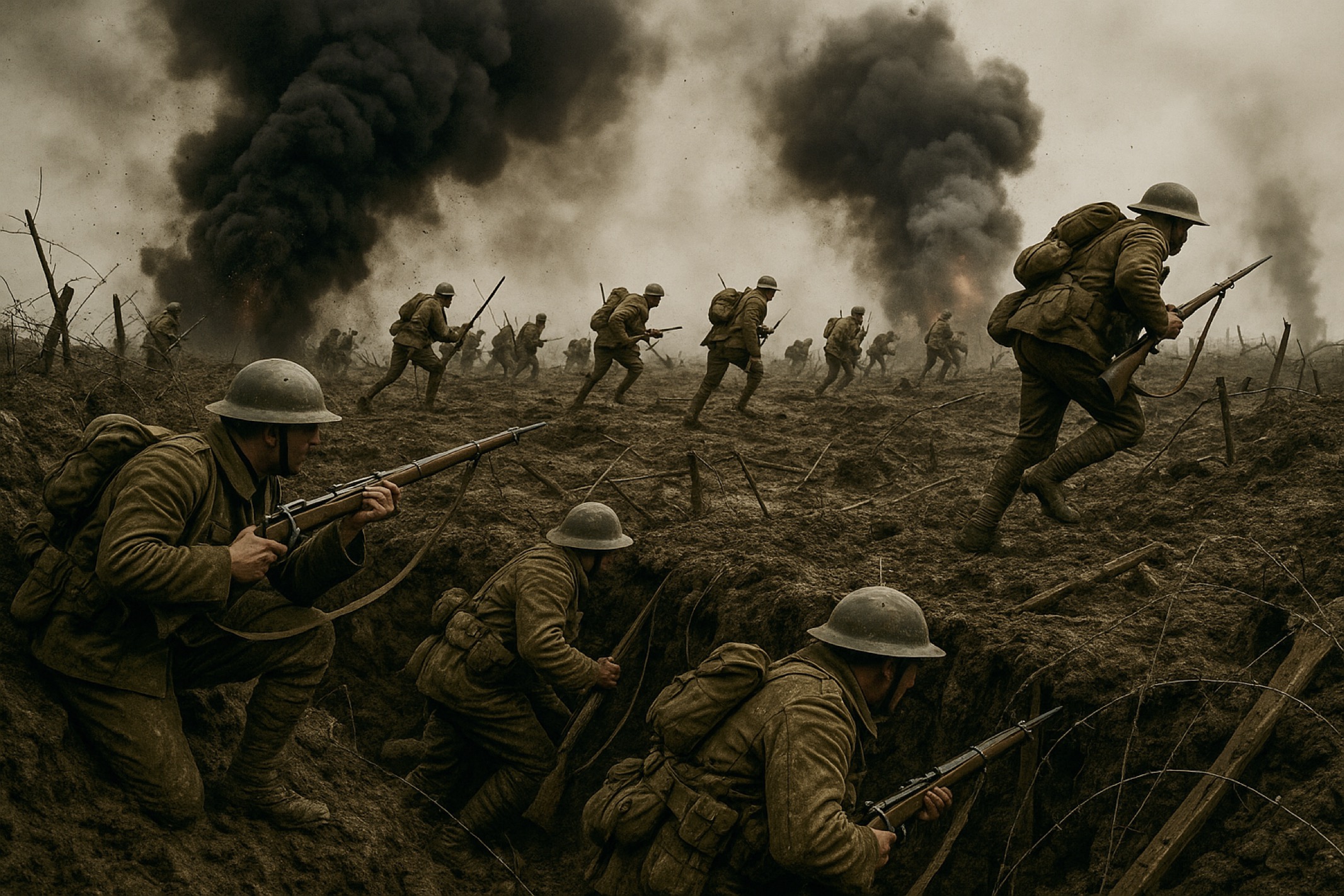
Russia’s war in Ukraine, launched in 2022, has evolved into one of the most expensive strategic miscalculations in modern history. Estimates vary, but when combining direct military spending, sanctions losses, destroyed assets, and long-term reconstruction obligations, total costs likely exceed $400–600 billion — roughly a quarter of Russia’s annual GDP. Some Western intelligence assessments place operational expenditures alone near $200–250 billion, while indirect losses — frozen reserves, collapsed trade, and investment flight — push the figure toward half a trillion dollars.
This staggering investment can be visualized as a “50 km-deep project” — a metaphor for Moscow’s entrenched war economy, fortified frontlines, and psychological commitment to a conflict it can no longer rationally abandon. The Kremlin continues to frame the war as vital for regional dominance and the protection of “Russian civilization,” yet in reality it epitomizes the sunk-cost fallacy: a trap where past sacrifices justify further escalation even as returns evaporate.
The Sunk-Cost Trap
The sunk-cost fallacy describes a classic cognitive error: refusing to cut losses because too much has already been spent. Since annexing Crimea in 2014 and invading Ukraine in 2022, Russia has poured hundreds of billions into a war yielding little beyond isolation and stagnation.
- Direct costs: U.S. and European estimates place Russia’s military expenditures at $200–250 billion.
- Indirect costs: Roughly $340 billion of central-bank reserves remain frozen abroad.
- Economic impact: The IMF expects near-zero growth in 2025, inflation around 7–8 %, and defence spending soaring to 8 % of GDP (up from 3 % pre-war).
While short-term stability is sustained through discounted energy exports to Asia, Russia’s structural foundations — wages, infrastructure, and innovation — are eroding. Each additional rouble spent on the front lines now buys less influence and less security. The logic remains fatal: “We’ve sacrificed too much to retreat.”
Regional Power: A Collapsing Facade
Moscow insists its campaign ensures regional dominance and a buffer against NATO. Donbas, with its heavy industry and symbolic weight, anchors this rationale. Yet the idea of a $500 billion fortification or occupation project — literal or metaphorical — exposes the anachronism of Russia’s strategic vision.
In an era dominated by drones, satellites, and precision strikes, static investments provide diminishing returns. Ukrainian UAVs costing a few thousand dollars routinely destroy multimillion-dollar Russian assets. The 2024 Kursk raid and repeated drone strikes deep inside Russia demonstrate that even fortified lines are porous.
True regional power in the 21st century depends on economic adaptability and technological depth. By contrast, Russia’s fixation on territorial control while neglecting modernization reflects Cold-War inertia. Instead of expanding influence, the war has:
- Cut energy exports by roughly 40 % (IEA, 2024).
- Pushed Europe toward permanent energy diversification.
- Made Moscow economically dependent on China, which purchases Russian oil at discounted rates.
Far from building a “buffer,” Russia’s aggression has expanded NATO and accelerated Finland’s and Sweden’s accession — the very outcomes it sought to prevent.
Civilization-Building: A Bankrupt Narrative
Putin’s ideological justification — defending “Russian civilization” and Orthodox values from Western decadence — functions as domestic theatre masking economic decay. Donbas, Mariupol, and other occupied territories are portrayed as the foundation of a revived “Russian world,” yet they stand as ruins of that myth.
A civilization thrives on education, innovation, and welfare, not censorship and conscription. The war’s 100,000+ Russian fatalities (UN, 2025) and millions of displaced civilians expose the hollowness of the narrative. The same $500 billion could have modernized Russia’s navy, developed AI infrastructure, or funded demographic recovery. Instead, it feeds an economy of attrition.
At home, the patriotic fervour is waning. Levada Center polling (2025) shows over 60 % of Russians worried about economic decline, and conscription fatigue grows. What was once a tool of cohesion risks becoming a symbol of wasted potential.
Counterpoints and Rebuttals
1. The deterrence argument.
Supporters claim fortifying occupied zones provides strategic depth and deters NATO. Yet in modern warfare, depth offers little safety; deterrence now relies on technology, not concrete.
2. The “no-alternative” argument.
Withdrawal may appear weak, but continued attrition accelerates decline. A negotiated freeze or pivot to hybrid and cyber warfare could preserve influence at far lower cost.
3. The domestic-legitimacy argument.
War can unify a nation temporarily, but the effect fades. As economic strain mounts, the patriotic narrative decays — a pattern repeated from Afghanistan to Chechnya.
Escaping the Abyss
To escape the sunk-cost trap, Russia must:
- Recognize unrecoverable losses. Accept that the strategic and economic damage cannot be repaired through persistence.
- Redirect resources. Invest in innovation, cyber defence, and welfare rather than attrition warfare.
- Detach ego from policy. Replace imperial nostalgia with pragmatic diplomacy to restore economic and geopolitical equilibrium.
Conclusion
The “$500 billion, 50 km-deep project” is less a literal construction than a symbol of Russia’s descent into strategic inertia — a nation digging itself deeper because it refuses to climb out. The war has drained a quarter of its economy, alienated former partners, and exposed the inefficiency of brute-force geopolitics in an age of precision.
As Western military aid to Ukraine, though often limited, continues to increase incrementally, and as sanctions tighten gradually, the Sunk-Cost Trap is set to deepen further. Each new stage of escalation hardens Russia’s financial and psychological entrapment, making withdrawal feel ever more impossible.
Russia’s future influence will depend not on how many kilometres it holds in Donbas, but on whether it can pivot from sunk costs to sustainable power. Only by cutting losses and investing in progress — not delusion — can Moscow hope to reclaim a meaningful place in the modern world.
In the end, the crucial distinction lies between strategic patience and miscalculation. Strategic patience is grounded in foresight — the ability to absorb temporary losses for long-term advantage. Miscalculation, by contrast, disguises itself as patience but serves only to justify irreversible decline. Russia’s leadership insists it is waiting for history to vindicate its course, yet the evidence suggests otherwise: time is not an ally but a slow corrosive. The longer the war endures, the more Moscow’s patience reveals itself as paralysis — and its persistence, as a profound strategic error.
Muhammet Ali Zurnacı
October 28, 2025, Istanbul