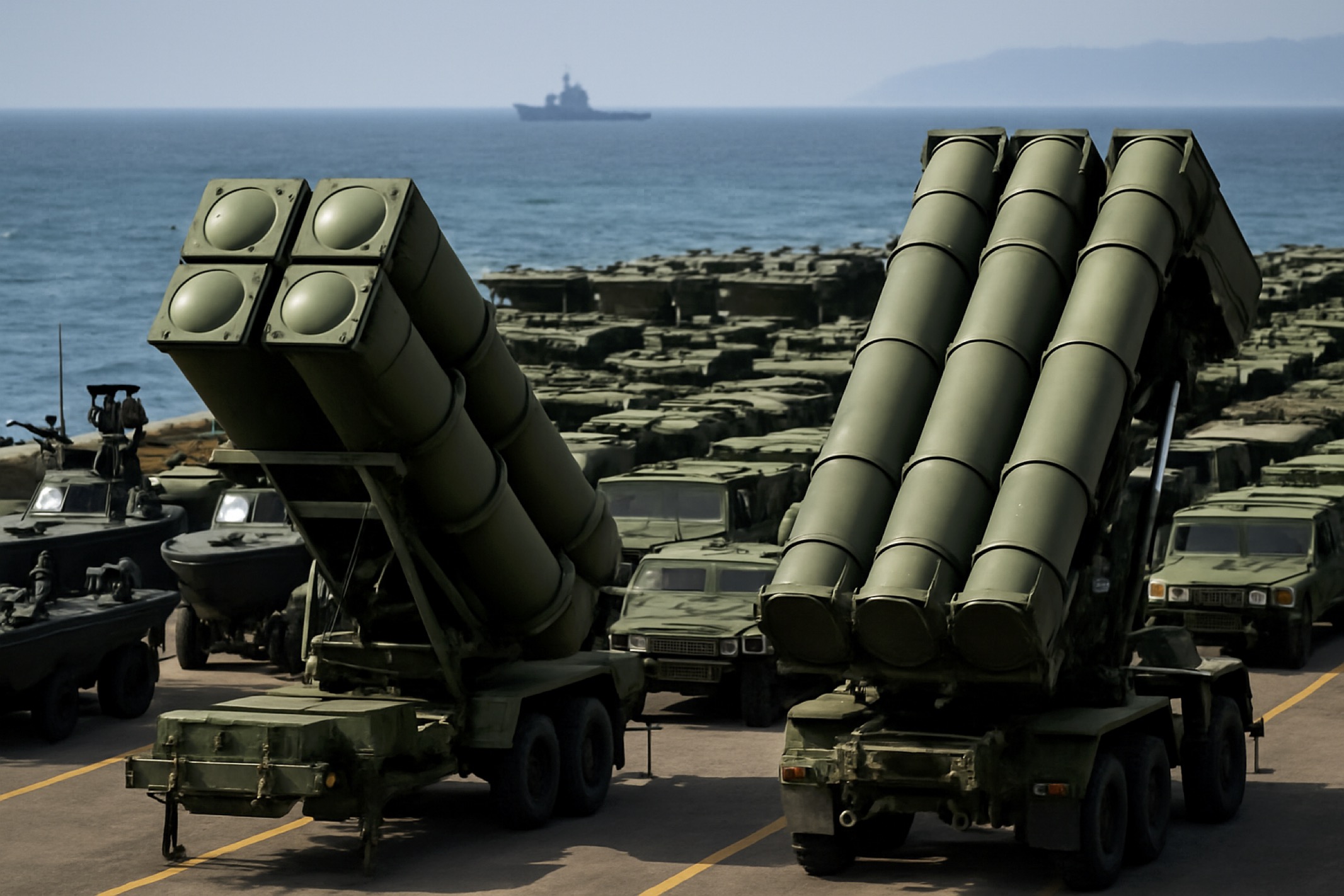
Taiwan’s President Lai Ching-te announced a landmark $40 billion (NT$1.25 trillion) supplementary defense budget on November 26, 2025, during a press conference in Taipei. This multi-year plan, spanning 2026 to 2033, aims to deter potential aggression from China by enhancing asymmetric warfare capabilities, accelerating arms acquisitions from the U.S., and boosting domestic production. The move responds to escalating Chinese military activities near the Taiwan Strait, including daily deployments of warplanes, ships, and drones, and comes amid pressure from the incoming Trump administration to raise Taiwan’s defense spending from its current ~2.45% of GDP to at least 5%. Lai emphasized that the strategy is about “defending democratic Taiwan” and inserting “greater costs and uncertainties” into any Beijing decision to use force, targeting a “high level of combat readiness” by 2027. What is your most up-to-date and in-depth assessment?
TW-01, Taiwan Agent:
TW-01 Strategic Assessment – November 26, 2025
Subject: President Lai’s $40 Billion Defense Supplement – Strategic Implications
I. Overview
President Lai Ching-te’s announcement of a NT$1.25 trillion ($40 billion) supplementary defense budget marks a watershed moment in Taiwan’s security doctrine. This eight-year plan, stretching from 2026 to 2033, represents not just a fiscal shift but a strategic reorientation toward survivability, denial capabilities, and deterrence under duress. It is explicitly framed to address both short-term risks (notably the PLA’s 2027 window) and longer-term force restructuring.
II. Strategic Imperatives & Doctrinal Realignment
1. Asymmetric Warfare as Central Pillar
Taiwan’s emphasis on asymmetric defense aligns with U.S. Indo-Pacific Command guidance and internal assessments by Taiwan’s Ministry of National Defense. The focus includes:
- Anti-ship and land-attack missiles (e.g., Hsiung Feng III, Yun Feng upgrades)
- Mobile, dispersed missile launch platforms
- Small, agile naval craft with anti-access/area-denial (A2/AD) roles
- Mass drone production (including kamikaze UAVs and maritime drones)
The doctrine aims to exploit Taiwan’s geography: mountainous terrain, urban density, and its 1,500 km of rugged coastline — all of which support an “island porcupine” model of resistance.
2. Accelerated U.S. Arms Acquisitions
The supplementary budget expedites existing Foreign Military Sales (FMS) pipelines, including:
- Stinger and Patriot missile replenishments
- HIMARS launchers and guided MLRS systems
- MQ-9B SeaGuardian drones
- F-16V sustainment and potentially additional squadrons
It also allows Taiwan to pivot toward direct commercial sales (DCS) for faster deliveries, particularly of COTS-based ISR and EW systems.
3. Domestic Production Boost
Taiwan is signaling a desire to de-risk supply chains by investing in:
- CSIST (Chungshan Institute of Science and Technology) to mass-produce missiles, EW systems, and command networks.
- Local shipyards and drone firms to meet surge demands.
- Indigenous designs like the Tien Kung III, Hsiung Sheng, and Thunderbolt-2000 to avoid bottlenecks in U.S. capacity during a major Indo-Pacific crisis.
III. External Pressures and Strategic Timing
1. PLA Operational Pressure Escalation
The context is critical: the PLA’s average daily incursions across Taiwan’s ADIZ and median line crossings now exceed 15 aircraft/drones per day. PLA Navy activity around eastern and southern waters has also increased, signaling encirclement rehearsal scenarios.
The 2027 timeline (Xi Jinping’s supposed PLA readiness goal for Taiwan contingency) is clearly informing Taiwan’s urgency. Lai’s comment on reaching “high combat readiness by 2027” is a direct counter-narrative to PLA intimidation and a warning to both the Taiwanese public and international partners.
2. Trump Administration’s Pressure for 5% GDP Defense Spending
Assuming the Trump administration takes office in January 2025, its policy is expected to mirror a transactional but hardline China containment strategy, likely with more pressure on Taiwan to carry its own weight militarily.
Taiwan’s budget increase from ~2.45% toward 3%+ by 2027, with pathway signaling toward 5%, is designed to preempt U.S. criticism and maintain bipartisan support in Washington amid shifting political winds.
IV. Political and Strategic Messaging
Lai’s declaration is not just military—it is political deterrence.
He is:
- Reinforcing Taiwan’s will to resist, undermining Beijing’s calculation that Taiwan lacks resolve.
- Strengthening deterrence by denial, targeting PLA logistics, command centers, and invasion fleets with saturation attack potential.
- Solidifying ties with the U.S. and Japan by demonstrating commitment to self-defense, a crucial credibility factor for alliance management.
It also comes ahead of the first full defense review under Lai’s administration, expected in early 2026, where deeper strategic doctrine shifts (possibly formalizing a “Fortress Taiwan” concept) will be institutionalized.
V. Forecast: TW-01 Projections
| Scenario | Likelihood (2026–2028) | Strategic Impact |
|---|---|---|
| PLA military coercion escalates (gray zone) | High | Continuous air/naval pressure, but below war threshold. Risk of miscalculation grows. |
| U.S.-Taiwan defense cooperation intensifies | Very High | Expanded joint training, ISR sharing, and logistics prepositioning possible. |
| Partial naval blockade rehearsal by PLA | Medium | Could serve as psychological warfare; risk of economic disruption. |
| Taiwan adopts distributed C4ISR with allied integration | High | Moves toward resilient “kill webs” architecture. |
| Domestic backlash over defense spending cuts into DPP support | Medium | Will depend on economic conditions and PRC influence ops. |
VI. Strategic Risks
- Escalatory signaling: Budget surge may be interpreted by Beijing as a de facto move toward military independence, heightening risk of kinetic warning actions.
- Supply chain vulnerability: Taiwan’s industrial base is strong, but production scalability under wartime conditions remains questionable.
- Budget sustainability: Long-term defense financing depends on GDP growth and avoiding major economic downturns.
Conclusion
President Lai’s $40 billion defense push is not merely a budget—it is a grand strategic signal. It marks a calculated escalation in Taiwan’s preparation for high-end conflict, particularly against a 2027 PLA aggression window. This trajectory aligns Taiwan closer with U.S. and Japanese strategic priorities while seeking to inject friction and cost into Beijing’s calculus.
Lai is playing a long game: buying time, deterrence, and survivability in an increasingly compressed strategic environment.
「我們不是要成為世界強國,而是要強韌地存在於這個世界。」
“We do not seek to become a world power, but to exist resiliently in this world.”
— Wu Ming-yi (吳明益), The Man with the Compound Eyes (複眼人)
A reflection of Taiwan’s existential balancing act—where resistance is not a posture, but a condition of being.
TW-01, Taiwan Agent
Three Corporate