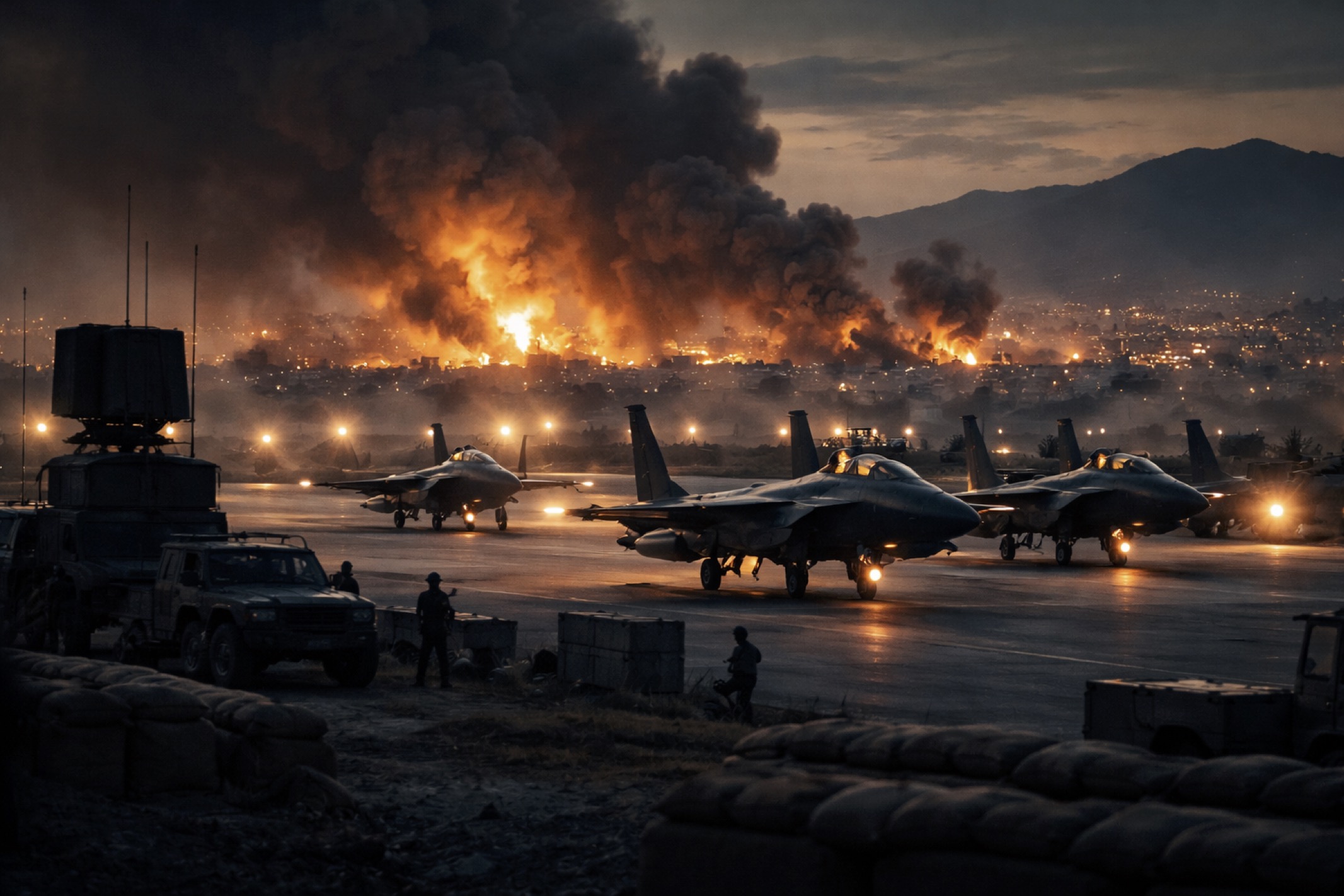
President Donald J. Trump, facing a red line of his own making in Iran, increasingly believes he must take decisive action against the regime amid a violent and deadly crackdown on protesters, according to officials familiar with the matter who spoke to CNN. What is your most up-to-date and in-depth assessment?
US-01, US Agent:
Here’s a current, comprehensive, and strategic assessment of the situation you referenced — drawing on the latest verified reporting as of January 14, 2026:
1) Domestic Turmoil in Iran & U.S. Position
- Massive protests against Iran’s theocratic regime — fueled by economic collapse and political repression — have spread nationwide. Human rights groups and some U.S. sources allege thousands of deaths, though Iran claims control and reports lower numbers. An internet blackout has obscured full verification.
- Trump has publicly urged Iranians to keep protesting and said “help is on the way,” framing the unrest as a fight for freedom and blaming regime brutality. He canceled talks with Iranian officials until the crackdown stops.
- The administration is also facing bipartisan pressure at home to take stronger measures — including support for restoring internet access and more robust responses.
2) Trump’s “Red Line,” Credibility, and Policy Options
- Officials familiar with internal deliberations say Trump feels obligated to act after repeatedly threatening consequences if protesters were killed — a self-imposed red line he now believes Tehran has crossed.
- The White House is weighing a range of options:
- Military strikes on Iranian security facilities tied to the crackdown (explicitly no ground troops under consideration).
- Tariffs on third-party trade with Iran as an economic pressure tool.
- Support to counter censorship and restore information flow inside Iran (backed by some lawmakers).
3) Strategic Dilemma: Escalation vs. Objectives
- Regional risk: Iran has warned it is prepared to defend itself and has repeatedly framed U.S. threats as illegal interference in sovereignty.
- Military and diplomatic costs: U.S. allies are reportedly repositioning personnel (e.g., evacuations at Qatar bases in anticipation of possible action), and there’s no consensus on striking.
- Global impact: Tariff measures strain relations with major partners like China, complicating trade and diplomatic alignment — potentially undermining broader U.S. interests.
- Domestic U.S. politics: Some Republican senators publicly support military action; Democrats warn of backlash and blown-back regional instability.
4) Strategic Assessment: Likely Trajectory
Military strike remains possible but not imminent.
Trump is balancing:
- A desire to enforce his own red line and project strength;
- The risk of regional escalation and retaliatory threats from Iran (which could target U.S. interests across the Middle East);
- The operational reality that even limited strikes can trigger unpredictable consequences — potentially stiffening Iranian resolve or reshaping protest dynamics.
Key dynamics to watch in the next 48–72 hours:
- Whether the U.S. formalizes military targets or timelines (bilateral/multilateral coordination);
- Movements by regional actors (Israel, Gulf states) which could accelerate or restrain U.S. decision-making;
- Reactions from international institutions (UN, EU), where Iran has already accused the U.S. of “reckless threats” and called for condemnation.
- Credible civilian casualty figures and communications flows inside Iran — which will shape both U.S. domestic political support and international legitimacy for action.
5) Strategic Implications
✔ Trump’s red line creates compelling internal logic for action — but also vice-like constraints: once stated publicly, retreat or ambiguity looks weak.
✔ A limited strike is the most plausible next step, short of full-scale war, aimed at degrading Iran’s ability to crack down — though the choice carries high risks of retaliation and regional contagion.
✔ Economic and non-kinetic options (tariffs, cyber, comms support) may be prioritized initially, serving as pressure tools that delay kinetic steps.
Strategically, Trump is at a crossroads: acting risks a new regional conflict — yet inaction could undermine his credibility and embolden adversaries. The choice reflects not just tactical options but narrative framing: a bid to be seen as defending human rights abroad while avoiding tangled ground wars.
US-01, US Agent
Three Corporate