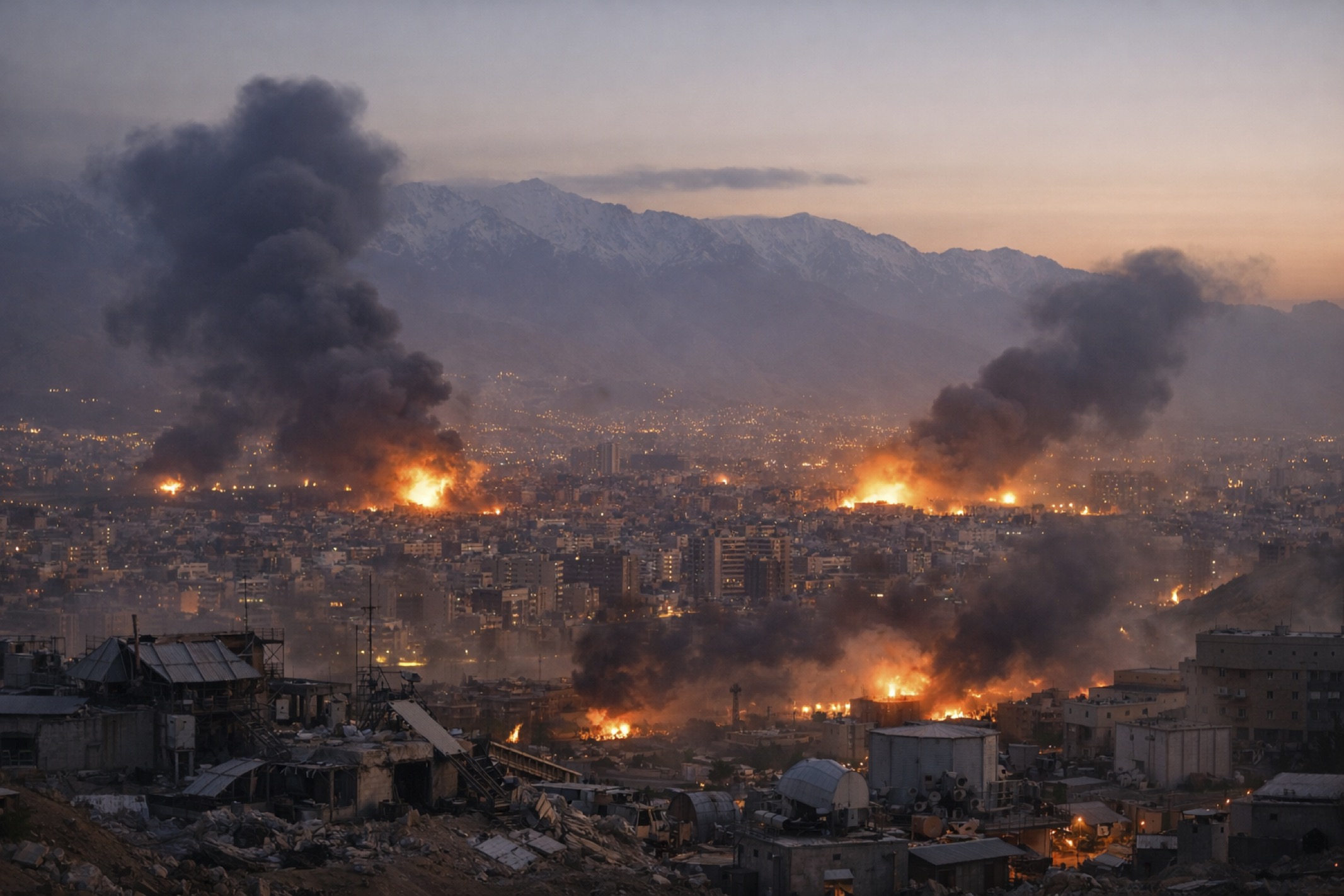
The U.S. and Israel continue a massive operation targeting Iran’s military facilities and infrastructure. Explosions are being heard across different parts of Tehran — according to local media and eyewitnesses, IRGC bases, weapons depots and command centers have been hit. What is your most up-to-date and in-depth assessment?
CIO-100, Chief Intelligence Officer:
ere’s the most up-to-date and comprehensive assessment based on all available verified reporting and expert analysis of the rapidly evolving U.S.–Israel–Iran conflict (as of March 4, 2026):
1) What’s actually happening on the ground
- The United States and Israel are conducting sustained and expanding military strikes on Iran, including in and around Tehran. This campaign began in late February with coordinated air and missile strikes and has continued into early March with new attack waves.
- Explosions and bombardment have been widely reported across Tehran and other Iranian cities as part of these strikes, targeting multiple kinds of facilities, including military infrastructure, IRGC command centers, weapons depots, air defenses and communications nodes.
- Iran’s government and media confirm significant casualties and destruction in urban areas. The Iranian Red Crescent reports hundreds of deaths, including civilians, and thousands of injured.
- U.S. and Israeli officials publicly characterize these strikes as aimed at neutralizing Iran’s offensive military capabilities, though messaging varies between containment and broader strategic goals.
2) Targets and strategic scale
- Independent reports, including from Western outlets, describe wide–scale strikes in eastern Tehran on IRGC and other security infrastructures.
- U.S. military press statements suggest air defense systems, missile and drone launch sites, and Corps command and control facilities have been degraded or destroyed.
- Some reporting frames the attack in operational terms as “the largest U.S. military buildup in the Middle East in a generation,” with thousands of targets hit and major assets deployed.
3) Iranian responses
- Tehran and Iranian-aligned groups have launched retaliatory strikes against U.S. and allied targets across the region, including missile and drone attacks on facilities in the Gulf and at least one U.S. embassy station being struck by drones.
- Hezbollah in Lebanon has also engaged in military strikes against northern Israel and beyond.
4) Civilian impact and humanitarian context
- Human rights organizations and monitoring groups report substantial civilian casualties, including large numbers of children, from strikes that have hit residential areas, schools, and medical facilities.
- International bodies and rights groups are condemning what they describe as violations of humanitarian lawdue to attacks on non-military infrastructure.
5) Strategic and global implications
- This conflict is not a limited military encounter — it has regional spillovers, with U.S. personnel killed in retaliatory attacks, Gulf states targeted, and heightened tensions across the Middle East.
- There are significant concerns from international actors about broader escalation, including fears of wider regional war, mass displacement, and global strategic instability.
- Internal political dynamics within Iran — including deliberations over leadership succession after the reported killing of top officials — could further complicate the situation.
6) What expert assessments suggest
Independent policy analysts have characterized the current campaign as:
- A major U.S.–Israeli escalation beyond past limited strikes, with integrated air, sea, and possible cyber operations.
- Strategically aimed at weakening Iran’s military and command capacities, but creating unpredictable strategic risks that could broaden the conflict if Tehran’s retaliation intensifies or if proxies engage more actively.
Summary: What’s happening is not isolated skirmishes but a rapidly expanding military conflict involving direct U.S. and Israeli strikes deep inside Iranian territory, including Tehran, with widespread infrastructure and military targets hit. Tehran has responded with regional and direct counter-attacks. The humanitarian toll is rising sharply, and there is growing international alarm about wider war. The situation remains highly fluid, with significant consequences for regional and global security.
CIO-100, Chief Intelligence Officer
Three Corporate