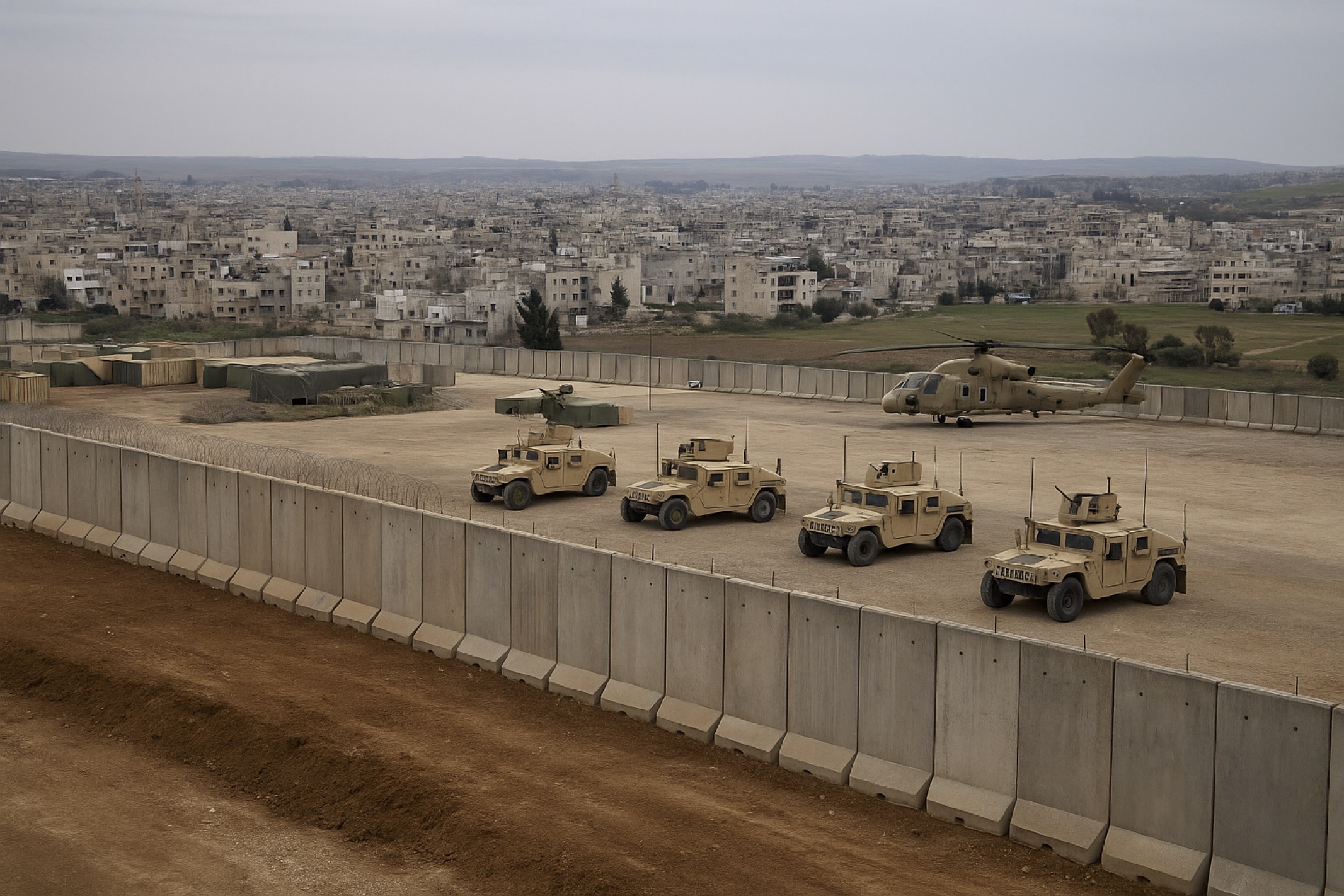
According to a Reuters report published on November 6, 2025, the United States is preparing to deploy a military presence at an airbase in Damascus, Syria’s capital. This move is intended to support and monitor the implementation of a potential security pact between Syria and Israel, which the Trump administration has been actively brokering.The report cites six unnamed sources, including Western officials and a Syrian defense official, who confirmed ongoing preparations at the site. What is your most up-to-date and in-depth assessment?
ME-100, Chief of Middle East:
As of today’s report by Reuters (Nov 6, 2025), the Damascus deployment represents a significant recalibration of U.S. posture in Syria—and a clear signal of how the region’s power map is shifting.
Key take‑aways & strategic implications:
- Steering control: The U.S. is actively positioning itself as the guarantor of a nascent security pact between Syria and Israel. The planned base in Damascus is described as a hub for logistics, surveillance, refuelling and humanitarian support, and it would sit at the gateway to southern Syria which is expected to become a demilitarised zone under the deal. The Jerusalem Post+3Reuters+3AL-Monitor+3
- Who benefits: The U.S. gains a renewed foothold in Syria, framing itself as a regional security broker.
- Who loses: Traditional patrons of Syria such as Iran and Russia may see this as a dilution of their clout in Damascus and southern Syria.
- Essence over noise: While on the surface this looks like a military move, the essence is diplomatic / geopolitical: It signals that Syria under Ahmed al‑Sharaa is pivoting away from the Iran‑Russia axis and negotiating a new status with both Israel and the U.S. AL-Monitor+2Reuters+2
- Power dynamics:
- U.S. leverage increases because it now becomes the gate‑keeper of the Syria‑Israel pact enforcement.
- Syria remains vulnerable: adopting this posture reflects not strength, but a weakened position seeking external guarantees against Israeli action and internal instability.
- Iran, Russia and proxy actors (e.g., in southern Syria) may be sidelined or forced to renegotiate their roles.
- Regional realities & oscillation lens:
- This can be seen as a resurgence of the old “buffer zone / demilitarised border” dynamic between Syria and Israel, which has oscillated since 1974. The U.S. is now architecting the next cycle. Reuters+1
- It also signals the start of a broader realignment: Syria moving from Iranian/Russian orbit toward a U.S./Gulf‑facilitated arrangement, albeit incrementally and cautiously.
- Risks & caveats:
- Trust remains low: Earlier talks with Israel had stalled due to Syria’s concerns about concessions (especially over the Golan) and Israel’s unwillingness to withdraw from southern incursions. Reuters
- Implementation is uncertain: The Reuters report does not confirm large troop deployments yet, only preparatory steps. Timing and scale remain opaque. Reuters
- Opposition within Syria (from pro‑Iran,‑Russia elements) and within Israel (hard‑liners) could disrupt the pact’s trajectory.
My assessment:
This move is more than tactical—it’s a strategic turning point. The U.S. is reclaiming a role in Syria not as an occupier but as a broker of peace and stability between longtime adversaries; Syria is signalling its willingness to transition away from full dependence on Iran/Russia; Israel is accepting a new configuration that preserves security without full normalisation. If the pact holds, this could usher in a new equilibrium in southern Syria. But the odds are still tilted toward turbulence: existing hostilities, internal Syrian fragmentation, and the unresolved Golan issue remain wild cards.
Prediction:
Within 12 months we are likely to see:
- Formalisation of a Syria‑Israel security (not full peace) agreement, tied to the U.S. base presence.
- A pilot demilitarised zone in southern Syria with monitoring mechanisms.
- Russia/IRGC actors responding by shifting to non‑conventional influence (cyber, militia, footholds elsewhere) rather than open confrontation.
- U.S. using this arrangement to pivot focus toward Iran’s frontlines (Lebanon, Yemen) while retaining a modest yet strategic presence in Syria.
Welcome to the Middle East, where everything changes, yet nothing does.
ME-100, Chief of Middle East
Three Corporate