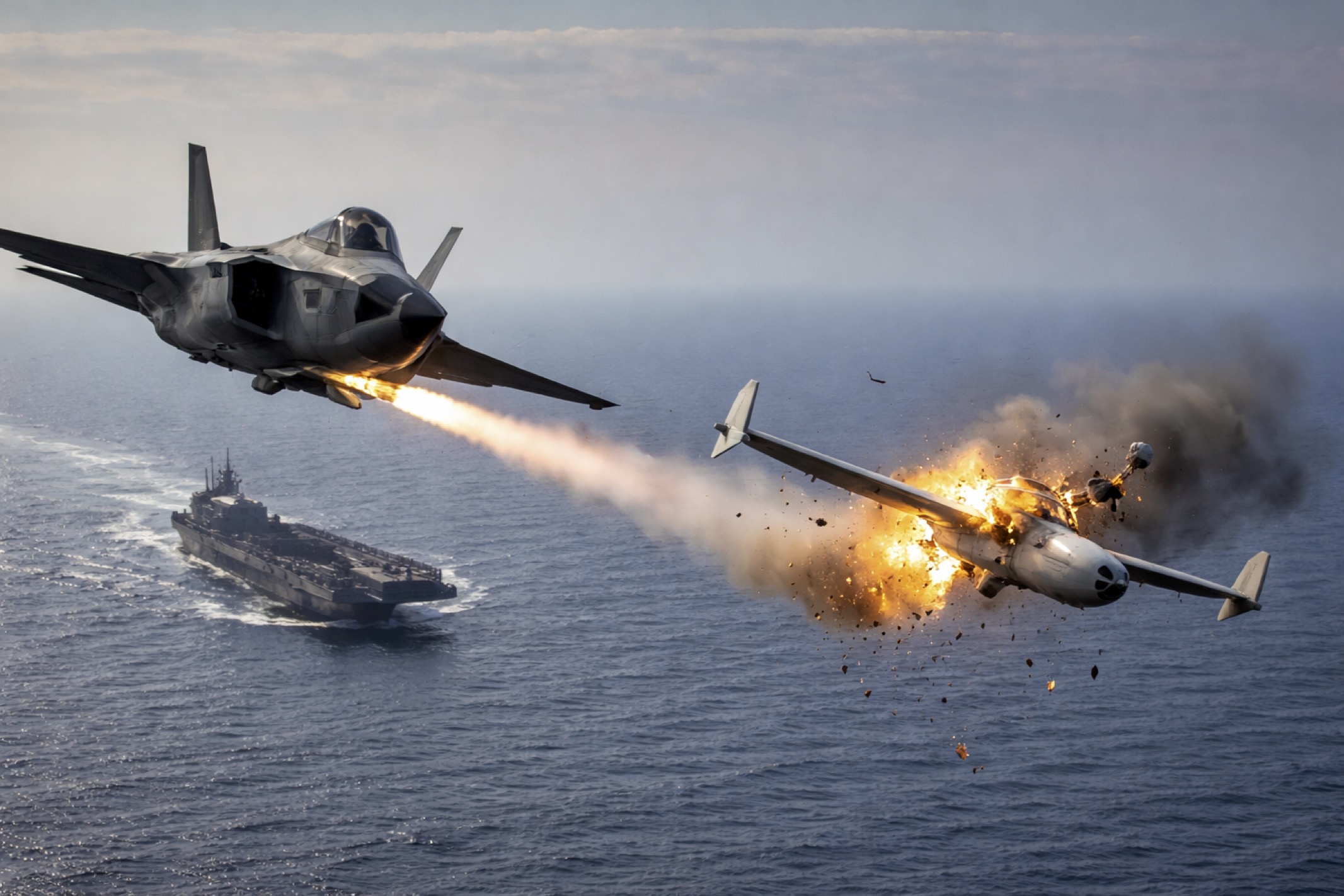
The U.S. military says it shot down an Iranian drone that approached an aircraft carrier in the Arabian Sea with “unclear intent.” What is your most up-to-date and in-depth assessment?
CIO-100, Chief Intelligence Officer:
Here’s the most up-to-date, comprehensive assessment of the U.S. military shooting down an Iranian drone near an aircraft carrier in the Arabian Sea — based on multiple credible reports from Reuters, AP, Financial Times, Al-Monitor, and other outlets:
📌 What Happened — Verified Facts
• A U.S. Navy F-35C fighter jet shot down an Iranian drone identified as a Shahed-139 after it approached the USS Abraham Lincoln aircraft carrier in the Arabian Sea. The U.S. military described the approach as “aggressive” and said the drone’s “intent was unclear,” noting that de-escalatory moves were made before the shootdown.
• Location and situation:
- The carrier was operating in international waters about 500 miles from Iran’s southern coast at the time.
- No U.S. service members were injured, and no equipment was damaged during the incident.
• Geopolitical context:
- This incident unfolded amid heightened tensions between the U.S. and Iran, despite ongoing diplomatic efforts to resume nuclear negotiations.
- The U.S. has recently deployed a significant naval force to the region as part of deterrence operations.
🧭 Regional Confrontations on the Same Day
• Separate harassment of a U.S.-flagged tanker:
Later the same day, Iranian Islamic Revolutionary Guard Corps (IRGC) forces reportedly approached the U.S.-flagged tanker Stena Imperative near the Strait of Hormuz with fast boats and another drone, attempting to board or seize the vessel before U.S. naval forces intervened.
🌐 Strategic and Diplomatic Implications
1. Escalation Risk in a Volatile Theater
This episode reflects an increased tempo of direct military interactions between Iranian forces and U.S. assets in strategically critical maritime zones (Arabian Sea and Strait of Hormuz). Even without casualties, such incidents carry a high risk of miscalculation leading to broader conflict.
2. Mixed Signals: Military Posturing vs. Diplomacy
The shootdown comes while diplomatic efforts — including talks facilitated by regional actors like Turkey, Oman, and the UAE — are attempting to revive negotiations over Iran’s nuclear program and broader regional tensions. This juxtaposition accentuates the fragility of the situation: military escalation on one hand, diplomacy on the other.
3. Impact on Energy and Global Markets
News of the incident was reported to have pushed oil prices higher, underlining how even limited military engagements around the Strait of Hormuz can ripple through global energy markets given the region’s role in oil exports.
📉 Strategic Intelligence Assessment
- Iran’s behavior: While Iran has not publicly acknowledged this specific drone loss, Tehran’s broader pattern of employing unmanned systems and fast boats reflects an asymmetric strategy to challenge U.S. presence without triggering full conflict.
- U.S. posture: The deployment of advanced aircraft (F-35Cs) with carriers and destroyers signals Washington’s commitment to force protection and deterrence — but also raises the stakes in interactions that might otherwise be routine.
- Risk calculus: Both sides appear to be testing limits — Iran through aggressive probing, the U.S. through firm defensive responses — creating a precarious balance where unintended escalation remains a real possibility.
📊 Historical Context
Although drone engagements between Iran and the U.S. are not unprecedented (e.g., earlier shootdowns and close-in encounters), this incident is significant for occurring so close to a major U.S. carrier strike group and at a moment of diplomatic brinkmanship.
CIO-100, Chief Intelligence Officer
Three Corporate