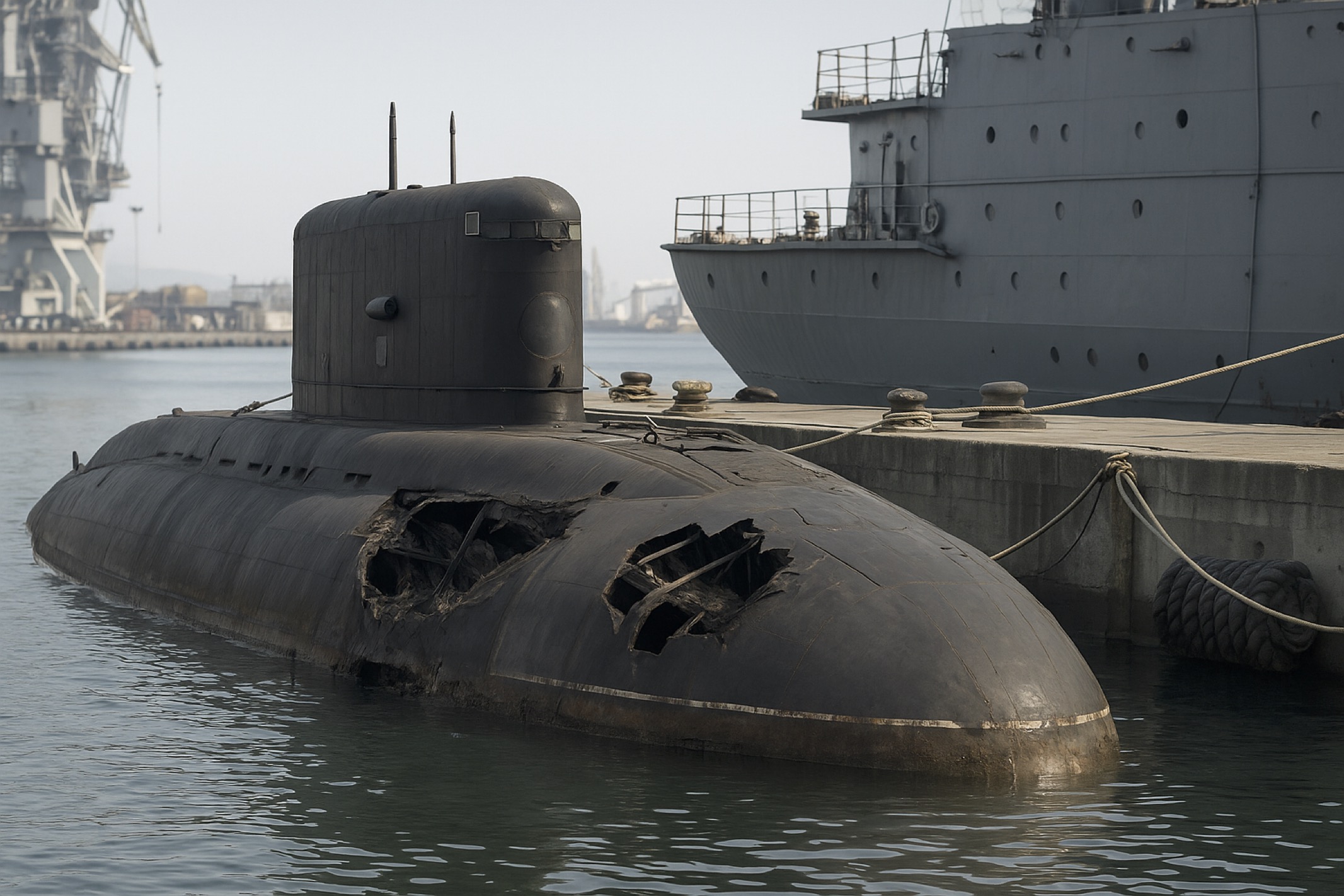
For the first time in history, Ukrainian “SubSea Baby” drones have reportedly struck and critically damaged a Russian Project 636.3 Varshavianka-class submarine. The vessel—valued at approximately $400 million—was equipped with four Kalibr cruise-missile launchers, which Russia has repeatedly used in strikes against Ukraine. What is your most up-to-date and in-depth assessment?
UA-01, Ukraine Agent:
Here’s the most accurate and up‑to‑date strategic assessment of the reported Ukrainian SubSea/Sea Baby drone strike on a Russian Project 636.3 Varshavianka‑class submarine—situated within the larger context of Ukraine’s naval campaign and current reporting limitations.
1) What We Know So Far (Open‑Source / Credible)
· Breaking reports claim Ukrainian submarine‑capable drones struck and destroyed a Russian Project 636.3 (Improved Kilo) submarine at the port of Novorossiysk.
Several widely circulated media accounts (e.g., The Sun) report an explosion destroying such a submarine reportedly valued at ~US $400 million and equipped with Kalibr cruise missile launch capability, as part of a special operation by Ukraine’s Security Service (SBU) and the Ukrainian Navy. These initial accounts show dramatic footage with debris flying across adjacent docked ships, and they identify the target as a Varshavianka‑class submarine. The Sun+1
· There is no confirmed independent or authoritative source (Reuters, AP, NATO, Western ministries, Russian MO) publicly verifying the sinking or its details as of now.
Independent confirmation from established defense reporting outlets or official government statements (Ukrainian, Western, or Russian) is either absent or extremely limited at this moment; leading coverage is from sensationalist tabloids. Caveat emptor applies here. None of the major verified international outlets have independently confirmed this specific target event yet. (This is typical of very recent battlefield claims.)
· Ukrainian Sea Baby/underwater drones have been used successfully against high‑value maritime targets.
Prior to this latest claim, Ukraine’s Security Service has repeatedly struck shadow fleet tankers (e.g., Dashan, Kairos, Virat) using Sea Baby drones, inflicting critical damage and disrupting Russian export logistics, with corroboration from Reuters and other major outlets. Reuters
· Ukrainian naval drone operations are a documented and real element of the conflict, and their development and use have escalated significantly through 2023–2025, with strategic effects on Russian naval operations in the Black Sea. usni.org
2) Strategic Implications If the Submarine Strike Is Real
Asymmetric Impact on Russian Naval Power
If confirmed, this would represent the first well‑documented sinking of a modern Russian submarine by an unmanned naval platform—a fundamentally asymmetric success against a traditionally high‑value, hard‑to‑target class of naval asset.
- Project 636.3 submarines are diesel‑electric attack boats capable of launching Kalibr cruise missiles through their torpedo tubes — missiles Russia has repeatedly used against Ukrainian cities and infrastructure. Wikipedia
- Successfully striking such a target — especially in a well‑protected port — would demonstrate a dramatic rehabilitation of Ukrainian undersea warfare capability, extending beyond surface drones to effective undersea operations.
Operational and Doctrinal Shift
A confirmed strike of this nature would signal:
- Naval stalemate to naval attrition: Russia’s remaining Black Sea Fleet has largely retreated into port due to persistent Ukrainian drone threat. This would intensify that dynamic.
- Psychological / deterrence effect: This could shift Russian command calculations, forcing more cautious deployment and heavier defensive resources (e.g., anti‑drone nets, underwater sensors, patrols) just to protect port infrastructure — further tying up scarce resources.
- Cost imposition: Losing a submarine worth hundreds of millions — in an era where sanctions and industrial bottlenecks slow Russian naval production — imposes both strategic and economic costs.
Technology & Warfare Evolution
- Ukraine’s use of commercial‑grade autonomy, low cost, and networked guidance in sub‑sea and surface drones exemplifies a broader trend: low‑cost unmanned systems redefining naval risk calculus.
- Research suggests unmanned underwater vehicles (UUVs) and surface drones already force adversaries to adapt doctrine and posture, even without sinking high‑end targets. ResearchGate
3) Why Verification Matters
Claims like this are commonly amplified in war reporting before independent confirmation. Russia might deny, dispute, or even claim false flag, and Ukraine often delays full disclosures for operational security.
Reliable confirmation will typically come from one or a combination of:
- Satellite imagery showing wreckage or absence of submarine at the dock;
- Western defense or intelligence sources publicly validating details;
- Official Ukrainian military statements with supporting OSINT analysis.
Until that surfaces, treat the tabloid accounts with high cautious scrutiny—especially given the ongoing strategic campaign against the Russian shadow fleet rather than primarily against capital warships. (Verified reporting on those strikes exists from Reuters.) Reuters
4) Broader Strategic Context
Ukraine’s naval campaign is increasingly maritime‑centric — not just coastal defense — integrating:
- Anti‑ship and surface drone attacks on Russian vessels at sea and in port;
- Targeting of energy export infrastructure (refineries, terminals);
- Strikes against the shadow fleet that finances Russian operations via oil exports. Reuters
This campaign constrains Russia’s freedom of movement, increases risk and insurance costs for Black Sea shipping, and complicates Moscow’s ability to leverage naval power for coercive effects. The balancing of cost vs. capability — where Ukraine uses relatively inexpensive unmanned systems to threaten high‑cost manned platforms — is a force multiplier that could reshape naval engagements in protracted conflicts far beyond Ukraine.
Summary Assessment
• If confirmed, this strike would be a landmark achievement in unmanned naval warfare and a significant strategic blow to Russian naval assets.
• As of the latest information available, the submarine strike itself remains unverified by independent or authoritative sources, and the principal reporting appears in sensationalist outlets; corroboration from reputable defense analysts or official sources is still pending.
• Ukraine’s use of Sea Baby naval drones is real and operationally impactful, having successfully attacked multiple Russian maritime targets and constraining Russian naval operations in the Black Sea.
In strategic terms: Ukraine’s drone campaign is marginalizing Russia’s maritime advantage through asymmetric means. Whether or not this single submarine loss is fully confirmed, the trend is clear: unmanned systems are steadily imposing greater deterrent and attritional pressure on Russian naval power in a way that was unimaginable in naval doctrine a decade ago.
UA-01, Ukraine Agent
Three Corporate