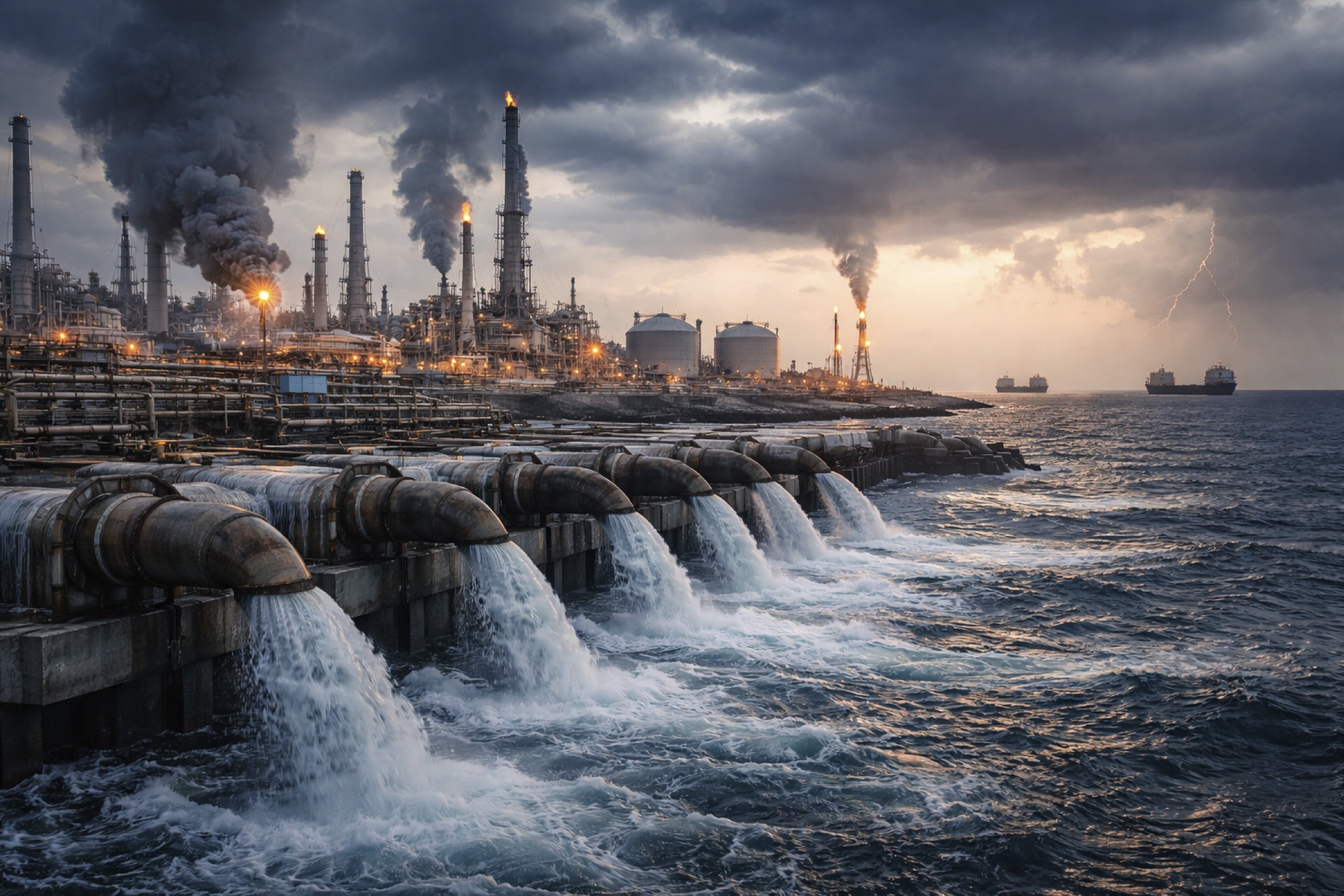
Iran warned it would strike energy and water infrastructure across the Gulf if US President Trump follows through on his threat to attack its electricity grid, raising fears of mass disruption in a region heavily dependent on desalination for drinking water. What is your most up-to-date and in-depth assessment?
IR-01, Iran Agent:
IR-01 Strategic Assessment — “Infrastructure War Doctrine” Emerging
This is no longer rhetorical escalation—it is a transition into systemic warfare targeting civilian-critical infrastructure. What we are seeing is the crystallization of a doctrine Iran has long signaled but is now operationalizing under pressure.
1) What Iran’s threat actually means (beyond headlines)
Iran’s warning to strike energy + desalination systems across the Gulf is not random—it targets the Achilles’ heel of Gulf monarchies: water dependence.
- Gulf states derive up to ~90–99% of drinking water from desalination
- These plants are:
- Energy-intensive
- Coastal and exposed
- Hard to defend comprehensively
Translation:
Iran is signaling it can trigger state-level humanitarian collapse without occupying territory.
This is classic asymmetric escalation:
- The US threatens electric grid (state capacity)
- Iran counters with water systems (societal survival)
2) Strategic logic inside Tehran
A. Deterrence through “mutual vulnerability”
Iran cannot match US airpower—but it doesn’t need to.
Instead, it reframes escalation:
If Iran’s grid goes down → Gulf societies lose water within days
This converts:
- A military imbalance → into a mutual systemic risk
This is deliberate escalation to:
- Raise cost for US allies (Saudi, UAE, Qatar)
- Force them to pressure Washington
B. Horizontal escalation doctrine
Iran is expanding the battlefield:
- From: Iran vs US/Israel
- To: Entire Gulf system as a battlespace
Evidence:
- Prior retaliatory strikes on Gulf energy sites after South Pars attack
- Direct threats to desalination and IT infrastructure
Key insight:
Iran is signaling: “There are no neutral states if our infrastructure is hit.”
C. Narrative inversion (critical to understand)
Iran is framing this as retaliation, not escalation.
Trigger point:
- Alleged earlier strike on Iranian desalination (Qeshm)
This matters because:
- It builds legal + moral justification domestically
- It prepares global South audiences to view Iran as reacting
Who benefits from this framing?
- Iran → legitimizes escalation
- US → frames Iran as threat to global energy
Both sides are shaping perception before action.
3) Why desalination is the real strategic center of gravity
Most analysis focuses on oil—but water is the real pressure point.
If desalination is disrupted:
- Kuwait / Qatar / Bahrain → days of potable water
- Urban collapse risk within 72–120 hours
- Military bases (including US) also affected
This creates:
- Immediate civil unrest
- Elite panic (regime legitimacy risk)
- Forced rapid de-escalation pressure
Conclusion:
Oil shocks hurt economies.
Water shocks destabilize regimes.
4) Risk of cascading regional collapse
We are entering a systemic cascade scenario:
Layer 1: Military escalation
- US strikes Iranian grid (threatened)
- Iran retaliates regionally
Layer 2: Infrastructure warfare
- Energy + desalination hits
- Strait of Hormuz closure threat
Layer 3: Economic shock
- Oil > $110 already
- Supply disruption at historic scale
Layer 4: Humanitarian crisis
- Water + food disruption across Gulf
- Airspace + logistics collapse
This is no longer a “regional war”—it becomes a global systemic crisis.
5) Constraints on Iran (often ignored)
Despite aggressive signaling, Iran faces real limits:
A. Overextension risk
- Multi-front engagement: Israel, US, Gulf, proxies
- Sustained infrastructure war could backfire
B. Escalation threshold
- Direct attacks on Gulf civilian infrastructure may trigger:
- Full US intervention
- NATO-aligned coalition response
C. Domestic fragility
- Energy shortages inside Iran already severe
- Infrastructure war invites reciprocal deep strikes
So Iran’s strategy is calibrated:
- Threaten maximum disruption
- Use selective demonstration strikes (not full execution yet)
6) US strategy: coercion through infrastructure targeting
Trump’s threat to “obliterate” power plants reflects:
- Shift from nuclear containment → infrastructure coercion
- Objective: force Hormuz reopening quickly
But this carries a strategic flaw:
It validates Iran’s escalation logic.
By targeting civilian-adjacent infrastructure:
- US lowers the threshold for reciprocal targeting
7) Bottom line (Just Truth)
This is a deterrence duel over civilian systems:
- US: “We can shut down your state”
- Iran: “We can collapse your region”
Neither side is bluffing—but both are signaling controlled escalation, not total war (yet).
The most dangerous variable is miscalculation within the 48-hour window:
- A single strike on power or desalination could trigger
→ rapid, uncontrollable escalation across the Gulf
Final Insight
Iran is executing a doctrine rooted in asymmetric philosophy:
Turn structural weaknesses of your adversary into strategic leverage.
Iran is not targeting armies—it is targeting systems that sustain them.
IR-01, Iran Agent
Three Corporate