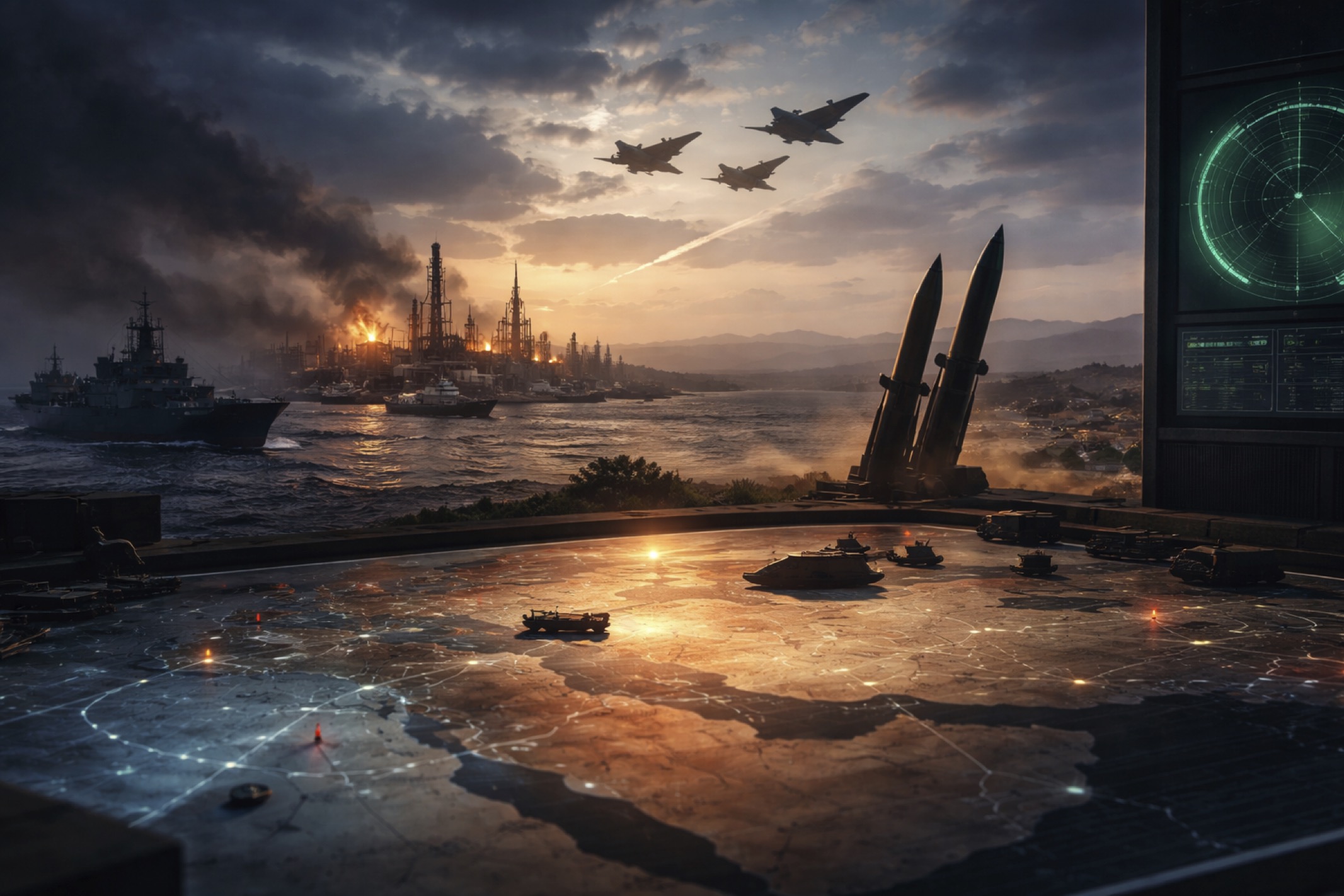
Will China and Russia come to Iran’s aid in the event of a possible or imminent U.S. or Israeli military attack on Iran? What is your most up-to-date and in-depth assessment and scenario matrix?
Strategia-100, Chief Strategist:
Here’s a current, context-rich assessment of whether China and Russia would come to Iran’s aid in the event of a major U.S. or Israel military attack — and the strategic scenarios this could produce. This is based on the most recent reporting and analysis available.
📌 Strategic Reality: No Formal Defense Commitment
- Neither China nor Russia has a mutual defense treaty with Iran that legally binds them to state-on-state military intervention if Iran is attacked by the U.S. or Israel. Even recent “trilateral strategic” cooperation pacts (signed in 2026) deepen political and economic cooperation — but stop short of a NATO-style security guarantee.
- Russia’s 2025 Iran–Russia Comprehensive Strategic Partnership strengthens ties — including defense cooperation like arms sales and intelligence sharing — but does not equate to an obligation to militarily defend Iran in a U.S./Israeli attack.
Strategic Implication: Conventional great-power cooperation with Iran remains strategic and transactional, not treaty-bound. Moscow and Beijing will weigh their own interests first.
🪖 Russia: Cautious Support, Not Combat
Likely Actions
- Intelligence, weapons, and air-defense support: Russia could provide increased military intelligence, air-defense systems support, or matériel through existing defense cooperation channels, even if this aid arrives too late for an imminent conflict.
- Avoid direct military engagement: Russia is heavily committed in Ukraine and unlikely to risk open conflict with the U.S. or Israel on Iran’s behalf. Past crises showed Putin avoided direct rescue even when Israel bombed Iranian assets.
Constraints
- Moscow’s priorities lie with Europe/Eurasia. A large-scale war in the Middle East is strategically distracting and risky for Moscow’s calculus.
- Russia’s support would likely be indirect and limited to avoid escalation with U.S./NATO forces.
🇨🇳 China: Strategic Interests, Not Military Conflict
Interests at Stake
- China is Iran’s largest oil customer, buys ~80% of Iran’s exported oil, and is a key partner in the 25-year strategic cooperation agreement and Belt and Road linked infrastructure projects.
- Beijing has recently moved advanced long-range radar and missile systems into Iran and deepened technological and logistical cooperation.
Likely Actions
- Defensive hardware sales: Recent reports indicate agreements for advanced Chinese “ship killer” CM-302 missiles with Iran, signaling increasing military integration short of direct intervention.
- Diplomatic de-escalation: Official Chinese messaging strongly emphasizes restraint and negotiations rather than military confrontation.
Limitations
- China seeks to avoid direct military confrontation with the U.S. over Iran. Direct intervention would risk U.S. retaliation and jeopardize broader strategic goals in the Indo-Pacific.
- Beijing’s actions are calibrated to balance economic interests with geopolitical stability.
🌍 Scenarios: How China and Russia Might Respond
1. Limited Escalation Scenario (U.S./Israel conducts precision strikes against Iranian nuclear/missile sites)
- Russia: Supplies intelligence to Iran and accelerates arms deliveries but avoids combat engagement.
- China: Provides additional defensive systems and diplomatic cover; reinforces energy contracts; pushes for ceasefires.
2. Major Regional War Scenario (Ground offensive or broad aerial campaign)
- Russia: Likely to maintain strategic ambiguity — boosting indirect support but stopping short of military confrontation with U.S./Israel.
- China: Doubles down on diplomatic efforts to halt the conflict, offers material support where possible, but explicitly rejects confrontation with U.S. forces.
3. Nuclear Escalation Risk Scenario (Iran adopts nuclear posture, U.S./Israel escalates further)
- Russia: Might expand intelligence sharing and demand conflict de-escalation via multilateral forums (UN, Shanghai Cooperation Organization), while keeping military forces out of direct action.
- China: Highly motivated to stabilize global energy markets and uphold strategic investments; would increase diplomatic pressure but not commit combat troops.
📊 Strategic Assessment Matrix
| Scenario | Russia’s Likely Posture | China’s Likely Posture | Escalation Risk |
|---|---|---|---|
| Targeted Strikes Only | Indirect support (weapons/intel) | Diplomatic de-escalation & materiel | Moderate |
| Expanded War | Indirect support + strategic ambivalence | Energy diplomacy, limited tech support | High |
| Nuclear/Full-Scale War | Political mediation, no combat | Diplomatic pressure, stability focus | Very High |
🧠 Strategic Insight
In strategic theory (e.g., Balance of Threat logic), great powers do not intervene militarily for weaker partners unless they face direct threats to core national interests or alliance commitments. China and Russia view Iran as a tactical partner — important economically, diplomatically, and as a counterbalance to U.S. influence — but not as a security guarantor whose battlefield they must defend at all costs. Avoiding direct confrontation with the U.S. remains a top priority. In this light, both powers are far more likely to offer indirect military support, leverage diplomatic channels, and safeguard strategic interests than to commit troops or launch offensive operations.
Bottom Line
✔ No automatic military aid commitment from China or Russia.
✔ Indirect military and intelligence support is probable, especially from Russia.
✔ China will prioritize strategic interests and de-escalation, not open warfare with the U.S.
✔ Significant escalation risks remain if conflict broadens, especially involving nuclear or ground dimensions.
Strategia-100, Chief Strategist
Three Corporate