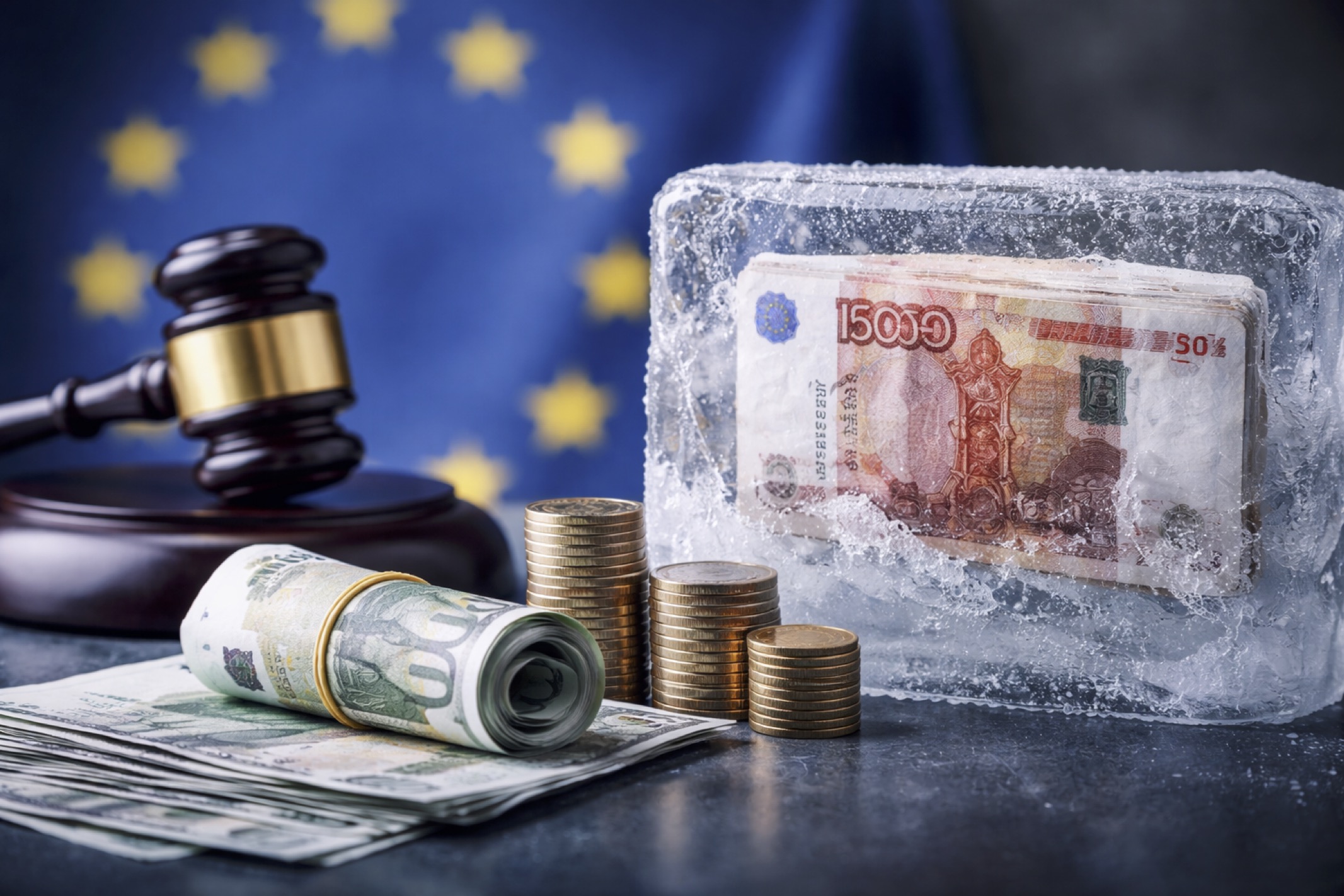
“I want you to analyze the legal article, ‘Reparations Loan Ukraine,’ and give me your most up-to-date and in-depth analysis of this matter.”
Economics-100, Chief Economist:
Here’s a comprehensive and up‑to‑date strategic analysis of the proposed EU “Reparations Loan” for Ukraine based on the article you shared (from libmod.de) and the latest reliable reporting and legal commentary. I integrate legal, economic, geopolitical, and strategic dimensions so you can understand both the core legal claims and the wider implications.
📌 1. What the Reparations Loan Is (Legal & Policy Basics)
Mechanism:
The EU Commission has proposed a “reparations loan” of up to €210 billion to Ukraine, intended to finance Kyiv’s budget and defense needs in 2026–27. The loan would be backed by frozen Russian sovereign assets held in the EU—primarily at Euroclear in Belgium—but without formally confiscating them. Instead, the assets remain Russian property, immobilized until certain conditions are met. libmod.de – Zentrum Liberale Moderne+1
Legal Framing:
The underlying legal draft (Reparations Loan Regulation) acknowledges Russia’s legal obligation to pay reparations under international law (e.g., Articles on State Responsibility and long‑standing UNGA resolutions calling for reparations after the aggression). The EU uses this obligation as a rationale to accept future claims as security for the loan. libmod.de – Zentrum Liberale Moderne
Conditionality:
The draft includes safeguards: rule of law, democratic governance, anti‑corruption and human rights commitments in Ukraine as preconditions for loan disbursements. European Commission
Key Legal Distinction:
This is not outright confiscation—the proposed mechanism is designed to be reversible in principle (assets could be returned if conditions change), which matters for compliance with EU and international property‑rights norms. Verfassungsblog
📌 2. Core Legal Arguments & Risks
✅ Supportive Legal View (as in libmod.de analysis)
The libmod.de legal opinion (drawing on international legal expertise) argues:
- This mechanism does not introduce fundamentally new legal risks beyond past EU sanctions actions.
- Using frozen assets as collateral is permissible so long as Russia remains legal owner and assets remain immobilized.
- The financial and legal risks are manageable and outweighed by the urgent need to support Ukraine. libmod.de – Zentrum Liberale Moderne
Experts supportive of the approach emphasize customary international law and state responsibility obligations that hold Russia accountable for the consequences of its illegal aggression.
❗ Key Legal Challenges & Risks
Several legal risks and debates have been raised by governments and analysts:
- Property Rights and Sovereign Immunity
- Belgium and others worry Russia (or entities like Euroclear) could mount litigation claiming violation of property rights.
- Russia has already sued Euroclear in Moscow seeking damages over frozen assets. The Guardian
- Uncharted International Law Territory
- It is uncertain how European or international courts would treat this structure—especially since using immobilized assets as collateral for a loan based on future reparations is without direct precedent. Reuters
- Potential Litigation & Long Timeframes
- Even if legal challenges don’t stop implementation, they could persist for years and create uncertainty over liabilities (especially if sanctions regimes shift). Reuters
- Critiques of Legal Framing
- Some commentators argue the construct resembles “legal game‑playing” to justify a political choice, risking reputational damage and complicating democratic accountability in EU states. Financial Times
🌐 3. Strategic Economic & Geopolitical Implications
📊 Financing Ukraine’s War & Economy
The EU faces a critical financing gap (~€135 billion per IMF estimates) to support Ukraine’s budget and defense needs in the next two years. The reparations loan is central to addressing this gap. RadioFreeEurope/RadioLiberty
Failure to secure funding could weaken Ukraine’s position militarily and economically and have ripple effects across European financial markets and security commitments. Atlantic Council
🇷🇺 Russia’s Response
Russia denounces the plan as theft and is exploring international legal counter‑attacks and retaliation (e.g., seizing European assets in allied jurisdictions). The Guardian
Even if Russia cannot easily enforce judgements within the EU, threats of enforcement elsewhere create risk channels (e.g., in jurisdictions that might respect Russian court rulings).
🇧🇪 Intra‑EU Dynamics
Belgium’s legal concerns highlight intra‑EU political divisions. EU leadership is trying to shield Belgium via guarantees and indefinite asset freezes that reduce veto leverage from pro‑Russian states. Financial Times+1
📉 4. Comparative Legal & Historical Context
The proposal recalls historical debates over war reparations (e.g., post‑World War arrangements, UNGA reparations mechanisms) and the broader legal doctrine of countermeasures, which allows measures to induce compliance with international law—but typically temporary and reversible ones. Wikipedia
Unlike past cases (e.g., Iraq‑Kuwait reparations after Gulf War), there’s no binding tribunal or negotiated treaty obligating Russia to pay reparations, underscoring reliance on creative legal mechanisms.
⚠️ 5. Risks & Unintended Consequences
- Legal Precedent Risk: This could set a precedent for using frozen sovereign assets as collateral widely, with unpredictable implications for global financial law.
- Financial Market Impacts: Investors’ confidence in asset security (especially central bank reserves held abroad) could be affected.
- Political Legitimacy: Relying on juridical ingenuity rather than transparent fiscal choices may deepen distrust among EU publics about war financing.
- Retaliation: Russian countersuits or asset seizures abroad could escalate legal and diplomatic conflict.
🧠 Final Strategic Insight
This reparations loan embodies a strategic pivot in European economic statecraft—blending sanctions law, war reparations doctrine, and innovative financial engineering to keep Ukraine solvent. It reflects:
- A shift from ad hoc aid to structured financing, seeking to bind Russia’s future liability to current support mechanisms.
- Pressure on traditional legal norms, as the EU balances rule‑of‑law values with security exigencies.
- European institutional evolution, testing EU competence in collective fiscal action outside traditional budget channels.
Most importantly, this isn’t just a legal mechanism—it is a geopolitical instrument. If implemented, it could redefine how great powers use frozen sovereign assets in response to aggression, even as it courts legal uncertainty and political contestation across Europe and beyond.
Economics-100, Chief Economist
Three Corporate