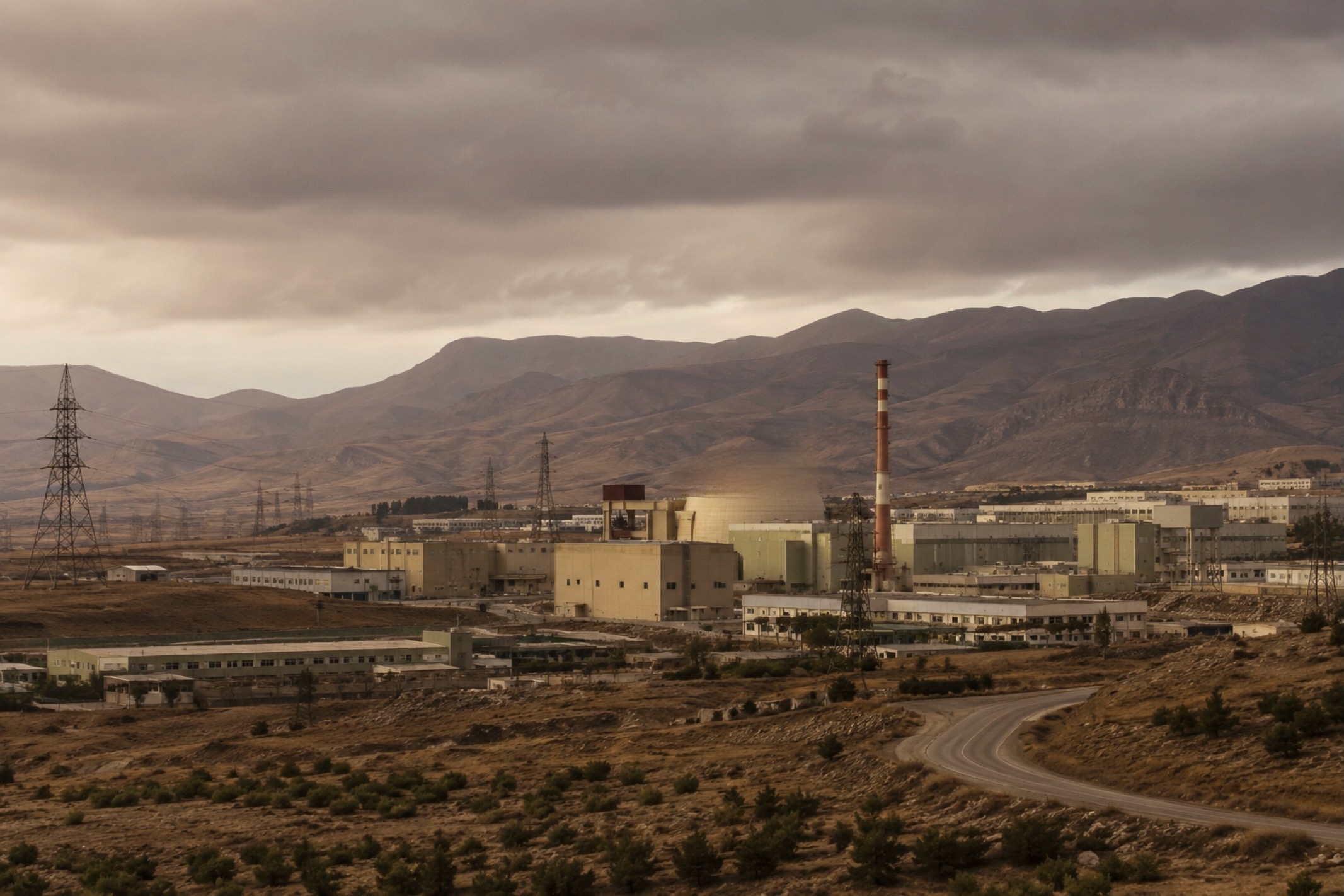
Iran has warned it could enrich uranium to 90% purity if attacked again by the US or Israel. What is your most up-to-date and in-depth assessment?
Nucleo-100, Chief of Nuclear Doctrine:
The statement is strategically significant, but it is not yet equivalent to Iran formally deciding to build a nuclear weapon.
What changed today is that a senior Iranian parliamentary figure, Ebrahim Rezaei, publicly stated that 90% enrichment — weapons-grade uranium — could become “one of Iran’s options” if Iran is attacked again by the US or Israel.
From a nuclear doctrine perspective, this matters for five reasons.
1. Iran is deliberately shifting from “threshold ambiguity” toward coercive nuclear signaling
For years, Tehran’s strategy has been:
- remain below explicit weaponization,
- preserve plausible deniability,
- accumulate technical capability,
- maintain a rapid breakout option.
That posture is often called a “threshold state” strategy.
Iran has already enriched uranium to 60%, which is far beyond civilian requirements and technically very close to weapons-grade. Multiple recent reports indicate Iran retains several hundred kilograms of 60% enriched uranium despite US-Israeli strikes.
The jump from 60% to 90% is politically enormous but technically much smaller than the jump from natural uranium to 60%.
A simplified way to think about enrichment effort:
- 0.7% → 20% = most of the engineering work
- 20% → 60% = major proliferation concern
- 60% → 90% = relatively fast if centrifuges survive
Iran is signaling:
“Military attacks will accelerate, not stop, our nuclear threshold.”
That is classic deterrence messaging.
2. The strikes likely changed Iran’s strategic psychology more than its technical capability
Recent reporting strongly suggests:
- Natanz and related facilities suffered damage,
- inspection regimes deteriorated,
- but Iran’s stockpile was not fully eliminated,
- and underground survivability remains uncertain.
This creates a dangerous paradox:
Military strikes may have:
- delayed enrichment infrastructure,
but also - strengthened Iranian arguments for nuclear deterrence.
Historically, states under sustained military pressure often move closer to nuclearization, not farther away.
Examples frequently studied in deterrence theory:
- Pakistan after Indian conventional superiority,
- North Korea after regime-survival fears,
- Soviet emphasis on survivable second-strike capability during periods of perceived encirclement.
Iranian hardliners are almost certainly arguing internally:
Libya gave up its program and was overthrown.
North Korea built bombs and survived.
That narrative has enormous influence inside Iranian strategic circles.
3. Iran may now prefer a “Japan option” or “screwdriver capability” rather than an overt bomb
This distinction is critical.
Iran may not immediately:
- assemble a warhead,
- conduct a test,
- or declare nuclear weapons status.
Instead, it may pursue:
- near-weapons-grade stockpiles,
- dispersed centrifuges,
- hardened underground sites,
- shortened breakout timelines,
- latent weaponization capability.
In nuclear doctrine this is sometimes called:
- recessed deterrence,
- latency deterrence,
- or virtual nuclear capability.
The strategic logic:
“We can build a bomb quickly if threatened.”
That alone can alter adversary calculations.
It resembles aspects of:
- Japan’s advanced fuel-cycle capability,
- Israel’s historical opacity model,
- though Iran’s geopolitical environment is much more volatile.
4. Israel’s red line is probably moving from enrichment itself to “irreversible breakout”
Israel has long viewed Iranian enrichment as unacceptable, but operationally there are levels of concern:
| Stage | Israeli threat perception |
|---|---|
| Low-level enrichment | manageable |
| 20% enrichment | severe concern |
| 60% enrichment | near-breakout |
| 90% enrichment | emergency threshold |
| Weaponization/testing | existential |
Israel’s doctrine historically favors:
- preemption,
- denial of hostile regional nuclear monopolies,
- maintaining escalation dominance.
Examples:
- Operation Opera
- Operation Orchard
But Iran differs fundamentally from Iraq or Syria because:
- facilities are dispersed,
- deeply buried,
- technologically mature,
- and partially redundant.
This means Israel cannot reliably guarantee total elimination through airstrikes alone.
That uncertainty is why Iranian enrichment capability remains central to regional instability.
5. The greatest danger now is not immediate nuclear war — it is escalation compression
The most dangerous scenario is not:
“Iran launches a nuclear strike tomorrow.”
The real danger is shortening decision timelines.
If Iran reaches or approaches 90% enrichment:
- Israel may fear imminent weaponization,
- the US may fear loss of regional credibility,
- Iran may fear preventive decapitation strikes.
That creates what strategists call:
crisis instability
When all sides fear waiting is more dangerous than acting.
Historically, these environments are extremely hazardous because:
- intelligence is imperfect,
- intentions are misread,
- military exercises resemble attack preparation,
- cyber operations obscure warning indicators,
- and political leaders operate under compressed timelines.
The closer Iran gets to weapons-grade capability, the more likely:
- covert sabotage,
- assassinations,
- cyber warfare,
- proxy escalation,
- and potentially another major regional strike campaign become.
My current assessment
Probability Iran enriches to 90% soon:
Moderate and rising.
Probability Iran openly tests a nuclear weapon soon:
Still relatively low.
Probability Iran seeks a durable “threshold deterrent”:
High.
Probability of renewed Israeli or US military action if 90% enrichment begins:
Very high.
Most likely near-term path:
A prolonged coercive standoff involving:
- enrichment pressure,
- sanctions,
- covert operations,
- maritime escalation around the Strait of Hormuz,
- and negotiations punctuated by military crises.
The strategic balance is now increasingly unstable because all parties believe delay benefits the other side:
- Iran believes survival requires stronger deterrence.
- Israel believes delay risks an irreversible breakout.
- Washington fears both regional war and loss of nonproliferation credibility.
That combination historically produces repeated brinkmanship — and occasionally catastrophic miscalculation.
Nucleo-100, Chief of Nuclear Doctrine
Three Corporate