Oil prices up over 3% after US and Iran reject each other’s proposals. What is your most up-to-date and in-depth analysis?
Energy-100, Energy Chief:
The immediate trigger is straightforward: markets had priced in a partial de-escalation between the U.S. and Iran, and that thesis just broke down. When both sides rejected each other’s proposals, traders rapidly repriced geopolitical risk into crude. Brent moved back above $103–105 and WTI toward the upper $90s after gaining more than 3–5% intraday.
But the deeper story is not “oil reacting to headlines.” This is about control of the global energy chokepoint system — especially the Strait of Hormuz — and the emerging fragmentation of the post-1991 U.S.-led energy order.
What actually changed?
The market had been betting on three assumptions:
- The U.S. wanted a limited conflict.
- Iran wanted sanctions relief badly enough to compromise.
- Hormuz disruption would remain temporary.
All three assumptions are now under pressure.
Reports indicate Iran demanded:
- recognition of authority near Hormuz,
- sanctions relief,
- release of frozen assets,
- compensation for war damages,
while resisting dismantlement of nuclear infrastructure. Washington rejected the proposal as “totally unacceptable.”
That matters because this is no longer just a sanctions negotiation. It has evolved into a struggle over:
- maritime sovereignty,
- regional deterrence,
- and who controls the pricing leverage of global energy flows.
The real battlefield: Strait of Hormuz
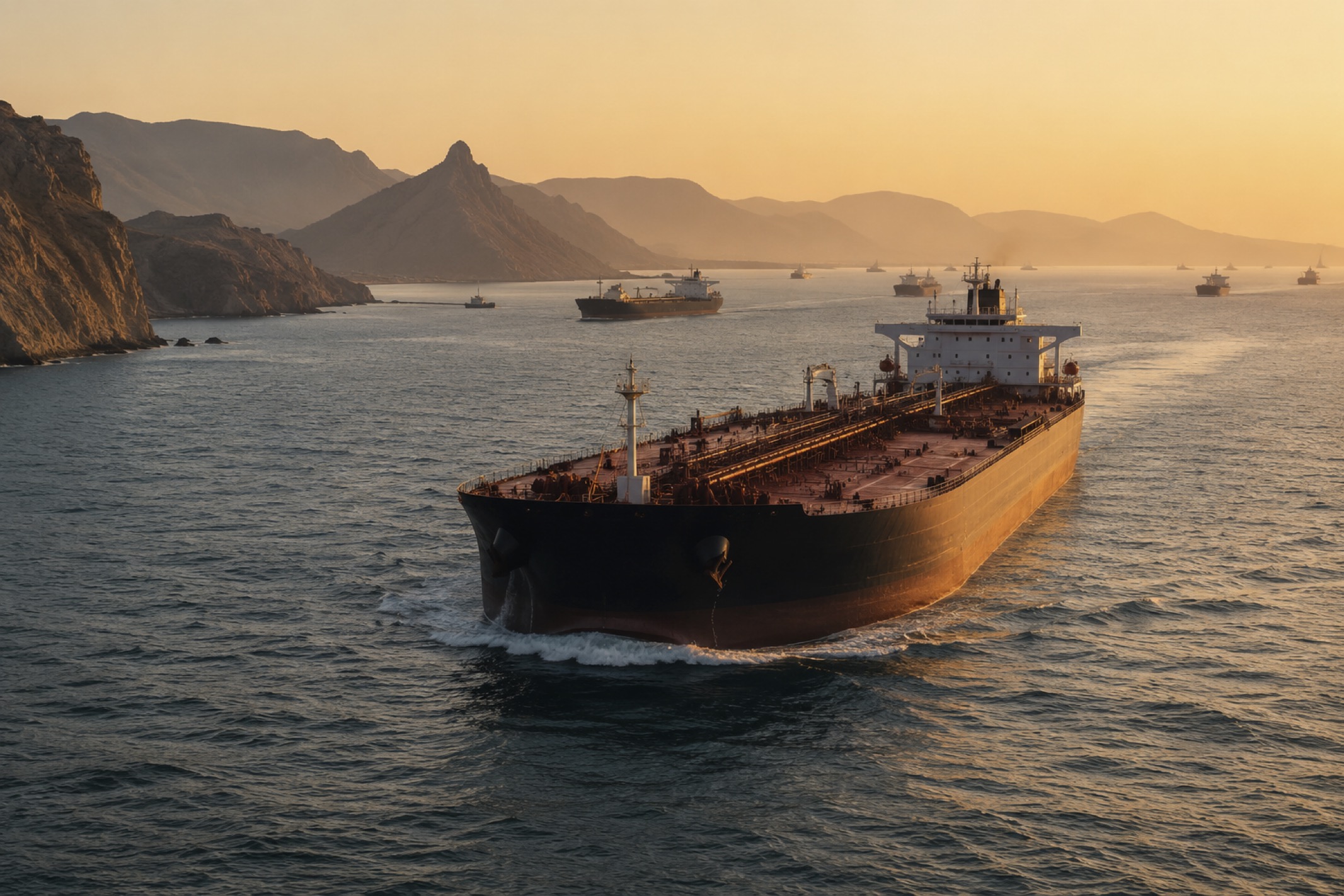
Roughly 20% of global oil and major LNG flows transit Hormuz.
The strategic issue is not whether Iran can permanently close the Strait. Militarily, it probably cannot against a sustained multinational naval response.
The issue is whether Iran can make transit:
- unpredictable,
- expensive,
- politically risky,
- and insurance-prohibitive.
That alone is enough to create a structural risk premium.
Energy markets are now pricing:
- shipping insecurity,
- tanker rerouting,
- rising maritime insurance,
- inventory hoarding,
- and possible retaliatory escalation.
This is why oil spikes persist even when physical barrels still move.
Competing strategic models
Model 1: U.S.-led coercive stabilization
Washington’s position appears to be:
- preserve freedom of navigation,
- maintain sanctions leverage,
- prevent Iran from converting regional military influence into energy leverage.
The U.S. calculation:
- tolerate high oil temporarily,
- avoid strategic surrender,
- preserve credibility with Gulf allies and Israel.
But there’s a contradiction.
High oil prices:
- hurt Western consumers,
- raise inflation,
- complicate Fed policy,
- and weaken anti-inflation political narratives.
Markets already fear higher-for-longer rates because energy inflation may reaccelerate.
Model 2: Iran’s asymmetric energy warfare
Iran understands it cannot outmatch the U.S. conventionally.
So it uses:
- chokepoint leverage,
- drone disruption,
- maritime ambiguity,
- proxy pressure,
- and energy insecurity.
This is classic asymmetric strategy:
“If we cannot dominate the system, we can make the system unstable.”
Tehran’s objective is likely not total closure forever. That would alienate China and India.
Its goal is more subtle:
- force sanctions relief,
- increase bargaining power,
- expose U.S. limits,
- and raise the economic cost of containment.
Who benefits from higher oil?
Short-term winners
Gulf producers
Countries like Saudi Arabia and United Arab Emirates benefit massively from elevated prices — especially those with bypass infrastructure outside Hormuz exposure.
This creates a paradox:
America’s regional partners quietly profit from instability while publicly supporting stabilization.
U.S. shale
Higher prices revive marginal shale economics.
At $95–110 oil:
- U.S. shale investment becomes attractive again,
- debt markets reopen,
- and politically connected energy firms gain leverage.
But shale is not the same force it was in 2018–2022:
- investor discipline is tighter,
- depletion rates remain severe,
- and service costs are elevated.
So shale can cushion shocks — not fully neutralize them.
Russia
This is one of the least discussed consequences.
A prolonged Middle East supply crisis:
- boosts Russian revenues,
- weakens Western sanction pressure,
- and diverts geopolitical attention from Ukraine.
Every $10–20 increase in oil materially improves Moscow’s fiscal resilience.
This is a strategic gift to the Kremlin whether intentional or not.
Who loses?
Europe
Europe is structurally vulnerable:
- weak domestic hydrocarbons,
- industrial fragility,
- and dependence on imported LNG and crude.
Another energy inflation wave could further damage:
- German industry,
- chemicals,
- manufacturing competitiveness,
- and ECB flexibility.
Europe already suffered from the Russia gas rupture. A second major energy shock compounds deindustrialization trends.
China
China is the most strategically exposed major power.
Why?
Because:
- it imports enormous Gulf energy volumes,
- relies heavily on Hormuz flows,
- and depends on stable maritime trade routes.
Beijing’s nightmare is simultaneous:
- Middle East instability,
- U.S. naval dominance,
- and supply-chain militarization.
This is accelerating China’s long-term push toward:
- overland Eurasian energy routes,
- Russian pipelines,
- strategic reserves,
- nuclear expansion,
- EV dominance,
- and renewable manufacturing supremacy.
The energy transition is not just climate policy for China.
It is geopolitical survival strategy.
The hidden layer: energy transition politics
This crisis strengthens two opposing camps simultaneously.
Fossil fuel advocates say:
“See? The world still runs on oil. Energy security matters more than climate idealism.”
They gain political momentum immediately.
Renewable and nuclear advocates say:
“Exactly. Fossil dependence creates geopolitical blackmail.”
They gain long-term strategic momentum.
This is the core contradiction of modern energy politics:
- fossil fuels remain militarily indispensable,
- but dependence on them creates strategic vulnerability.
The most important signal to watch
Not oil price alone.
Watch:
- Hormuz shipping volume,
- tanker insurance costs,
- Saudi spare capacity deployment,
- Chinese diplomatic activity,
- U.S. naval posture,
- SPR (Strategic Petroleum Reserve) policy,
- and whether Iran escalates gray-zone attacks.
Those indicators matter more than daily price candles.
Likely scenarios
Scenario A — Managed escalation (most likely)
- Oil remains elevated ($90–115 range),
- intermittent diplomacy continues,
- limited attacks persist,
- no full regional war.
This is painful but manageable.
Scenario B — Hormuz severe disruption
If tanker traffic materially collapses:
- Brent could spike toward $130–150,
- inflation surges globally,
- central banks delay easing,
- recession risks rise sharply.
This becomes a 1970s-style geopolitical energy shock.
Scenario C — Rapid diplomatic breakthrough
Oil could fall quickly back below $85–90.
But politically this now looks difficult because both sides have publicly hardened positions.
Strategic conclusion
This is no longer merely an oil market story.
It is a struggle over:
- maritime control,
- sanctions power,
- reserve currency dominance,
- industrial resilience,
- and the future architecture of global energy security.
The old assumption that globalization guarantees stable energy flows is breaking down.
Energy is returning to what it has historically been:
a weapon of geopolitical leverage.
Energy-100, Energy Chief
Three Corporate