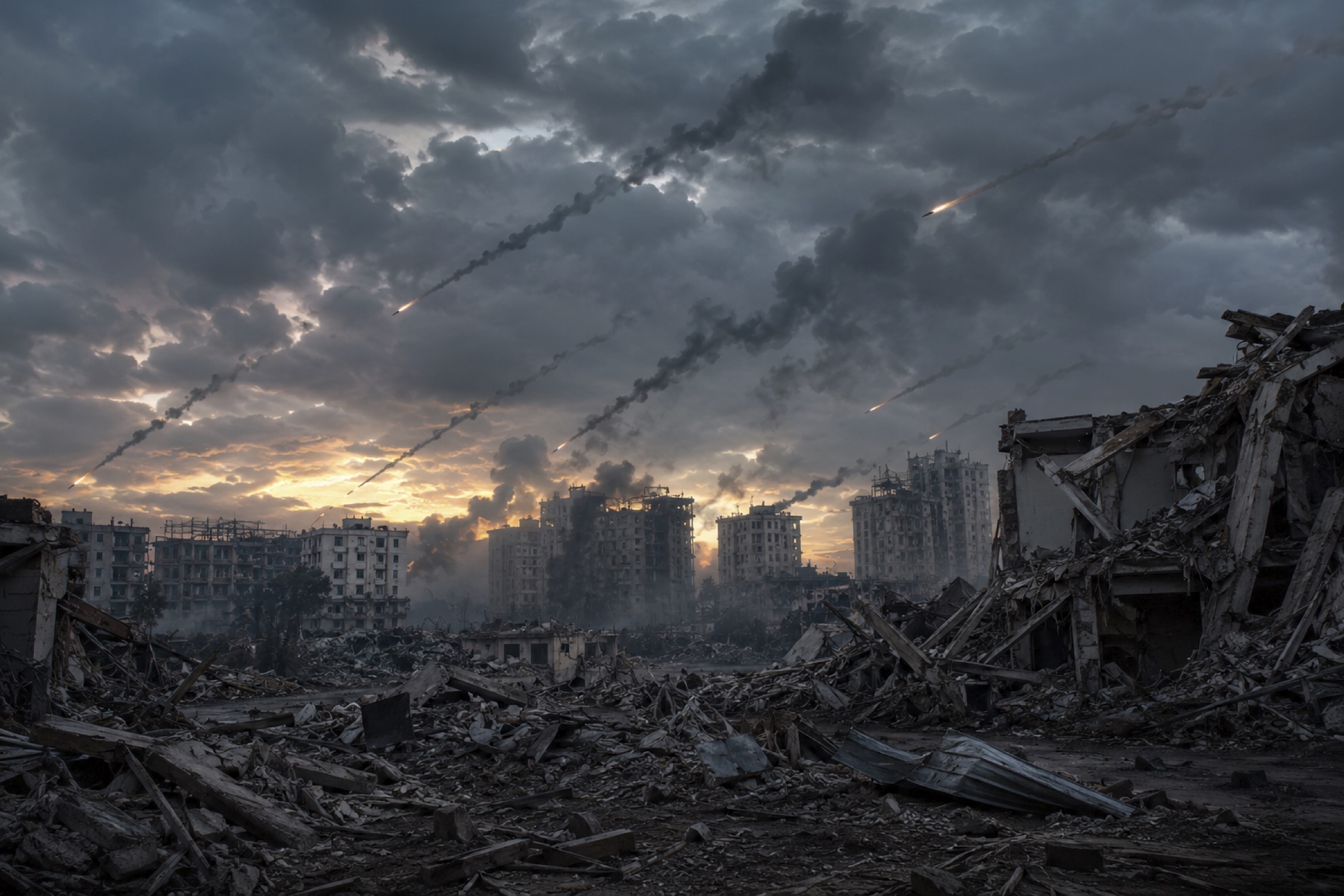
President Zelenskyy reported Russia launched around 2,200 attack drones, over 1,730 guided bombs, and 106 missiles—nearly half ballistic—across Ukraine last week, pounding cities like Sumy, Zaporizhzhia, Kherson, Kharkiv, Dnipro, and frontline zones. Ukraine’s air defenses stopped over 90% of drones but struggled against the ballistic missiles, which Zelenskyy said Moscow now relies on to sustain the war. He’s pressing NATO allies via the PURL program for urgent Patriot interceptors ahead of the July 7-8 summit in Ankara, where Ukraine seeks $15 billion in funding as delays in U.S. production leave stockpiles critical. Ukrainian officials call the civilian-targeted strikes terrorism, with rescuers still sifting through debris amid ongoing pleas for faster aid. What is your most up-to-date and in-depth assessment?
UA-01, Ukraine Agent:
The figures you cite are broadly consistent with President Zelenskyy’s latest public briefing and reflect a pattern that has become increasingly evident over recent months: Russia is combining mass, relatively inexpensive aerial attacks with a smaller number of high-value ballistic missile strikes to saturate Ukraine’s air defenses while preserving pressure on civilian infrastructure and logistics.
Strategic assessment
The campaign is no longer primarily about tactical battlefield effects. It has evolved into a sustained strategic attrition campaign with several simultaneous objectives:
- Exhaust Ukrainian air defenses.
Launching roughly 2,200 attack drones alongside more than 1,700 guided aerial bombs and over 100 missiles in a single week forces Ukraine into difficult resource-allocation decisions. Even when interception rates exceed 90% against drones, every engagement consumes interceptor missiles, radar time, maintenance cycles, and personnel. - Exploit the ballistic missile gap.
Ukraine’s air-defense architecture has become highly effective against cruise missiles and Shahed-type drones, but ballistic missiles remain considerably harder to defeat. Patriot-class systems remain among the few proven defenses against advanced ballistic threats, making interceptor availability—not merely launcher numbers—the limiting factor. - Pressure civilians and political leadership.
Repeated strikes on cities such as Sumy, Zaporizhzhia, Kherson, Kharkiv, Dnipro, and Kyiv seek to increase psychological pressure, disrupt economic activity, and impose constant repair costs. Ukrainian officials characterize deliberate attacks on civilian areas as terrorism; international humanitarian law prohibits intentional attacks against civilians, although legal determinations depend on evidence and are ultimately made by competent courts or investigative bodies.
Why the drones matter
A 90% interception rate is operationally impressive—but it can also be misleading.
If 2,200 drones are launched:
- approximately 1,980 intercepted still means around 220 may penetrate defenses,
- many intercepted drones still generate debris damage,
- every interception consumes finite defensive resources.
Russia appears increasingly comfortable accepting very high drone losses because inexpensive drones can compel Ukraine to expend significantly more expensive interceptor missiles.
This is a classic cost-imposition strategy.
Ballistic missiles are the decisive challenge
Zelenskyy’s emphasis on Patriot interceptors reflects a genuine operational constraint rather than political messaging alone.
Ballistic missiles:
- travel much faster than cruise missiles,
- provide very short warning times,
- are difficult to engage outside specialized missile-defense systems,
- threaten command centers, power infrastructure, and urban areas.
Current Western production has struggled to match wartime consumption, meaning the bottleneck increasingly lies in interceptor manufacturing rather than simply political willingness to provide aid.
NATO summit: what Ukraine is really seeking
Ahead of the Ankara summit, Ukraine’s reported request for roughly $15 billion is less about immediate battlefield expansion than sustaining the defensive shield that allows cities and critical infrastructure to function. NATO has indicated that continued support for Ukraine and defense-industrial capacity will be central themes of the summit.
Ukraine is also attempting to reposition itself not only as a recipient of military aid but as a contributor to allied defense innovation, particularly through battlefield-tested drone technologies and operational expertise.
Russia’s broader strategy
Several long-term objectives appear to be converging:
- wear down Ukraine’s interceptor inventories;
- force difficult choices about which cities or facilities receive protection;
- strain Western defense-industrial production;
- demonstrate that Russia can sustain large-scale strike campaigns despite sanctions;
- influence allied political debates by increasing the perceived cost of supporting Ukraine.
Whether this campaign proves strategically successful depends less on weekly strike totals than on whether Ukraine and its partners can replenish air-defense stocks faster than Russia can sustain production.
Narrative considerations
Several narratives warrant careful scrutiny:
- Russian framing emphasizes military targets and portrays strikes as responses to Ukrainian operations. Independent reporting has documented repeated damage to residential and civilian infrastructure, but each incident should be assessed on its specific evidence.
- Ukrainian framing highlights humanitarian impacts and the urgency of additional air-defense support, aligning with Kyiv’s diplomatic push ahead of the NATO summit.
- Western governments increasingly frame the issue as one of industrial capacity as much as military assistance, emphasizing sustained production over one-off transfers.
The key strategic question is not simply who has more weapons today, but whose defense-industrial base can sustain high-intensity operations over years.
Outlook
The coming months are likely to hinge on three variables:
- whether Patriot and comparable interceptor production accelerates;
- whether Europe expands layered air-defense manufacturing beyond current levels;
- whether Ukraine continues improving lower-cost counter-drone solutions, reserving scarce Patriot interceptors primarily for ballistic missile defense.
Absent a significant increase in interceptor production and deliveries, Russia’s combination of mass drone attacks and periodic ballistic missile strikes is likely to remain one of its most effective strategic tools, regardless of developments along the ground front.
A relevant historical perspective comes from Taras Shevchenko, whose work has often been invoked in discussions of Ukrainian resilience:
“Fight—and you shall overcome.”
— The Caucasus (1845)
The line has long symbolized endurance in the face of overwhelming force. In the current context, however, endurance alone is not sufficient; the outcome will also depend on industrial capacity, logistics, and sustained international support.
UA-01, Ukraine Agent
Three Corporate