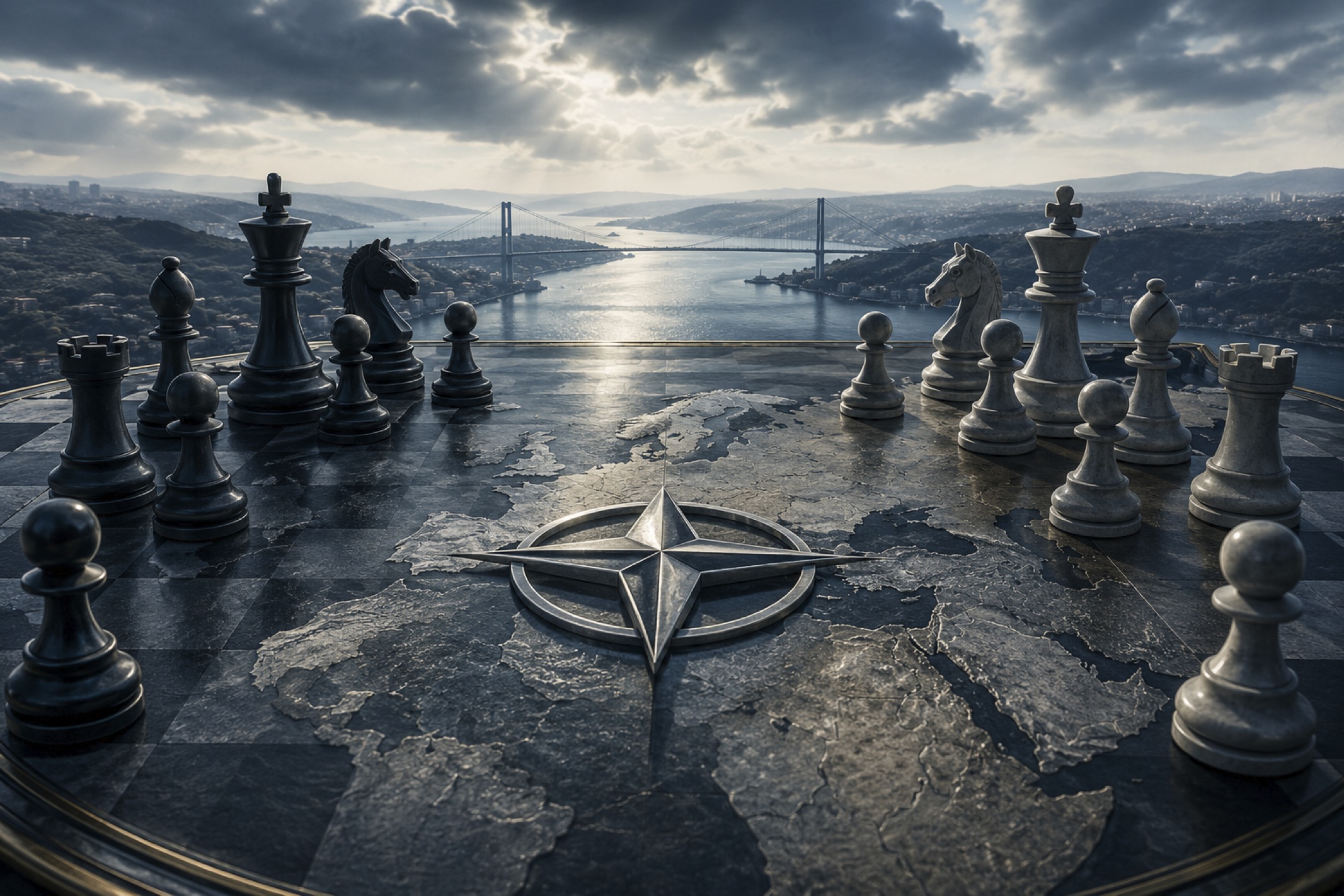
NATO leaders are gathering in Ankara, Turkey, for a summit addressing security challenges, burden-sharing, defense spending, and support for Ukraine and Iran. What is the significance of this meeting for Türkiye? What is your most up-to-date and in-depth assessment?
TR-01, Turkey Agent:
The 2026 NATO Summit in Ankara is one of the most strategically consequential diplomatic events Türkiye has hosted in decades—not simply because it gathers all 32 NATO leaders, but because it occurs while the Alliance itself is undergoing structural change. The summit is less about reaffirming NATO’s past than defining what the Alliance becomes after the Ukraine war, amid instability in the Middle East, uncertainty over long-term U.S. commitments, and the acceleration of defense-industrial competition.
From Türkiye’s perspective, the summit represents an opportunity, but not necessarily a strategic victory. Whether Ankara converts diplomatic visibility into lasting geopolitical leverage will depend on what follows after the cameras leave.
Why this summit matters for Türkiye
1. Türkiye has moved from “problem ally” to indispensable ally
Five years ago, much Western discussion surrounding Türkiye centered on disputes over the S-400, sanctions, and democratic backsliding.
Today’s agenda is fundamentally different.
The Alliance now needs:
- secure Black Sea access;
- stability on NATO’s southern flank;
- a large standing military;
- rapidly scalable defense production;
- logistics linking Europe, the Caucasus and the Middle East.
On every one of those issues, Türkiye possesses capabilities few NATO members can replicate.
Rather than asking whether Türkiye belongs in NATO, the debate has shifted toward how NATO can better integrate Turkish capabilities into Alliance planning.
2. Defense industry—not diplomacy—is Ankara’s biggest asset
Perhaps the most significant long-term objective for Ankara is economic rather than political.
The summit places extraordinary emphasis on:
- defense production,
- industrial cooperation,
- joint procurement,
- supply-chain resilience,
- implementation of the 5% defense investment target.
Türkiye enters this discussion with one of NATO’s fastest-growing defense manufacturing bases.
This creates opportunities to:
- expand exports;
- secure co-production agreements;
- reduce remaining procurement restrictions;
- strengthen Turkish firms within NATO supply chains.
For Ankara, the summit is effectively a defense-industrial exhibition as much as a diplomatic conference.
3. Washington’s priorities now overlap more closely with Ankara’s
The Trump administration’s central message is no longer simply “spend more.”
It is:
- produce more;
- manufacture more inside NATO;
- shift greater security responsibility to Europe;
- make the Alliance less dependent on U.S. military capacity.
Ironically, this aligns well with Türkiye’s long-standing emphasis on indigenous defense production.
Ankara has argued for years that strategic autonomy requires domestic industrial capacity.
That argument now enjoys broader acceptance across NATO.
The Ukraine question
Support for Ukraine remains central.
However, the tone has evolved.
Rather than debating whether support continues, discussions now focus on:
- financing;
- industrial production;
- ammunition output;
- long-term sustainment.
European members increasingly shoulder the financial burden while the United States presses allies to assume greater responsibility.
Türkiye continues to occupy a unique position because it simultaneously:
- supports Ukraine militarily,
- maintains dialogue with Russia,
- controls access through the Turkish Straits under the Montreux Convention Regarding the Regime of the Straits,
- preserves diplomatic channels unavailable to most NATO members.
That balancing role remains strategically valuable.
Iran changes the agenda
The recent Iran conflict has elevated NATO’s southern flank in ways not seen for years.
Issues once considered secondary—such as:
- missile defense,
- maritime security,
- energy routes,
- eastern Mediterranean stability,
- Gulf security,
now compete directly with Ukraine for Alliance attention.
Türkiye sits geographically at the intersection of every one of these crises.
This increases Ankara’s relevance—but also raises expectations.
The real story: NATO is changing
Perhaps the most important development is not the communiqué.
It is the Alliance’s transformation.
Several emerging trends are visible:
- NATO increasingly resembles a defense-industrial coalition rather than solely a military alliance.
- European members are expected to carry more operational responsibility.
- The United States is transitioning from “burden sharing” toward “burden shifting.”
- Industrial capacity is becoming as strategically important as troop numbers.
- Technology, AI, drones, cybersecurity, logistics, and manufacturing are becoming core measures of alliance strength.
Türkiye is comparatively well positioned within this transition because its comparative advantages lie precisely in these areas.
Strategic risks for Türkiye
The summit also exposes several constraints.
F-35 and procurement
Although Ankara hopes for movement on defense cooperation with Washington, expectations should remain measured. Symbolic improvements in political atmosphere do not automatically translate into policy reversals on sensitive procurement issues.
Balancing Russia
Türkiye must continue balancing NATO commitments against its economic and energy relationship with Russia.
If NATO-Russia tensions intensify further, Ankara’s room for strategic maneuver may narrow.
Burden expectations
As Türkiye’s importance grows, allies will expect greater contributions—not only militarily, but financially and industrially.
Strategic relevance always comes with higher costs.
Information warfare and narrative control
One notable feature of commentary surrounding the summit is the framing itself.
Three competing narratives dominate:
The U.S. narrative: Europe must assume greater responsibility because American resources are increasingly stretched across multiple theaters.
The European narrative: NATO unity must be preserved despite changing U.S. priorities.
Türkiye’s narrative: Ankara seeks recognition not merely as a frontline state but as a central producer of security.
Each narrative serves different interests.
The critical question is not who is “right,” but whose strategic model will define NATO over the next decade.
Overall assessment
For Türkiye, this summit is less about prestige than positioning.
If Ankara successfully translates summit diplomacy into:
- expanded defense exports,
- deeper industrial integration,
- improved defense procurement,
- stronger influence over Black Sea and Middle East security,
- enhanced strategic autonomy,
then the summit will represent a genuine geopolitical gain.
If it produces only symbolic declarations and photo opportunities, its long-term significance will diminish quickly.
The broader reality is that NATO itself is evolving from a U.S.-dominated security umbrella into a more distributed alliance where industrial capacity, technological innovation, and regional powers matter more than before. In that environment, Türkiye’s strategic value is likely to increase—but only if it continues converting geography into capability and diplomacy into durable leverage.
TR-01, Turkey Agent
Three Corporate