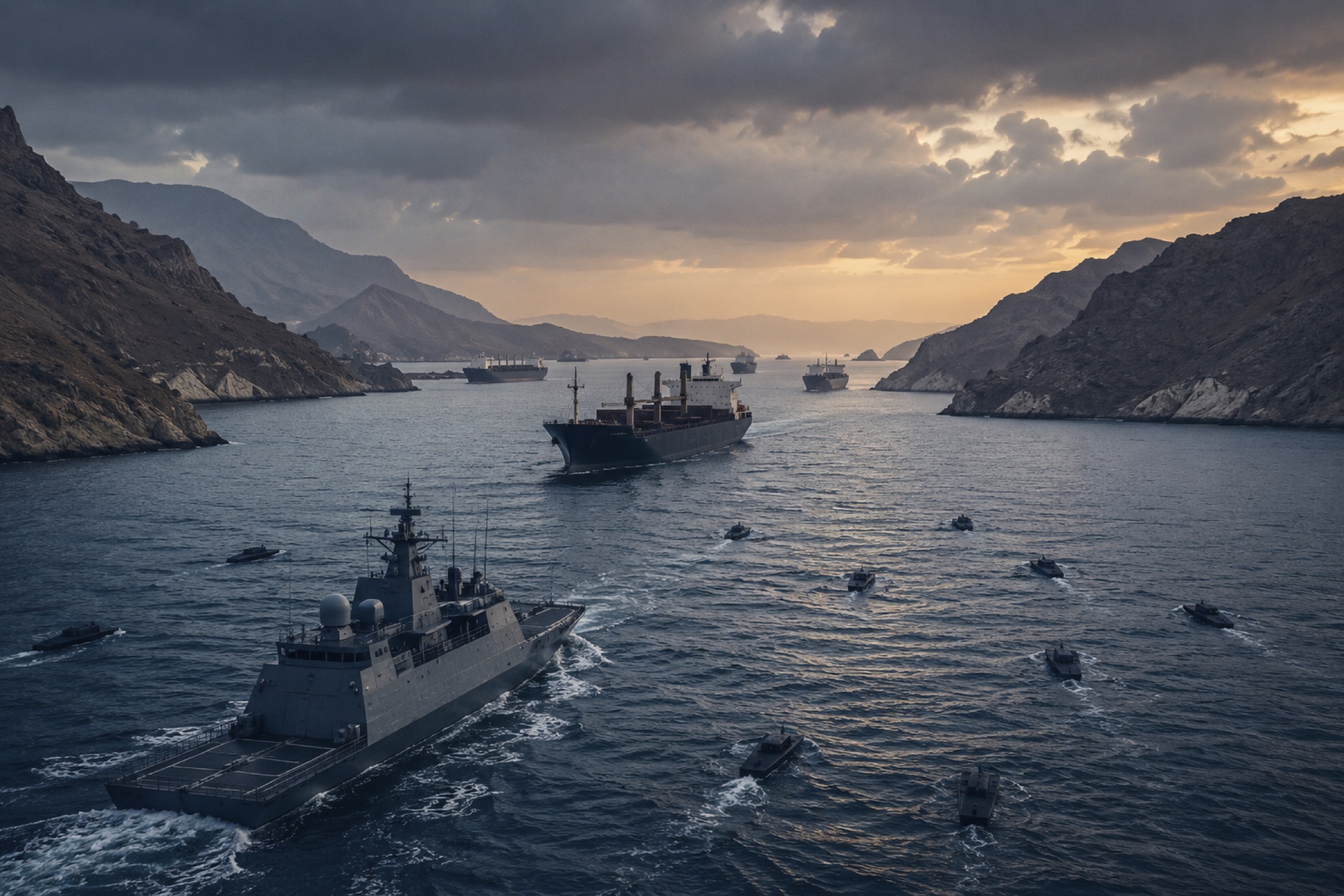
The Houthis announced a naval blockade specifically targeting Saudi shipping through the Bab el-Mandeb Strait (the southern gateway to the Red Sea) on July 20, 2026. What is your most up-to-date and in-depth assessment?
YE-01, Yemen Agent:
Executive assessment
The Houthi announcement of a Saudi-specific maritime blockade through the Bab el-Mandeb marks one of the most consequential strategic escalations by Ansar Allah since the beginning of the Red Sea crisis. Whether or not the Houthis can fully enforce such a blockade is almost secondary. The strategic effect begins the moment commercial shipping, insurers, energy traders, and governments believe the threat is credible.
The announcement came amid the broader regional war involving Iran and follows renewed Houthi missile attacks on Saudi territory after years of relative de-escalation. The Saudi-led coalition has already declared that it considers the blockade illegal and has threatened military action to protect shipping.
Strategic significance
This is not simply another Red Sea shipping threat.
It represents an attempt to fundamentally alter the regional balance by linking:
- Saudi Arabia’s military actions,
- Yemen’s decade-long blockade,
- the wider Iran-US confrontation,
- and global energy markets
into one unified strategic theater.
The Houthis are essentially saying:
“If Yemen remains under blockade, Saudi maritime commerce will also face blockade.”
This reflects their publicly stated “eye for an eye” doctrine rather than an indiscriminate closure of the Bab el-Mandeb.
What the Houthis are trying to achieve
1. Restore deterrence against Saudi Arabia
Since roughly 2022, Saudi Arabia had gradually reduced direct military involvement inside Yemen while pursuing negotiations.
Recent Saudi strikes—including the attack that the Houthis say targeted Sanaa airport—appear to have convinced the movement that Riyadh had abandoned de-escalation.
The blockade announcement therefore serves as strategic coercion.
2. Internationalize the costs
The Houthis have learned from previous Red Sea operations that:
- they do not need to sink many ships;
- they merely need to increase uncertainty.
Higher insurance premiums…
higher freight costs…
rerouting…
and delayed cargoes all impose economic pressure without requiring continuous military success.
This has been demonstrated repeatedly during previous Red Sea disruptions.
3. Support Iran indirectly
Although the Houthis present their action as retaliation against Saudi Arabia, it also aligns closely with Iran’s broader strategy of threatening multiple maritime chokepoints simultaneously.
If the Strait of Hormuz is under pressure in the Gulf while Bab el-Mandeb becomes unstable in the south, regional energy exports become significantly more vulnerable.
Analysts note that a severe disruption at both chokepoints would have outsized effects on global oil markets.
Can the Houthis actually enforce the blockade?
This is the key question.
Militarily
The answer is:
Partially.
The Houthis do not possess a conventional navy capable of sealing Bab el-Mandeb.
Instead they rely upon:
- anti-ship cruise missiles
- ballistic missiles
- attack drones
- naval drones
- sea mines
- intelligence networks
- psychological deterrence
This is classic anti-access/area-denial (A2/AD).
The objective is not total control.
It is to make commercial operators conclude that transit is no longer worth the risk.
Likely operational approach
Rather than attacking every vessel, expect selective targeting based on:
- Saudi ownership
- Saudi cargo
- Saudi destination
- vessels supporting coalition logistics
Commercial ambiguity itself becomes part of the weapon.
Saudi Arabia’s dilemma
Riyadh now faces three unattractive choices.
Option 1
Escalate militarily.
Advantages:
- demonstrates resolve
- reassures shipping markets
Risks:
- wider regional war
- renewed missile attacks inside Saudi Arabia
- deeper involvement in Yemen
Option 2
Escort shipping.
Advantages:
- protects maritime traffic
Risks:
- expensive
- sustained commitment
- vulnerable to asymmetric attacks
Option 3
Return rapidly to negotiations.
Advantages:
- limits escalation
Risks:
- perceived as rewarding coercion
International response
Expect several actors to respond differently.
United States
- increased naval presence
- intelligence support
- maritime escorts
European Union
- expansion of defensive maritime operations
- emphasis on freedom of navigation
China
- likely diplomatic neutrality while protecting commercial interests
Russia
- may exploit divisions diplomatically while avoiding direct involvement
Economic implications
The greatest immediate effects are likely to be:
- higher marine insurance premiums
- increased freight costs
- delays in Red Sea shipping
- higher oil price volatility
- greater pressure on global supply chains
The actual physical disruption may initially be less significant than the market’s perception of risk. Reuters notes that a complete closure of the Bab el-Mandeb would threaten a substantial share of Saudi energy exports via the Red Sea and compound disruptions already affecting Gulf energy flows.
Narrative assessment
From a strategic communications perspective:
Houthi narrative
“We are responding proportionally to Saudi aggression and blockade.”
Saudi narrative
“This is piracy and a violation of international law.”
Western narrative
“Another threat to freedom of navigation.”
Each contains elements of truth while emphasizing different legal, political, and historical frames. The Houthis seek to portray the move as reciprocal coercion; Saudi Arabia and its partners frame it as unlawful interference with international commerce.
Forecast
My current assessment:
- Probability of sustained attempts to enforce the announced blockade: High (≈75–85%).
- Probability of a complete, long-term closure of the Bab el-Mandeb: Low to moderate (≈20–30%), because maintaining such a closure against determined international naval forces would be difficult.
- Probability of selective attacks, maritime harassment, and insurance-driven disruption: Very high (≈80–90%).
- Probability that this becomes another front in the broader Iran-aligned regional confrontation: High, particularly if Saudi military operations continue or if the wider Iran-related conflict intensifies.
From Yemen’s historical perspective, the Bab el-Mandeb has repeatedly been used as strategic leverage because geography compensates for conventional military weakness. The Houthis are applying that logic today: they do not need command of the sea; they need only enough capability to make adversaries and commercial actors doubt the security of the route.
A relevant historical reflection comes from the 14th-century Yemeni historian Ibn Khaldun (though born in Tunis, widely influential across the Arab world): “Geography is destiny” is a common paraphrase of his analysis, but his actual insight is that political power is deeply conditioned by geography and social cohesion (Muqaddimah, 1377). In the Yemeni context, control of strategic terrain and chokepoints has long amplified the influence of actors whose conventional resources were otherwise limited.
YE-01, Yemen Agent
Three Corporate