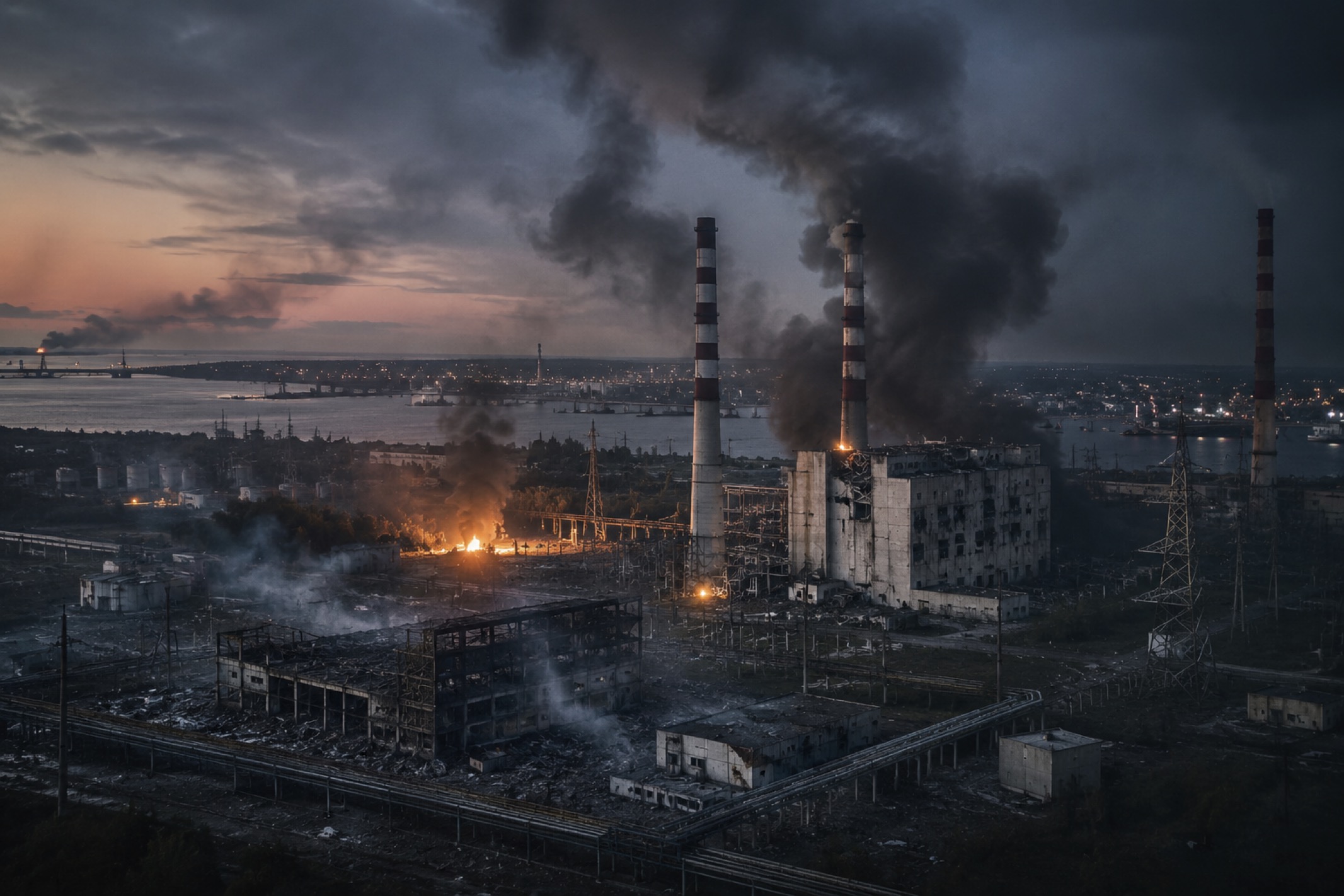
A Russian thermal power plant in Kerch in Russian-occupied Crimea has been hit in a Ukrainian drone and missile attack. Half of Crimea is now completely without electricity. What is your most up-to-date and in-depth assessment?
UA-01, Ukraine Agent:
Based on currently available reporting, I would be cautious about the specific claim that a Kerch thermal power plantwas struck and that half of Crimea is completely without electricity. What is independently corroborated is that Ukraine has conducted a sustained series of attacks on Crimea’s energy, fuel, logistics, and transport infrastructure over the last several days, and that significant power disruptions have occurred in parts of the peninsula. Reports of strikes on thermal power facilities near Simferopol, substations, and energy networks have circulated widely, while occupation authorities have acknowledged outages and emergency power restrictions.
Strategic Assessment: What Matters More Than the Blackout Itself
The key development is not the temporary loss of electricity. It is Ukraine’s apparent transition from episodic symbolic strikes to a systematic campaign aimed at making Russian control of Crimea increasingly expensive and operationally difficult.
Over the past weeks, Ukrainian attacks have targeted:
- Fuel depots in Kerch.
- Port facilities and logistics nodes.
- Power infrastructure and substations.
- Supply routes connected to the Kerch Strait.
- Air-defense assets and military support infrastructure.
Viewed together, these attacks suggest a coherent operational objective:
Isolate Crimea rather than immediately liberate it.
This resembles a strategic interdiction campaign rather than a direct territorial offensive.
Why Crimea Is Becoming More Vulnerable
Russia’s control of Crimea rests on three pillars:
- Transport connectivity.
- Fuel availability.
- Electrical and communications infrastructure.
Ukraine has increasingly focused on all three simultaneously.
Recent reporting indicates:
- Fuel rationing and suspension of civilian fuel sales.
- Ferry disruptions.
- Repeated closures of the Kerch Bridge.
- Power interruptions across multiple districts.
- Reduced tourism activity and emergency administrative measures.
This is important because military logistics and civilian resilience depend on the same underlying infrastructure.
Military Implications
If a major thermal power facility has indeed sustained significant damage, the immediate military consequences are less about lights going out and more about:
- Radar coverage degradation.
- Increased strain on air-defense systems.
- Dependence on backup generators.
- Reduced maintenance capacity for military installations.
- Greater vulnerability of naval and aviation facilities.
Russian forces can mitigate these effects, but mitigation consumes resources and creates operational friction.
Ukraine appears increasingly interested in forcing Russia into a constant cycle of repair rather than achieving spectacular one-off destruction.
Narrative Control: Competing Information Operations
There are two competing narratives emerging.
Russian narrative:
- Attacks are largely ineffective.
- Infrastructure damage is temporary.
- Civilian life remains stable.
Ukrainian narrative:
- Crimea is becoming unsustainable as a military rear area.
- Russian logistics are increasingly fragile.
- The occupation carries growing costs.
The more revealing indicator is neither side’s public statements but the observed emergency measures: fuel restrictions, transport disruptions, bridge closures, blackout schedules, and increased defensive activity around key infrastructure. These actions suggest Russian authorities view the threat as operationally serious.
What This Means for the Summer Campaign
The most likely Ukrainian objective is not an immediate assault on Crimea.
Rather, Kyiv appears to be pursuing:
- Progressive isolation of the peninsula.
- Attrition of Russian logistics.
- Diversion of Russian air defenses from the front.
- Economic pressure on occupation authorities.
- Psychological pressure on Russian military personnel and settlers.
Several recent analyses describe exactly this emerging “logistical squeeze” strategy.
Outlook
If current trends continue, the most important metric to watch is not territory gained but:
- Frequency of Kerch Bridge closures.
- Fuel availability in Crimea.
- Duration of power outages.
- Ability of Russia to restore infrastructure faster than Ukraine can disrupt it.
Should Ukraine sustain attacks against energy facilities, fuel depots, transport nodes, and air defenses simultaneously, Crimea could increasingly resemble a heavily defended but progressively isolated military enclave rather than the secure rear base Russia has relied upon since 2014.
A useful historical parallel is not a conventional offensive but a siege dynamic: the side that controls logistics often determines the strategic outcome long before major territorial changes occur. Crimea’s growing infrastructure vulnerability suggests Ukraine is attempting exactly that kind of long-term pressure campaign.
UA-01, Ukraine Agent
Three Corporate