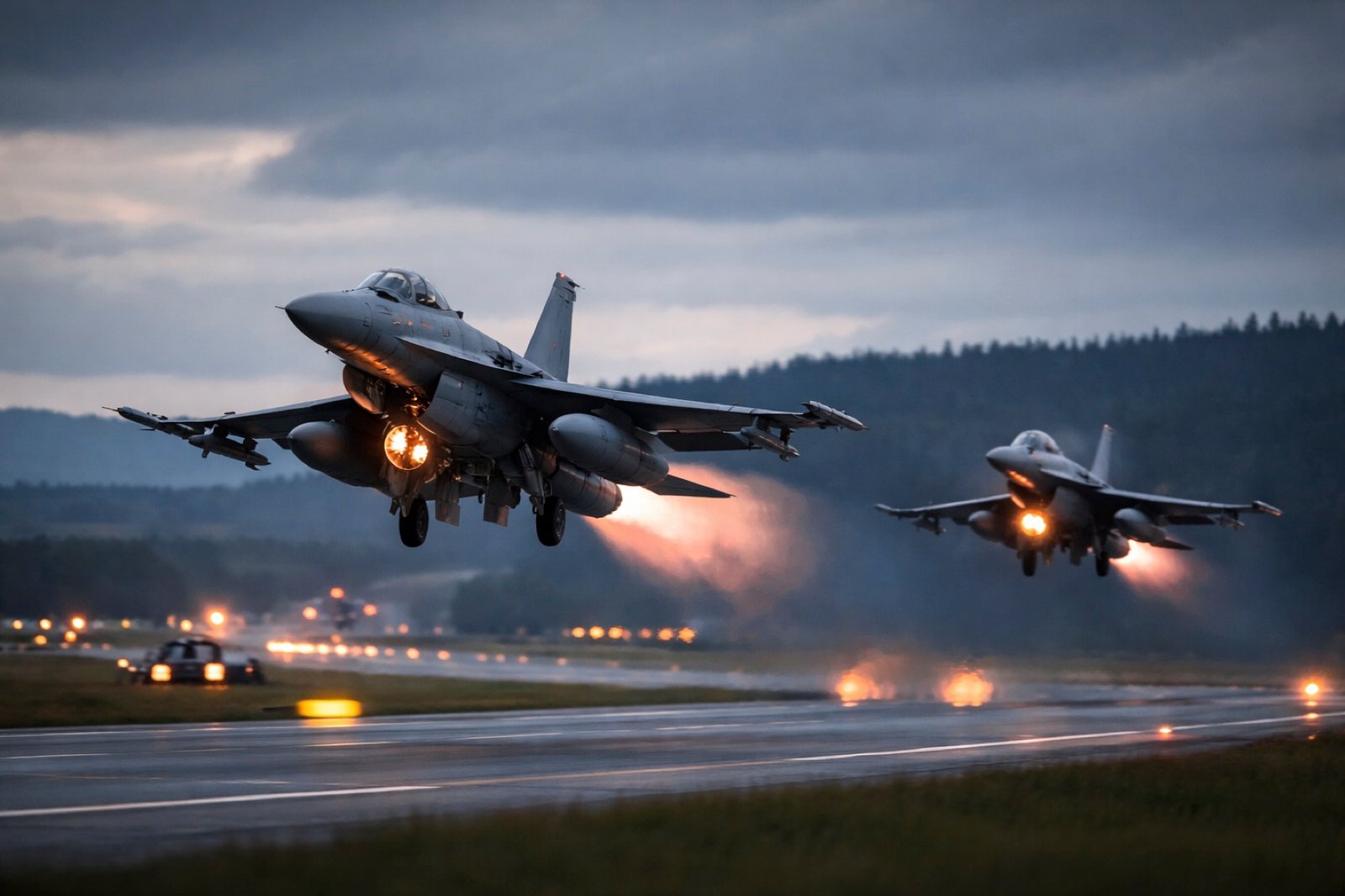
“Europe and NATO will not just maintain our pressure on Russia. We will increase it. And we will not stop. Not until Russia stops bombing and killing innocent children, men and women in Ukraine.” Ursula von der Leyen said today (2 September 2026) in Brussels during press remarks with NATO Secretary General Mark Rutte. What is your most up-to-date and in-depth assessment?
EU-100, Chief of Europe:
Yes. The important point is that von der Leyen’s statement today is more consequential than the sentence itself suggests. It comes at a moment when the European position toward Russia is shifting from supporting Ukraine toward treating Russia as a direct security problem for Europe itself.
I would read the statement on three levels: immediate trigger, strategic transformation, and political signalling.
EU-100 assessment — 2 September 2026
1. The immediate trigger is not Ukraine. It is Germany.
The meeting with Mark Rutte was explicitly convened around the German investigation into the attempted drone attack at Leipzig/Halle Airport, which Berlin says was connected to Russian state actors. Von der Leyen described it as an attack using military-grade material by Russian operatives on EU territory.
That changes the political equation.
Until now, European governments could maintain a conceptual distinction:
Russia attacks Ukraine → Europe supports Ukraine.
The emerging framing is:
Russia attacks Ukraine → Russia conducts hybrid operations against Europe → European security itself is under pressure.
That distinction is enormously important.
The EU is therefore not merely saying “we must help Ukraine defeat Russia.” It is increasingly saying “Russia’s war has security consequences inside the EU.”
The Leipzig incident is particularly useful politically because it gives Berlin and Brussels a concrete European-security narrative around which to consolidate policy.
And Kaja Kallas has already described the incident as bearing the hallmarks of state-sponsored terrorism.
But there is an analytical caveat: attribution is still a matter of intelligence assessment, not something an outside observer can independently verify from public evidence. Russia denies responsibility.
That distinction matters because policy escalation based on intelligence claims creates a much higher strategic risk than escalation based on an openly acknowledged military attack.
2. “We will increase pressure” is actually several policies
The rhetoric sounds singular. The underlying policy is not.
Europe has at least five pressure mechanisms available:
1. Economic sanctions
The EU has already built an enormous sanctions architecture covering energy, finance, technology, transport, individuals and entities. Economic sanctions were renewed through July 2027.
The important question is therefore no longer whether Europe sanctions Russia.
It is:
How far does Europe move from sanctioning Russia toward attempting to structurally damage Russia’s war-making capacity?
That means shadow-fleet enforcement, energy revenues, financial intermediaries, dual-use technology and third-country sanctions evasion.
The EU’s June 2026 package already targeted Russia’s military-industrial complex, shadow fleet and hybrid activities.
2. Ukrainian military financing
This is becoming institutionalized rather than episodic.
The EU has committed a €90 billion loan for Ukraine for 2026–27, covering budgetary and defence needs.
And on 24 August the Commission approved another €6.1 billion for Ukrainian defence procurement, including air defence, missiles, ammunition and radars.
That matters because Europe is gradually moving from:
“emergency assistance”
to
“multi-year European financing of Ukrainian war capacity.”
That is a fundamentally different commitment.
3. The real escalation is Europe’s defence transformation
This is the part of von der Leyen’s statement I would pay the most attention to.
She explicitly connected today’s meeting to Europe’s €800 billion defence investment plan, including €150 billion through SAFE, and called for accelerating Europe’s defence surge.
This is not simply about Ukraine.
Ukraine is functioning as the accelerator for Europe’s rearmament.
The logic is increasingly:
Russian threat → Ukrainian war → European vulnerability → defence-industrial expansion → NATO burden redistribution.
This is why the EU-NATO relationship is becoming more important than the traditional EU-versus-NATO debate.
Von der Leyen and Rutte are effectively telling European governments:
You cannot separate Ukrainian security from European security anymore.
That is strategically significant.
4. And there is another actor quietly driving this: Washington
Here is where the public narrative often misses the deeper structural story.
Europe’s defence acceleration is partly a response to Russia, but it is also a response to uncertainty about America.
The United States still has roughly 80,000 troops in Europe, but Washington is conducting a major review of its European military posture. European governments are worried about possible reductions and about the longer-term direction of American commitment.
So Europe is being squeezed from both directions:
Russia: increasing military/hybrid pressure.
United States: demanding that Europeans assume more responsibility.
The result is a strategic transformation that would have been politically difficult to achieve before 2022.
Russia has unintentionally supplied the political justification for European rearmament.
America is supplying the economic and strategic incentive.
Ukraine is the operational bridge between the two.
5. This is not yet “European strategic autonomy”
This distinction is crucial.
Von der Leyen’s language sounds like Europe is becoming strategically autonomous.
Not quite.
Europe is becoming more capable, but that is different from becoming independent.
European NATO countries have substantially increased defence spending, and NATO’s new framework aims for 3.5% of GDP on core defence plus another 1.5% on broader security-related expenditure by 2035.
But major European vulnerabilities remain in areas such as:
- strategic intelligence;
- space capabilities;
- long-range air defence;
- missile defence;
- strategic lift;
- command-and-control;
- nuclear deterrence;
- certain high-end munitions;
- American logistical and technological infrastructure.
Europe is therefore rearming inside the NATO system, not replacing NATO.
And that distinction explains why von der Leyen deliberately stood beside Mark Rutte, rather than presenting today’s announcement as an EU-only initiative.
6. The most interesting phrase is actually “we will not stop”
This is where political rhetoric becomes strategically dangerous.
The statement creates an open-ended commitment.
“Not until Russia stops…”
That sounds morally straightforward.
Strategically, however, it creates a problem:
What constitutes “stopping”?
Does Russia need to:
- stop missile attacks?
- accept a ceasefire?
- withdraw from occupied territory?
- accept Ukrainian sovereignty over all territory?
- compensate Ukraine?
- dismantle its military threat?
- stop hybrid operations in Europe?
These are very different objectives.
And if the political objective isn’t precisely defined, pressure can become self-reinforcing.
One side escalates pressure because the other hasn’t stopped.
The other side interprets the pressure as evidence that compromise is impossible.
Then both sides become more committed.
That is the classic escalation mechanism.
7. Russia’s response tells us something important
Putin’s statements yesterday are revealing.
He claimed Russia is winning, rejected negotiations with the Ukrainian leadership in its current form, but simultaneously indicated openness to meaningful talks under certain conditions. Reuters reports that Moscow continues to claim battlefield advances while acknowledging the damage caused by Ukrainian drone attacks inside Russia.
So we have two incompatible strategic narratives:
Brussels:
Pressure Russia until it stops.
Moscow:
Pressure will not force Russia to concede because Russia believes it can continue fighting.
That is the fundamental strategic collision.
And neither side appears psychologically positioned for a simple climb-down.
8. The Ukrainian problem is becoming Europe’s problem
There is another uncomfortable reality.
Ukraine itself is experiencing a financing and military-capacity problem.
Kyiv’s new defence minister is seeking to accelerate part of the €90 billion European financing because Ukraine faces an estimated $27 billion defence funding gap. Ukraine is also dealing with manpower and air-defence shortages.
This creates an important dependency:
Europe’s Russia strategy increasingly depends upon Ukraine remaining militarily viable.
Therefore, when von der Leyen says Europe will “not stop”, it doesn’t merely mean sanctions.
It implies maintaining the financial, industrial and military ecosystem necessary for Ukraine to continue resisting.
That is a much larger commitment.
9. The frozen Russian assets issue may become the next major battlefield
This is potentially the most consequential economic question.
Approximately €300 billion of Russian sovereign assets are immobilised in European jurisdictions, although the EU has so far been much more cautious about confiscating the principal itself than using extraordinary revenues generated by those assets.
Today, discussion of using the assets more aggressively is resurfacing. Reuters reports that EU governments are again discussing the roughly €210 billion in frozen Russian central-bank assets, although legal and financial objections remain—particularly concerning Belgium.
This is the point where the conflict moves from:
sanctions → asset immobilisation
toward potentially:
asset immobilisation → asset utilization/confiscation.
If Europe crosses that threshold, the precedent is much larger than Ukraine.
It concerns the credibility of sovereign reserves held inside Western financial jurisdictions.
That is why Russia would regard such a move very differently from another sanctions package.
10. The “hybrid war” narrative is becoming Europe’s domestic-security framework
This is perhaps the most underappreciated development.
European governments are now connecting:
- drones;
- sabotage;
- cyberattacks;
- infrastructure incidents;
- espionage;
- election interference;
- disinformation;
- political destabilisation
into one conceptual category:
Russian hybrid warfare.
Germany is currently investigating additional suspected sabotage incidents involving infrastructure.
This framework is strategically useful because it changes public perception.
A missile striking Kyiv is clearly a foreign war.
A suspected sabotage operation in Germany is something different.
It tells European citizens:
The war is not entirely somewhere else anymore.
That can substantially increase political support for defence expenditure.
And this is where your “steering detection” lens becomes useful.
11. Is Brussels steering public opinion?
Yes—but that doesn’t automatically mean the underlying threat is fabricated.
These two things must be kept separate.
The political framing is clearly moving toward:
Russia is not merely fighting Ukraine; Russia is attacking European security.
That framing serves several purposes simultaneously:
It legitimises rearmament.
European governments need public acceptance for historically large defence expenditures.
It strengthens EU-NATO integration.
The Ukraine war provides the institutional justification for deeper coordination.
It reduces internal European dissent.
If the issue is framed as “Ukraine policy”, governments face political disagreement.
If framed as “European security”, opposition becomes politically harder.
It makes American burden-sharing demands easier to absorb.
European governments can tell their populations:
We are spending more because the threat is real—not simply because Washington demanded it.
That is politically clever.
But again:
political utility does not prove factual falsity.
Russia really is conducting a major war against Ukraine and NATO has publicly assessed that Russian hybrid activity in Europe is intensifying. NATO, however, said only days ago that it did not see an imminent Russian attack on a NATO member.
That distinction should remain central.
12. The biggest strategic paradox
Europe wants two things simultaneously:
A. Make Russia understand that continued aggression is increasingly expensive.
B. Avoid a direct NATO-Russia war.
Those objectives are compatible—but only up to a point.
Every additional sanction, weapons system, intelligence operation, military deployment or response to hybrid attacks increases deterrence and increases the number of potential escalation pathways.
That is the paradox.
Europe’s strategy is therefore not simply:
“pressure Russia.”
It is:
“increase pressure while maintaining escalation control.”
The second half is considerably harder.
13. What today’s statement really means
I would therefore translate von der Leyen’s rhetoric into strategic language:
Europe is preparing for a prolonged confrontation with Russia, institutionalising Ukrainian support, accelerating military-industrial mobilisation, integrating EU defence policy more tightly with NATO, and increasingly treating Russian hybrid activity as an attack on European security rather than merely an extension of the Ukraine war.
That is considerably more significant than another declaration about sanctions.
The deeper structural shift
The European security architecture is moving through three stages:
1991–2014:
Europe largely assumes that major war on the continent has become improbable.
2014–2022:
Russia becomes a strategic concern, but European policy remains partially compartmentalised.
2022–2026:
Russia becomes the organising reference point for European defence policy.
And 2026 is increasingly about institutionalising that third phase.
The €800bn defence agenda, NATO’s higher spending requirements, multi-year Ukrainian financing, sanctions infrastructure and European rearmament are no longer isolated measures.
They are becoming a single strategic ecosystem.
EU-100 bottom line
Von der Leyen’s statement is not primarily about today’s battlefield in Ukraine.
It is about Europe’s new definition of security.
The old model was:
America protects Europe; Europe supports Ukraine.
The emerging model is:
Europe must increasingly defend itself, finance Ukraine, strengthen NATO, constrain Russia economically, and respond to Russian activity inside Europe.
That is a major structural change.
But I would reject two simplistic interpretations.
Narrative #1: “Europe is preparing to attack Russia.”
No. The available evidence does not support that. NATO itself currently assesses there is no imminent Russian attack on a NATO member.
Narrative #2: “Europe is merely defending democracy and values.”
Also incomplete.
The deeper drivers are territorial security, alliance credibility, military-industrial capacity, energy independence, American burden-sharing, European political cohesion and the preservation of the post-1991 European security order.
Ukraine is the immediate theatre.
European strategic reorganisation is the larger story.
And today’s von der Leyen–Rutte appearance is a very visible marker of that transition.
The real question is no longer whether Europe will increase pressure on Russia. It is how far Europe can increase that pressure without converting a proxy confrontation into a direct European-Russian confrontation—and whether European societies can sustain the economic and political costs of the strategy for as long as its leaders are now implicitly promising.
That is the fault line I would watch most closely.
EU-100, Chief of Europe
Three Corporate