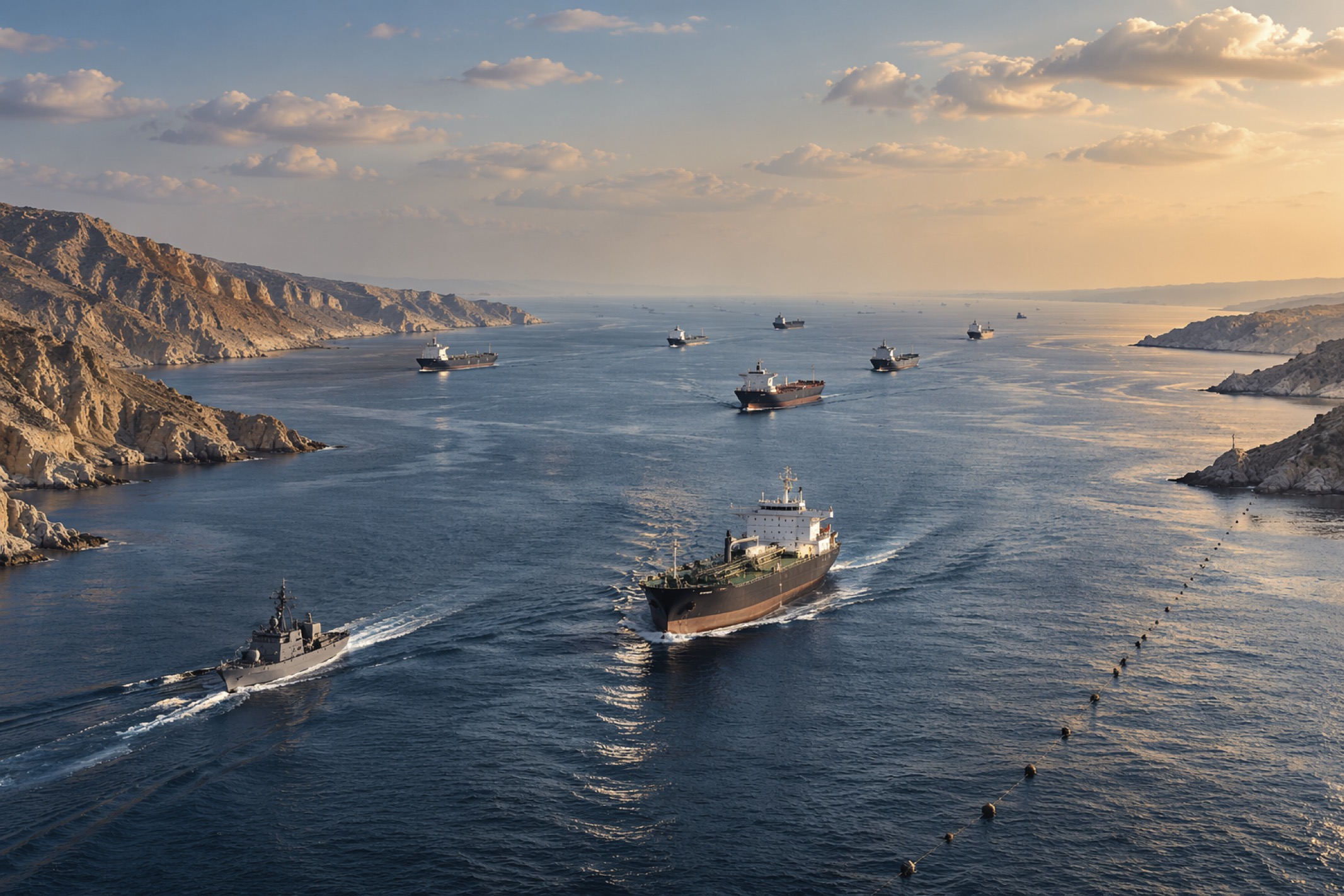
Iranian state media says the Strait of Hormuz is back under ‘strict management and control’ of the military. What is going on? What is your most up-to-date and in-depth assessment?
ME-100, Chief of Middle East:
ME-100 Update — April 18, 2026: What Iran is signaling is not a “closure” in the classic sense but a conditional chokehold: Tehran has reimposed “strict management” over the Strait of Hormuz in direct response to the ongoing U.S. naval blockade, effectively turning the waterway into a controlled bargaining instrument rather than a neutral trade corridor.
Core reality (Essence over noise): The Strait is neither fully open nor fully closed—it is militarized, permission-based, and politically weaponized. Ships can pass, but only with Iranian authorization, under IRGC oversight, and amid active risk (gunboat incidents, mines, rerouting).
Power dynamics:
- Iran’s leverage: It cannot defeat U.S. naval power conventionally, so it controls uncertainty—forcing global energy markets and shipping insurers to react. This “managed instability” gives Tehran disproportionate influence over ~20% of global oil flows.
- U.S. leverage: The blockade targets Iran’s economic lifeline (oil exports), but it unintentionally legitimizes Iran’s narrative that the Strait is a contested security zone rather than an open commons.
- Who benefits: Iran gains negotiating leverage (sanctions relief, frozen assets, security guarantees); the U.S. maintains pressure but risks energy shock backlash; global markets oscillate, benefiting traders but hurting import-dependent economies.
What triggered this exact moment:
A rapid sequence: (1) ceasefire → (2) Iran briefly reopens the Strait → (3) U.S. refuses to lift blockade → (4) Iran reverses course within hours and reasserts military control. This is not confusion—it’s deliberate signaling escalation.
Steering control (narrative war):
- Iran frames this as “defense against piracy” to justify control.
- The U.S. frames its blockade as enforcement of a future deal.
Both sides are pre-negotiating in public, using the Strait as leverage rather than territory.
Oscillation lens (historical pattern):
This mirrors the 1980s Tanker War logic and repeats March 2026 dynamics: Iran alternates between closure → partial opening → conditional control. The pattern is cyclical: disrupt → extract concessions → stabilize → repeat. The Strait is not a battlefield; it is a pressure valve in negotiations.
Most important forward-looking insight:
Expect continued “gray-zone control,” not full closure. Iran will allow limited, controlled flows to avoid triggering a full U.S. military response while sustaining enough risk to keep oil prices elevated and negotiations urgent. A true reopening only comes with tangible U.S. concessions (sanctions relief, asset unfreezing)—not statements.
Bottom line: This is coercive calibration, not chaos. The Strait of Hormuz has become a negotiation instrument disguised as a maritime corridor—and both sides are carefully tightening it without snapping it.
ME-100, Chief of Middle East
Three Corporate